A video showing Greta Thunberg laughing at Germany’s Fridays for Future climate movement has reignited debate about the declining prominence of climate activism, as political movements across the left increasingly concentrate on living costs, housing, education and social justice rather than environmental policy.
The footage, an extract from Auf Panzern in die Klimakrise – Wie Aktivismus kriminalisiert wird, a film by activist and filmmaker Hubertus Koch, shows Thunberg sitting behind a coffee table covered with a Palestinian keffiyeh. When Koch tells her about a Fridays for Future demonstration in Berlin, she bursts into laughter before asking: “Really? They are still doing that?” The exchange is presented as an illustration of the distance between the movement’s former leading figure and the climate protests she helped bring to international prominence.
In an analysis published by Die Zeit, political commentator Johannes Schneider argues that Thunberg’s reaction reflects a broader change extending well beyond the Swedish activist. The central concern, he writes, is not simply that a prominent climate campaigner has shifted her attention towards the Israel-Palestine conflict, but that climate protection itself is losing priority among sections of the political left and younger protest movements.
Recent Gen Z demonstrations have increasingly focused on compulsory military service, education and social justice. Meanwhile, left-wing politicians, from New York to Berlin, have gained support through campaigns centred on what has become known as “affordability”: the ability of ordinary people to meet the costs of housing, food and other necessities. The political emphasis has shifted towards immediate economic pressures, with climate protection frequently retained in speeches and campaign materials but receiving less attention as a central political demand.
In Germany, climate action is still presented as an issue of social justice, particularly because poorer communities are expected to suffer disproportionately from its consequences. However, Schneider argues that treating climate change as one concern among several, rather than as a defining political priority, risks reducing it to a secondary issue that movements acknowledge rhetorically without making it central to their programmes.
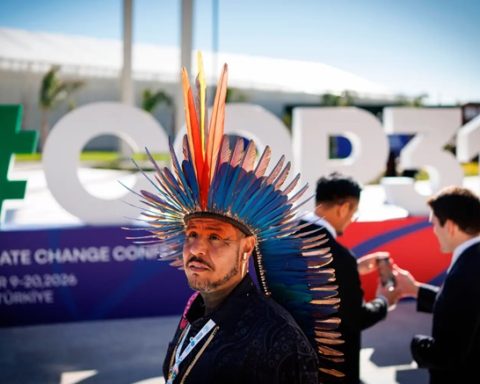
The shift comes as another United Nations climate conference passes, the 1.5-degree Celsius target loses political momentum and Fridays for Future stages further demonstrations in Berlin and other German cities. Schneider also points to the political consequences of the rightward shift in German politics. As climate denial and the downplaying of environmental risks gain greater prominence under the influence of the Alternative for Germany (AfD), established climate campaigners such as Luisa Neubauer have increasingly broadened their activism to include defending democracy and opposing the far right.
Schneider acknowledges that left-wing movements have legitimate reasons to concentrate on everyday economic concerns. Housing costs, rising prices and public services directly affect people’s lives, while the political right has successfully portrayed sections of the left as disconnected from ordinary citizens. Responding to those concerns is therefore necessary, particularly when voters are increasingly receptive to arguments that progressive movements have prioritised cultural and environmental causes over material living conditions.
But the Die Zeit commentary argues that climate change cannot be placed in the same category as an exhausted protest theme or an issue associated primarily with urban progressive politics. Its consequences, Schneider maintains, will be more severe than pension reductions, rent increases or higher supermarket prices. Climate disruption threatens to make people poorer and less healthy, with the greatest effects falling on vulnerable populations, from residents of overheated top-floor flats in Western cities to communities exposed to expanding drought zones and flooding.
The political difficulty is that meaningful climate protection requires immediate changes to consumption, energy use and established patterns of economic activity. Such measures can involve restrictions on comfort and prosperity, making them difficult to defend electorally when households are already concerned about the cost of living. Schneider argues that the political right has achieved considerable success in presenting climate action as an expensive project imposed by distant elites. The resulting reluctance has influenced parts of the left, which increasingly defer responsibility to other groups.
One argument gaining traction is that the wealthy should take the lead in reducing emissions. Schneider accepts that the concentration of responsibility among the richest is a legitimate concern but warns that invoking it without setting out practical steps can become another means of postponing action. The same logic, he suggests, resembles an argument traditionally associated with the political right: others must act first, whether those others are China or wealthy individuals.
He identifies a deeper political problem in the way left-wing movements continue to organise their arguments around the traditional conflicts between capital and labour, and between rich and poor. These remain important questions, but Schneider argues that the defining conflict of the 21st century is increasingly between the planet’s ecological limits and the growing energy demands of fossil-fuel-dependent societies.
The expansion of renewable energy has not, in his assessment, resolved this contradiction. Energy demand continues to grow, driven partly by data centres in the Global North and by legitimate efforts in the Global South to achieve living standards comparable with those enjoyed in Western countries. Meanwhile, biodiversity loss and the deterioration of ecosystems constitute another major environmental crisis alongside climate change.
The consequences extend directly into the economic and social issues now dominating political campaigns. Agricultural failures linked to climate disruption affect food prices and supermarket affordability. Housing programmes depend on materials such as timber and sand, while water scarcity can intensify conflict rather than bring wars to an end. Schneider also rejects the assumption that wealthy individuals or societies can insulate themselves indefinitely from ecological collapse through private shelters or technological escape routes.
He argues that Germany’s political spectrum, from the AfD and the Christian Democratic Union (CDU) to sections of the left, increasingly avoids confronting the scale of the environmental crisis. The result is a political narrative in which immediate economic demands take precedence while climate protection is repeatedly deferred.
Schneider does not argue against social policies addressing everyday hardship or against political movements responding to the needs of poorer communities. His criticism is directed at treating climate protection as an obligatory reference in campaign speeches rather than a central element of political action. The climate crisis, he concludes, cannot be postponed until the immediate concerns of the present have been resolved.