Editorial
Today is his Birthday.
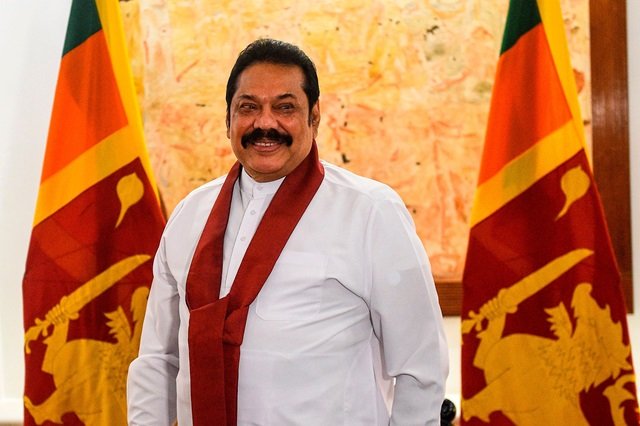
Mahinda Rajapaksa turns a year older as the order he built has been dismantled and his family has lost much of its authority. Yet his birthday raises a question. What made him consequential, and why is he so difficult to replace, even within family?
Rajapaksa was not born into the presidency. He entered Parliament in 1970, aged twenty-four, lost his seat in 1977, and returned in 1989 after practising law. During the late 1980s and early 1990s, he campaigned against disappearances and state violence. In 1990, he took material on missing people to Geneva. He joined the Pada Yathra, a protest march against Ranasinghe Premadasa’s government. These episodes show a politician formed by struggle. They expose the distance between his earlier rights-based language and controversies surrounding his own government.
His rise was neither inevitable nor smooth. He advanced within a party dominated by the Bandaranaike family, built a southern power base, and secured the SLFP presidential nomination in 2005. He understood a country exhausted by war. He joined Sinhala-Buddhist nationalism, a strong state and military victory into an electoral offer. The defeat of the LTTE in 2009 made him more than a successful president. For many citizens, he became the leader who ended a war that had shaped their lives. That achievement cannot be erased. Nor can civilian suffering, disappearances, allegations of serious violations and the failure to secure a political settlement be ignored.
His deeper impact was structural. He did not create the executive presidency, but concentrated power around it. The Eighteenth Amendment removed the presidential two-term limit and weakened restraints on appointments. His brothers and son occupied government positions. Military influence expanded into civilian administration. Infrastructure projects gave form to his development ambitions, while borrowing and poor economic decisions left liabilities. Nationalism became a language of government. Political loyalty converged around the leader and his family. The state resembled an extension of a political household.
This was his political genius and central failure. Rajapaksa understood memory, fear, pride, belonging and the desire for decisive leadership. He spoke to rural constituencies without sounding remote. He built alliances across groups with little shared ideology. He turned defeat into an organising opportunity. After losing the presidency in 2015, he returned to Parliament, rebuilt a movement and restored his family to power. Few politicians have recovered so completely. His return as Prime Minister in 2018, followed by SLPP victories in 2019 and 2020, confirmed his command.
But a system built around one person carries a fatal weakness. It mistakes loyalty for competence and popularity for consent. It suppresses criticism until errors become impossible to correct. The economic collapse of 2022 exposed that weakness. Tax cuts, the fertiliser ban, depleted reserves, external shocks and fiscal vulnerabilities converged. The public that had celebrated Rajapaksa demanded his departure. He resigned as Prime Minister after violence on 9 May. Gotabaya Rajapaksa later left the presidency. The family’s authority fell with startling speed.
His fall does not make him replaceable. It explains why he is not. Namal Rajapaksa may inherit a name, party and network, but not the experiences that formed his father. No family member can inherit instincts shaped by decades of opposition, parliamentary struggle, coalition-making, war and electoral recovery. Charisma cannot be transferred like property. His son may build a career, but cannot reproduce the circumstances that produced Mahinda.
To say no comparable figure will emerge for a hundred years is impossible to prove. History offers no guarantees. Yet Sri Lanka is unlikely to produce another politician with this combination of longevity, mass connection, nationalist authority, resilience and historical consequence. His absence leaves a space, not necessarily a demand for his return. The country may be better served by institutions that do not require a political patriarch.
His legacy is neither redemption nor disgrace. He ended a war, transformed the presidency, personalised the state, inspired devotion, deepened division and presided over an order that collapsed under its failures. He was powerful because he understood the country’s political emotions. He fell because he did not build a system capable of correcting itself. That is the hard measure of the man. His family may carry his name. It cannot inherit his place in history.