November 20, World Children’s Day, serves as a reminder of a global commitment to safeguarding the right to life, security, and dignity of children who, regardless of nationality, race, religion, or geographical location, deserve to live in peace and safety. Children do not start wars, make decisions on the battlefield, or bear responsibility for political and military disputes between states. Yet, they remain among the most defenseless victims of armed conflicts. Article 38(4) of the Convention on the Rights of the Child, adopted in 1989, explicitly emphasizes that States Parties, in accordance with their obligations under international humanitarian law to protect the civilian population in armed conflicts, must take all feasible measures to ensure the protection and care of children affected by such conflicts.
In the teachings of Islam, children also hold a highly respected position, and safeguarding their dignity, security, and rights is regarded not merely as a moral responsibility but also as a religious and humanitarian duty. Islam considers children worthy of respect, protection, and freedom from harm in every sphere of life, from family relationships and social interactions to politics and even armed conflicts. The teachings and traditions of the Holy Prophet Muhammad (PBUH) emphasize kindness toward children, respect for their rights, and the avoidance of all forms of violence against them. Indeed, Islamic teachings explicitly prohibit harming women and children during warfare.
Furthermore, international humanitarian law recognizes the protection of children during armed conflicts as one of the fundamental obligations of parties engaged in warfare. The four Geneva Conventions of 1949 and their Additional Protocols, alongside The Hague Regulations, emphasize the necessity of protecting civilian populations and recognize children as among the most vulnerable groups requiring special care and protection in times of war.
The Fourth Geneva Convention, in particular, contains specific provisions concerning the protection, care, and education of children, underscoring the responsibilities of parties to armed conflicts toward them. Article 77 of Additional Protocol I to the Geneva Conventions further stipulates that children must be accorded special respect and that parties to a conflict are obliged to provide them with the care and assistance they require.
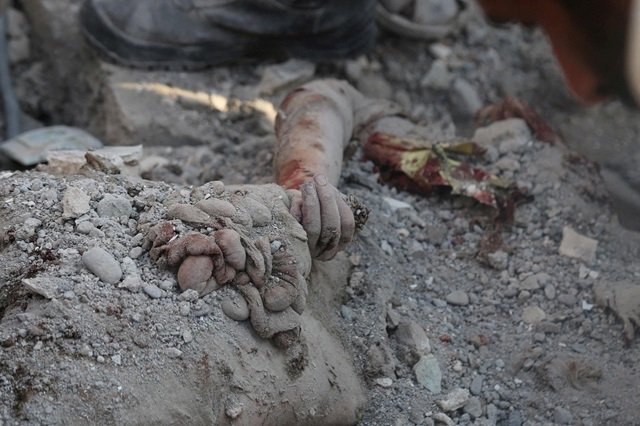
Despite all these legal obligations and humanitarian principles, the tragedy in Gaza, which began in October 2023, has become one of the most painful examples of widespread violations of children’s rights and disregard for the fundamental principles of international humanitarian law in contemporary history. During Israel’s military operations against the defenseless people of Gaza, more than 74,000 Palestinians have lost their lives, including nearly 22,000 children, according to figures released by the United Nations. The scale of this tragedy has been so immense that the United Nations Independent International Commission of Inquiry, in its September 2025 report, concluded that Israel’s actions in Gaza constituted genocide. In another report issued in 2026, the Commission also referred to the deliberate targeting of Palestinian children. The continuation of these tragedies, amid political and military support for Israel from the United States and certain European countries, has raised serious questions about the international community’s responsibility to protect children and prevent the recurrence of such crimes.
The widespread killing of children, the destruction of schools and hospitals, and the deprivation of thousands of children of their most basic human rights have left a deeply disturbing image of this war in the eyes of the international public. This image has contributed to the expression “child-killing regime” becoming a symbol of condemnation of Israel’s treatment of Palestinian children in the protest discourse of its critics.
One of the most recent and heartbreaking scenes of the violation of children’s dignity and fundamental rights was the mass killing of students at the Shajareh Tayyebeh Girls’ School in Minab, Iran, a tragedy that occurred during the US and Israeli military attacks against Iran on February 28, 2026. According to published reports, 168 students and several of their innocent teachers lost their lives while attending classes. Published reports and what has been presented as conclusive evidence indicate that military missiles attributed to the US armed forces struck the school, causing extensive destruction to the building.
The devastation was so severe that the remains of some students were never recovered. The children who had set off for school that morning with their bags, books, and dreams of a brighter future never returned home. Their classrooms were transformed into scenes of death and destruction. This tragedy once again confronted the conscience of humanity with a fundamental question: If children cannot be protected from the horrors of war and violence even in what should be one of the safest places in their lives—their school—what meaning do international commitments to protect their rights truly hold? Indeed, what understanding of international law and international humanitarian law can a defenseless child possibly have in the face of such devastation?
World Children’s Day is far more than a symbolic occasion on the international calendar. It is an opportunity to recall and renew humanity’s moral, legal, and humanitarian commitments to today’s children and future generations—generations that will inherit the world we leave behind and become the architects of tomorrow’s international order.
Children who are deprived of their most fundamental rights today amid war, violence, and injustice will one day stand as judges of history, assessing the present generation’s commitment to human values, human rights principles, and international norms for the protection of children’s rights. Undoubtedly, history will judge governments not by their slogans or declared commitments, but by their actual conduct in upholding human dignity and protecting the most defenseless members of society.
From this perspective, the true commemoration of World Children’s Day lies not in ceremonial events or formal statements, but in the international community’s genuine determination to end violence against children, ensure their safety, and build a world in which no child becomes a victim of war, political interests, or power rivalries. A world where children’s laughter drowns out the roar of weapons, and where the right to live in peace and security is no longer an unattainable dream, but a reality for every child across the globe.