
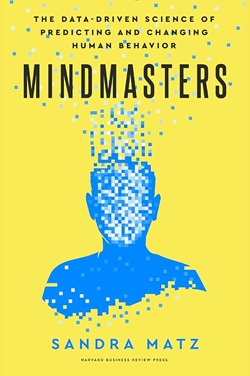
Sandra Matz’s Mindmasters: The Data-Driven Science of Predicting and Changing Human Behavior is a compelling dissection of our data-driven era, delving into the psychology of human behaviour and the technological forces shaping it. Written with the precision of an academic and the accessibility of a skilled storyteller, Matz bridges the realms of cognitive science, technology, and ethics, presenting a narrative that is as informative as it is provocative.
The Village Analogy: A Powerful Metaphor
Matz begins her exploration with a vivid comparison between her childhood in a small German village and the digital villages we inhabit today. In her village, “everyone—and I mean everyone—knew my business,” she recalls. This analogy underscores a central theme of the book: the paradoxical coexistence of community support and invasive scrutiny, both of which have been amplified by the digital age.
Through this personal anecdote, Matz introduces the reader to the concept of “psychological targeting”—the practice of using digital data to predict and influence human behaviour. This theme resonates throughout the book, as she examines how seemingly mundane data points, from social media likes to GPS records, can reveal deeply personal insights.
Part One: The Psychological Lens of Data
In the first part of the book, Matz illustrates how data serves as a “window into our psychology.” One particularly chilling example comes from her discussion of Facebook’s ability to predict users’ personalities better than their spouses. Citing a study conducted by her former colleagues, she writes, “After observing just ten likes from someone’s Facebook profile, their model was able to judge a user’s personality better than their work colleagues… with three hundred likes, it surpassed even their spouse.”
This section also highlights the ubiquity and granularity of our digital footprints. The average person generates about six gigabytes of data per hour, much of which is unintentional. Matz’s ability to translate these statistics into relatable implications is remarkable; she brings abstract concepts to life by weaving them into the fabric of everyday experiences.
Part Two: The Dual Edges of Psychological Targeting
The book’s second part delves into the ethical quagmire surrounding psychological targeting, exploring both its “bright and dark sides.” On the positive end, Matz showcases how data can be harnessed to improve mental health, citing her own research on early depression detection. She writes, “GPS records or tweets could alert you to changes in your behaviour that resemble patterns observed in other people suffering from depression… before they develop into a full, clinical depression.”
However, this optimism is tempered by stark warnings about the dangers of manipulation. The Cambridge Analytica scandal is discussed in detail, serving as a cautionary tale of how data can be weaponised for political purposes. “The same tools that can guide us towards healthier lives,” Matz observes, “can also exploit our vulnerabilities, perpetuate misinformation, and deepen societal divides.”
Part Three: Reimagining the Digital Ecosystem
The final section of Mindmasters is both a call to action and a roadmap for creating a more equitable digital ecosystem. Matz challenges the reader to rethink the “data game,” advocating for systems that prioritise collective benefit over corporate profit. She draws inspiration from co-operative models, such as data trusts, which align individual and communal interests.
Her argument is not merely theoretical; it is grounded in practicality. She envisions a future where data is managed by “digital allies,” small, village-like communities that foster trust and transparency. “We need to understand the players that control the current data ecosystem,” she writes, “figure out how they use our personal data for and against us, and identify the leverage we have to come out on top.”
A Balanced Tone: Neither Dystopian Nor Utopian
What sets Mindmasters apart is its balanced tone. Unlike many commentators who veer towards either techno-utopianism or dystopian alarmism, Matz occupies a nuanced middle ground. She acknowledges the transformative potential of psychological targeting while remaining acutely aware of its perils. Her stance is encapsulated in the quote, “Technology is neither good nor bad, nor is it neutral.”
This balanced perspective makes the book a valuable resource for anyone seeking to navigate the complexities of the digital age. It is neither a manifesto against technology nor an uncritical celebration of its marvels; rather, it is a thoughtful exploration of how we might harness its power responsibly.
Language and Style
Matz’s prose is engaging yet sophisticated, blending academic rigour with narrative flair. Her use of metaphors and anecdotes brings the subject matter to life, making complex ideas accessible to a broad audience. For example, her description of machine learning as akin to “chick sexing”—a trial-and-error process used to identify the gender of baby chicks—is both illuminating and memorable.
The book is also rich with thought-provoking questions, which challenge the reader to reflect on their own relationship with technology. For instance: “How much of our private lives are we willing to disclose to those around us? How much of our privacy and autonomy are we willing to give up for the security and strength provided by the collective?”
A Few Shortcomings
While Mindmasters is a tour de force, it is not without its limitations. The book occasionally leans heavily on anecdotal evidence, which, while compelling, may leave some readers craving more empirical depth. Additionally, the solutions proposed in Part Three, though visionary, can sometimes feel idealistic in the face of entrenched corporate interests.
Final Thoughts
MINDMASTERS is a timely and essential book that offers both a diagnosis of our data-driven world and a prescription for its reform. Sandra Matz’s insights are deeply informed and meticulously researched, yet she presents them with a human touch that resonates beyond academia.
For anyone interested in the intersection of psychology, technology, and ethics, Mindmasters is an indispensable read. It will leave you questioning not only how data shapes your life but also how you might take control of the narrative. As Matz poignantly concludes, “We might not be able to escape the digital village, but we can—and must—redesign it.”