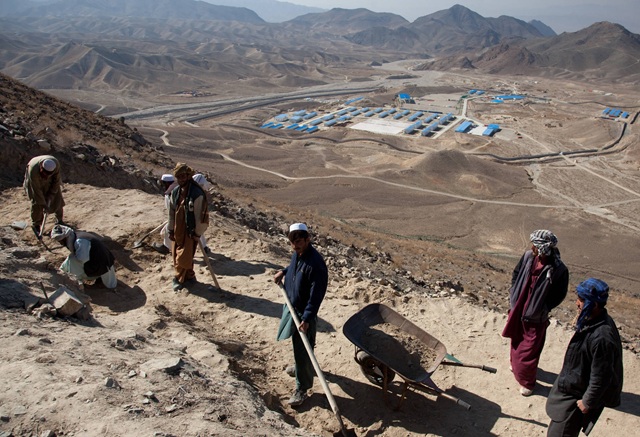
Afghanistan’s mining sector has become a vital component of the country’s economy, generating nearly $100 million in revenue over the past year, as reported by the Ministry of Mines and Petroleum under the current administration. The majority of this revenue, over $80 million, came from crude oil sales primarily sourced from the Amu Darya oil field. Zinc mining in Bamyan Province contributed $17.8 million, and salt extraction added $1 million. While these figures underscore the economic significance of the sector, concerns about how the revenue is managed and utilized remain a topic of discussion among Afghans.
Afghanistan is endowed with substantial mineral wealth, estimated to be worth over $1 trillion. The country’s reserves include copper, lithium, rare earth elements, iron ore, and gold. The Mes Aynak deposit in Logar Province is one of the world’s largest undeveloped copper reserves, holding approximately 450 million metric tons of ore. Additionally, Afghanistan is regarded as a potential leader in lithium production, a crucial material for electric vehicle batteries and renewable energy technologies. Rare earth elements, indispensable for high-tech industries, further highlight the strategic importance of Afghanistan’s mineral resources. Despite this potential, the full development of these resources faces challenges, including infrastructure limitations and a lack of clarity in governance.
Recent data from the Ministry of Mines and Petroleum indicates that the reporting of mining revenue has significantly decreased over the past five months compared to the earlier part of the year. While revenue transparency is a key concern, many Afghans are also calling for greater investment in local communities where mining activities occur. Residents in resource-rich regions often express frustration over the perceived lack of tangible benefits, such as infrastructure development or improved services, despite the wealth extracted from their areas.
Private companies, including some from neighboring countries, have been involved in developing Afghanistan’s mining projects. These partnerships are seen as an opportunity to tap into the country’s vast natural resources. However, there is growing consensus that ensuring the benefits of these projects reach local communities and contribute to national development is critical for sustainable growth.