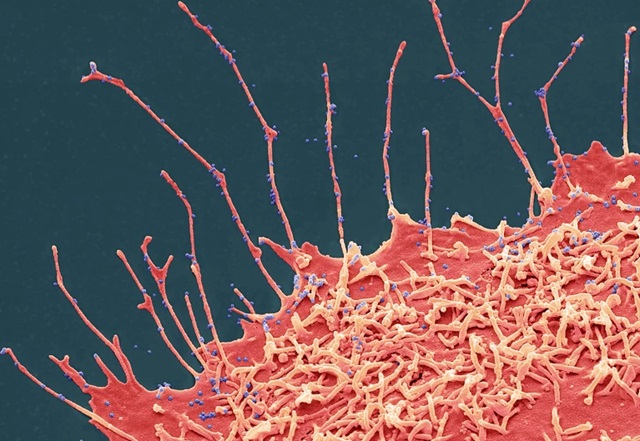
The capacity to predict a virus’s evolution by analyzing its genetic sequence has long been considered the ultimate objective in pandemic preparedness. While such capabilities remain out of reach, advancements in artificial intelligence (AI) are bringing researchers closer to achieving this goal. A growing number of studies are employing AI to forecast the evolution of viruses such as SARS-CoV-2 and influenza, marking significant progress in the field. This report is based on an article published in Nature.
RNA viruses like SARS-CoV-2 are known for their constant evolution through mutations, some of which confer advantages that enable rapid spread or immune system evasion. Predicting these evolutionary changes could revolutionize the development of vaccines and antiviral therapies, allowing for proactive measures against emerging variants. Currently, AI models can predict the success of individual viral mutations and short-term variant trends. However, forecasting combinations of mutations or long-term variant trajectories remains a significant challenge.
Brian Hie, a computational biologist at Stanford University and an early adopter of large language models to study viral mutations, highlighted the complexity of predicting viral evolution despite the exciting potential of AI in this area. Traditional laboratory experiments have been instrumental in understanding viral evolution, but they are often labor-intensive and time-consuming. Researchers like Yunlong Cao from Peking University have conducted detailed experiments to investigate how specific mutations affect a virus’s ability to evade antibodies. While such studies provide valuable insights, they cannot fully capture the complex landscape of viral evolution.
The integration of AI-based tools such as AlphaFold by DeepMind and ESM-2 by Meta has reinvigorated the field. David Robertson, a virologist at the University of Glasgow, noted that these tools have facilitated significant advances. AI models require extensive data to predict viral evolution effectively, and the mass sequencing of SARS-CoV-2—now numbering nearly 17 million sequences—has provided an invaluable resource for training these models.
One such AI-driven tool, EVEscape, developed by Debora Marks and her team at Harvard Medical School, has demonstrated the potential to simulate 83 variations of the SARS-CoV-2 spike protein. These simulations enable the testing of vaccine efficacy against hypothetical future mutations. Meanwhile, Jumpei Ito and his colleagues at the University of Tokyo have created CoVFit, a model that predicts the relative fitness of SARS-CoV-2 variants. CoVFit, trained on over 13,000 spike-protein variants, successfully identified key mutations that have since appeared in globally dominant variants.
For instance, CoVFit’s analysis of the JN.1 variant by March 2024 identified three single-amino-acid changes that would enhance its fitness. Remarkably, these mutations were subsequently observed in rapidly expanding variants, validating the model’s predictive capabilities.
Improving the accuracy of AI models will require more extensive longitudinal data on viral evolution, a process that could take over five years. Combining sequencing data with experimental results is proving to be a promising approach, as demonstrated by ongoing efforts at the University of Tokyo. For example, Shusuke Kawakubo is studying the evolution of the influenza virus to inform vaccine design.
Despite these advances, predicting sudden evolutionary leaps—such as the emergence of the Omicron variant with over 50 mutations—remains elusive. These unpredictable trajectories challenge researchers to develop more sophisticated models. Robertson and his team are exploring how AI tools can map evolutionary possibilities and identify constraints within a virus’s potential mutations.
As AI models like ESM-2 analyze viral sequences, they offer insights into regions of viral proteins susceptible to changes and their broader impacts. While these tools often seem enigmatic in their predictions, they provide a glimpse into the vast evolutionary potential of viruses. Researchers aim to leverage such capabilities to anticipate viral evolution shortly after detection in human populations.