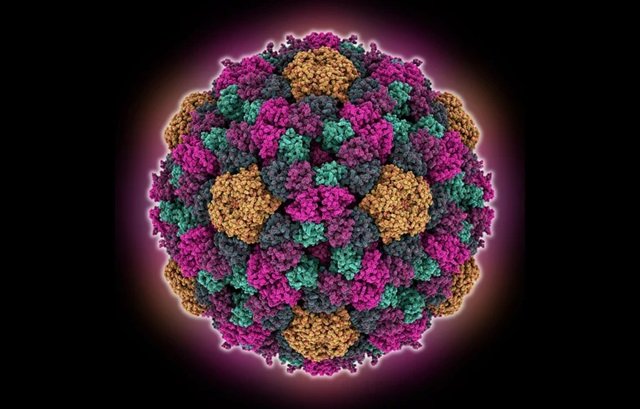
Scientists have systematically mutated nearly every nucleotide in the genome of the bacteriophage ΦX174, or phi X, revealing both unexpected effects on the virus and significant limitations in the ability of leading artificial-intelligence models to predict biological consequences.
The study examined one of biology’s most extensively investigated systems. Phi X has a circular single-stranded DNA genome containing 5,386 nucleotides and encoding 11 proteins. It became the first whole genome to be sequenced in the 1970s and the first to be chemically synthesised in the 2000s. It was also the subject of the first viral genomes designed by artificial intelligence.
The new research represents another milestone: scientists systematically changed nearly every individual nucleotide in the complete genome and measured the consequences. Most of the mutations harmed the virus’s ability to survive and reproduce, but the researchers found that many of these effects could not be explained.
“Even in this super well-studied system, we can’t explain why one-quarter of the mutations kill the virus,” said Ben Lehner, a molecular biologist at the Wellcome Sanger Institute in Hinxton, UK, who co-led the study, posted on the bioRxiv preprint server in July.
Lehner and his colleagues created more than 44,000 viral variants by making every possible change to individual nucleotides, as well as every individual amino acid in the virus’s proteins. They then tested the variants by culturing thousands of them with Escherichia coli, which is susceptible to phi X infection.
The experiment lasted 80 minutes, allowing two or three infection cycles. Variants that multiplied were considered successful, while those carrying harmful mutations failed to survive the competition. The results were more damaging to the virus than Lehner had expected.
Half of the single-nucleotide mutations were harmful, as were 60% of mutations that altered amino acids. Yet the experiment also produced an unexpected finding: despite phi X being generally considered highly optimised for laboratory conditions, a small number of mutations actually improved its fitness.
Among the harmful amino-acid mutations, researchers suspected that about half disrupted interactions with other proteins, either within phi X or with proteins belonging to its E. coli host. Around one-quarter occurred in amino acids buried inside proteins and may have compromised their structural integrity. The effects of the remaining mutations remain unexplained.
The researchers then turned to artificial intelligence. Where experimentally determined structures of phi X proteins were unavailable, they used structures predicted by AlphaFold 3. These predictions indicated that several harmful mutations clustered in a region of a protein involved in viral DNA replication.
Paul Jaschke, a synthetic biologist at Macquarie University in Sydney, said using AI-predicted structures to interpret mutation data could greatly accelerate research if the predictions prove reliable. However, he said further evidence was needed to establish the accuracy of the predicted protein structures.
Edward Marcotte, an evolutionary biochemist at the University of Texas, Austin, described the work as an important milestone in understanding how mutations affect an organism’s fitness and said the approach could eventually be applied to more complex organisms, although scaling it up would be difficult.
The researchers also tested 20 AI models designed to predict the effects of mutations. The results were sobering. A range of systems, including protein language models trained on vast quantities of sequence data, were outperformed by a much simpler model that considered only the location of a mutation within a protein.
AI models “don’t do badly, but they’re not brilliant”, Lehner said. “The striking thing is that nearly all of them don’t do better than a very, very simple model.”
The reasons remain unclear, although a lack of training data on viruses, particularly phages such as phi X, could be a factor. For Lehner’s team, the findings point to a fundamental requirement for biological AI: better experimental data and more rigorous benchmarks.
The researchers next hope to examine the combined effects of multiple mutations in phi X. Without generating the necessary experimental data, Lehner said, “these models are never going to work”.