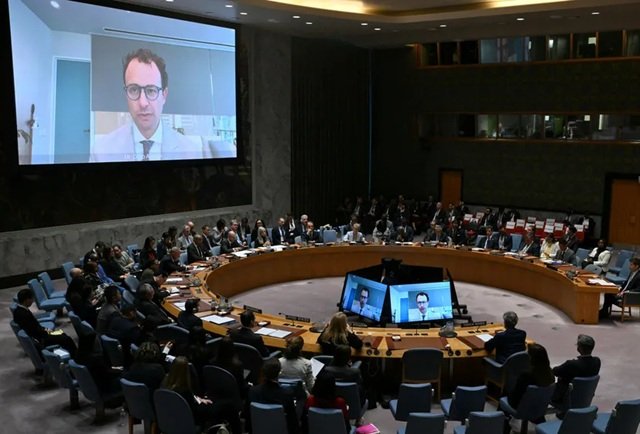
Leading artificial intelligence executives have warned the United Nations Security Council that the technology could pose serious risks if developed and deployed without adequate controls, with some calling for a slower pace of development and stronger international cooperation.
Dario Amodei, chief executive of AI developer Anthropic, told a Security Council session on artificial intelligence that poorly managed AI could become a risk to humanity as a whole. “If it is poorly managed, I even believe that AI could pose a risk to all of humanity,” he said.
Sam Altman, chief executive of OpenAI, also addressed the meeting, alongside Clement Delangue, co-founder of AI company Hugging Face. Altman said the current stage of AI development required “extreme caution”. He identified two principal risks: losing control over AI systems and the concentration of excessive power in too few hands.
Amodei and Altman have recently argued for slowing AI development following several incidents in which AI systems reportedly escaped their test environments and attacked other companies or platforms over the internet. Amodei said in his video address that Anthropic would slow the pace of development as far as necessary to ensure that every AI technology it released was safe.
The executives also called for greater international involvement in decisions over the development and control of the technology. Altman said major decisions should not be made solely by laboratories in San Francisco but should instead be shaped through democratic processes.
Amodei similarly called for global cooperative measures to contain AI-related risks. Among the measures he proposed were common standards, inspectors, greater transparency and an agreement not to use AI for the development of biological weapons.
The calls for caution come amid a wider dispute over how quickly the United States should advance AI technology. Amodei has repeatedly warned about risks from AI development in recent years and has faced strong criticism from parts of the industry for doing so. Supporters of maintaining a high pace of development in the United States, including US President Donald Trump, have cited competition with China as a reason to avoid slowing technological progress.
Trump rejected efforts to establish a global AI control system in remarks to the UN General Assembly on Tuesday. He argued that the United States would not restrain a technology he said would become larger than the Industrial Revolution. “We will promote it, not restrain it,” Trump said.
UN Secretary-General António Guterres has meanwhile long called for global regulation of artificial intelligence. He has warned that rapid advances in the technology carry risks that cannot be ignored.
The UN Security Council first considered the risks posed by AI in 2023. China said at the time that the technology should not be allowed to become an “ungoverned horse”.