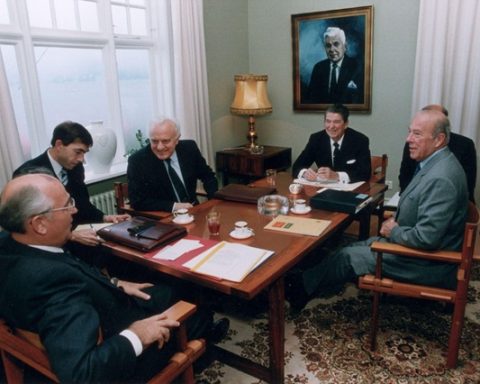
When people hear the word “diplomacy,” they usually picture men in dark suits walking into marble buildings, flags behind them, cameras flashing. That picture is not wrong. It is just incomplete.
There has always been another kind of conversation that happens away from the official table. Scholars, retired officials, journalists, religious leaders, and ordinary citizens sit in hotel conference rooms, university halls, and, now, Zoom calls, and try to say the things governments cannot say out loud. That unofficial space is what people call Track II diplomacy. Official talks are Track I. Track II is the quieter corridor next to it.
What has changed in the last few years is who is walking that corridor. More and more of them are young.
I am not a diplomat. I am a student who spends too much time reading about wars I did not start and peace processes I was never invited to. That is probably why this shift feels personal. My generation grew up with conflict on our phones. We saw Gaza, Ukraine, Iran and Israel, Afghanistan and the border, climate floods, and viral hate all in the same feed. Waiting for the next official statement started to feel like waiting for a bus that never comes. So some of us stopped waiting.
Track II is not new. The phrase itself comes from the early 1980s, when a former American diplomat, Joseph Montville, noticed that private citizens could sometimes lower the temperature when governments could not. The Oslo talks began in that unofficial space. So did many quieter conversations in Cyprus, Northern Ireland, and South Asia. For a long time, though, those rooms were still mostly filled with the same kind of people: older, well-connected, and often from the same elite circles that already had access to power.
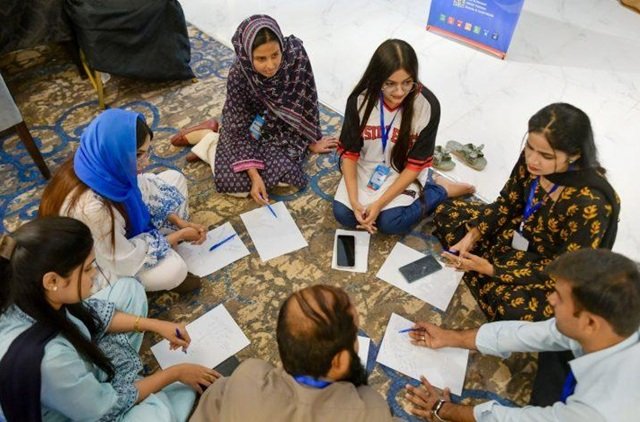
Youth diplomacy is the attempt to open that door wider. It is Model UN that stops being a simulation and starts drafting statements that actually get sent somewhere. It is university peace clubs, digital dialogues across closed borders, and youth summits that produce communiqués instead of only group photos. It is young people from Pakistan, India, Morocco, South Africa, and dozens of other countries sitting in the same room in Paris, New York, or Islamabad and arguing about water, AI, refugees, and war without a ministry script in front of them.
This week alone shows how crowded that space has become. The International Youth Conference is meeting in New York during UN General Assembly week. A Global Youth Diplomacy Forum is taking place in Paris. Pakistan has its own International Youth Summit later this year. The European Union held a Youth, Peace and Security conference last winter that produced a long joint declaration written with young peacebuilders, not only for them. UNESCO is training intercultural youth leaders. In South Asia, young people who cannot easily get visas still find each other on WhatsApp, Instagram, and student networks and talk about a shared future their governments keep postponing.
Why now? Part of it is numbers. The world is young, especially in places like Pakistan. Part of it is technology. A student in Islamabad can join a dialogue with someone in Delhi or Kabul without anyone stamping a passport. Part of it is disappointment. Official diplomacy often looks slow, closed, and allergic to new voices. When Track I freezes, Track II and youth networks become the only moving parts.
That does not mean they replace governments. They cannot. A youth declaration is not a treaty. A student workshop will not demobilise an army. Track II only works when it feeds ideas, language, and relationships back into the official track — or at least keeps a thin line of human contact alive when the official line is cut. In South Asia, that line is thin. India still says there are no official Track II talks with Pakistan; meetings happen in a private capacity, often in third countries. Visas get cancelled. Dialogues get called off at the last minute. Older Track II networks that once linked journalists and former officials have weakened. Young people are trying to fill a gap that politics keeps widening.
There is also a risk we should be honest about. Youth diplomacy can become another elite hobby: the same well-spoken students from the same universities flying to the same hotels, producing statements that sound beautiful and change very little at home. Funding comes and goes with donor fashion. Governments like youth forums when they look good in photographs and ignore them when the recommendations become inconvenient. Digital “dialogue” can just as easily become digital shouting.
Still, something real is happening. Research on Pakistani and Indian youth keeps finding the same quiet fact: many young people are more willing to imagine cultural exchange and conversation than the official story allows. They are not naïve. They know history. They just refuse to treat history as a life sentence. Peace education, campus debating, non-violent communication training, and small local projects — libraries, sports, storytelling, interfaith circles — look small next to a Security Council resolution. They are how a generation practises the habit of talking before it is asked to negotiate.
Track II was invented because official rooms were too stiff. Youth diplomacy is rising because those unofficial rooms were still too old. Neither is a miracle. Both are a reminder that diplomacy is not only what states do to each other. It is also what people do when they decide the official silence is not good enough.
The suits will keep walking into the marble buildings. That is their job. The question for my generation is whether we treat the side corridor as a waiting room or as a workshop where we actually learn how to speak across a line someone else drew.