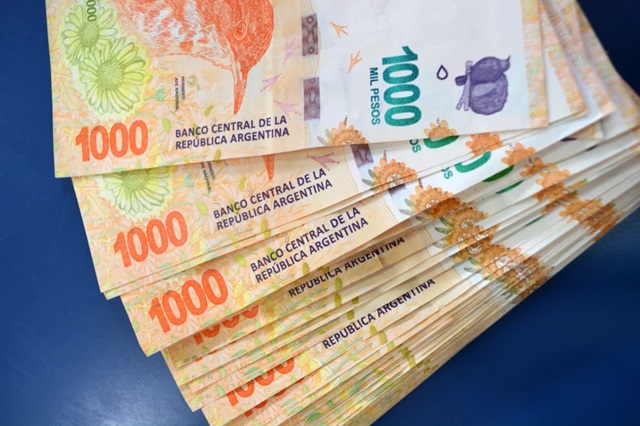
Argentina announced on Thursday that it has reached an agreement with the International Monetary Fund (IMF) for a $20 billion loan aimed at replenishing the country’s central bank reserves, marking a key milestone in President Javier Milei’s economic recovery strategy.
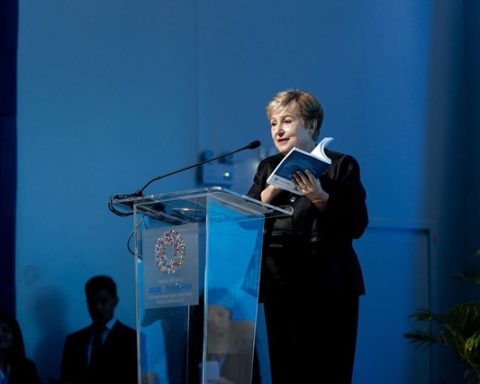
Economy Minister Luis Caputo confirmed that the deal is still pending approval from the IMF’s board, a process that could take several weeks. However, he stated that he had received permission from IMF Managing Director Kristalina Georgieva to disclose the figure in an effort to calm financial markets, which have been unsettled by uncertainty surrounding the agreement.
“What we are aiming for with this agreement is that people can rest assured that pesos are backed by the central bank. That will give us a healthier currency,” Caputo said.
The news, first reported by the Financial Times, comes as Milei attempts to stabilize Argentina’s fragile economy. Despite his success in curbing inflation and implementing fiscal austerity measures, the libertarian leader has struggled to rebuild the country’s depleted foreign exchange reserves. The IMF loan is expected to provide much-needed liquidity to support the peso, repay debts, and mitigate economic shocks.
Argentina remains the IMF’s largest debtor, currently owing more than $40 billion from a previous bailout program. The new loan would offer additional financial stability, giving the Milei administration greater flexibility to manage economic policy and maintain investor confidence.
Caputo also revealed that negotiations are underway for an “additional package of freely available” funds from the World Bank, the Inter-American Development Bank, and the Latin American development bank (CAF). He estimated that the central bank’s gross reserves, currently at $26 billion, could increase to $50 billion following these agreements. However, after accounting for liabilities, net reserves remain in the red by approximately $6 billion.
Recent market turbulence prompted the central bank to sell over $1 billion in reserves over six days to stabilize the peso, as traders reacted to speculation that the IMF might require a currency devaluation as part of the deal. Caputo initially fueled uncertainty by stating that the exact loan amount was “not yet defined,” exacerbating concerns about potential devaluation.
The unofficial exchange rate, widely used by individuals and businesses unable to access the official rate, has depreciated sharply since mid-March, with the gap between official and parallel exchange rates widening to 18 percent from 13 percent earlier in the month. A growing disparity raises pressure on the government for an official devaluation, a move that could reverse Milei’s progress on inflation and pose risks ahead of crucial midterm elections in October.
Financial analysts view Caputo’s announcement as a temporary stabilizing factor for the peso. “This will help to calm pressures on the peso for now,” said Salvador Vitelli, head of research at Buenos Aires-based financial consultancy Romano Group. However, he emphasized that the real impact would come when the IMF disburses the funds.
Following the news, Argentina’s U.S. dollar bonds due in 2030 saw an uptick, rising by approximately half a cent to just under 75 cents on the dollar, with yields dropping to just over 7 percent, a notable improvement from 12 percent a year ago.
Analysts speculate that a portion of the IMF funds will be allocated toward rolling over Argentina’s outstanding debt payments. The specific conditions attached to the loan, including how much will be disbursed upfront, remain unclear. Nonetheless, the $20 billion figure is widely seen as a substantial boost to Argentina’s financial stability and a step toward restoring confidence in the country’s economy.