


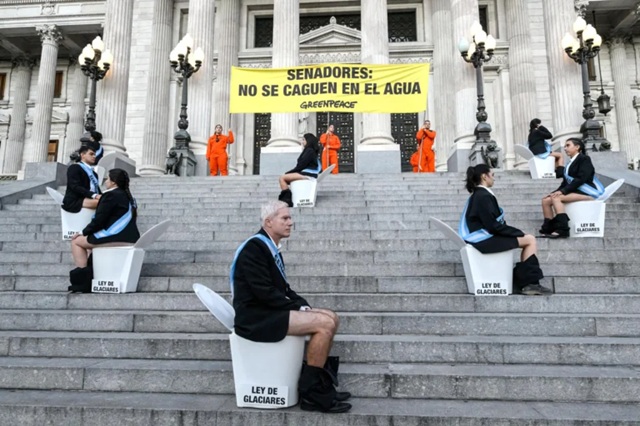
Argentina’s Senate approved a contentious bill on Thursday, February 26, that significantly loosens legal protections for glaciers, advancing the measure to the lower chamber for debate. The legislation, backed by the far-right administration of President Javier Milei, passed with a vote of 40 to 31, with one senator abstaining, igniting sharp criticism from environmentalists, opposition lawmakers, and international observers.
First introduced in 2025, the bill seeks to modify the 2010 Glacier Law, Latin America’s first statute to designate glaciers and their surrounding areas as strategic water reserves. Under the new proposal, provincial authorities would gain the power to permit mining activities in zones adjacent to glaciers, undermining the longstanding national framework aimed at safeguarding freshwater sources. The government argues that the reform is crucial to stimulate economic growth, particularly in lithium, copper, and gold mining, and claims that not all periglacial areas are essential for water storage, advocating for selective provincial assessments.
Opposition senators have condemned the measure as unconstitutional and environmentally reckless. Environmental organizations warn that the bill threatens Argentina’s freshwater reserves and accuse the government of prioritizing corporate interests over the constitutional right to a healthy environment. In response, Greenpeace staged a dawn protest outside the National Congress, resulting in a dozen arrests and injuries to journalists covering the demonstration.
Argentina lacks a comprehensive database of mining operations in glacial zones, but a 2016 government audit revealed that 44 of 77 mining projects were already operating in periglacial areas. Experts believe the number of projects has surged alongside Argentina’s mining boom, which has seen total operations nationwide more than double from 160 to 325 in just three years. Critics argue that the legislation risks exacerbating these encroachments, raising concerns about long-term impacts on water security and environmental sustainability.
The bill now moves to the lower chamber, where it faces intense debate over the balance between economic development and environmental preservation, with global attention focused on Argentina’s next legislative steps.









