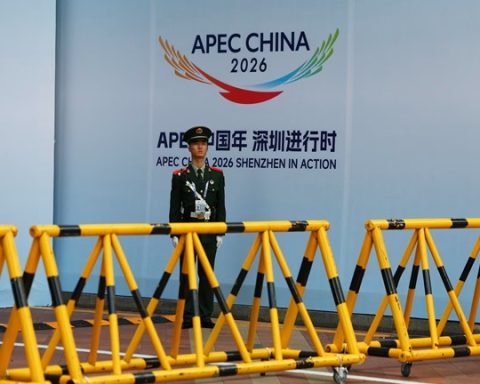
The Asia-Pacific’s economic future will increasingly depend on its ability to manage technological transformation, protect critical supply chains and maintain regional economic integration in an increasingly uncertain global environment. That is the central message emerging from the 2026 gathering of Asia-Pacific Economic Cooperation (APEC) leaders in Shenzhen, where 21 economies endorsed a broad agenda linking digital innovation, trade facilitation, energy security and inclusive economic growth.
The declaration, adopted following the leaders’ meeting on 18 and 19 November, sets out a vision of an Asia-Pacific community built around openness, innovation and cooperation. It reaffirms the region’s commitment to the Putrajaya Vision 2040, which envisages an open, dynamic, resilient and peaceful regional economic community. More significantly, it reflects an effort to position APEC as a platform for addressing the structural changes reshaping regional and global commerce, particularly the growing importance of digital technologies, the vulnerability of supply chains and the need for more secure energy systems.
Trade and investment remain central to this agenda, but the emphasis is increasingly on the infrastructure, institutional arrangements and technological capabilities required to sustain economic integration. Leaders reaffirmed their support for the Free Trade Area of the Asia-Pacific (FTAAP) agenda, which seeks to advance market-driven economic integration and prepare economies to participate in comprehensive, high-standard regional trade arrangements.
The declaration also identifies digitalisation as a major instrument for reducing trade barriers and improving productivity. Leaders welcomed the APEC Trade Digitalization Cooperation Framework for 2027–2030, intended to encourage supportive policy environments, strengthen exchanges between economies and expand the use of digital technologies in international trade. Paperless trade, cross-border e-commerce and the adoption of emerging technologies are among the areas identified for further cooperation.
The emphasis reflects a broader recognition that economic competitiveness will increasingly depend on the ability of businesses and governments to operate across interconnected digital systems. The declaration also highlights the expanding importance of digitally delivered services, recognising their contribution to economic growth and employment. At the same time, it calls for stronger intellectual property protections, particularly for cultural and creative industries, innovators and other rights holders whose work is increasingly exposed to the challenges of digital distribution and technological reproduction.
Connectivity represents another major component of the regional strategy. Leaders endorsed the APEC Connectivity Blueprint, which seeks to strengthen physical infrastructure, institutional arrangements and people-to-people links. The objective is to create a more comprehensively connected Asia-Pacific through improved transport networks, investment and regulatory cooperation.
However, the declaration places particular emphasis on the vulnerability of supply chains, especially those supporting essential goods. Recent disruptions have reinforced the importance of keeping regional trade corridors open and ensuring the continued movement of energy supplies and other critical commodities. Leaders committed to working with one another and external trade partners to maintain trade flows and protect the infrastructure underpinning global supply networks.
The declaration also calls for greater attention to supply chain chokepoints, transparency in measures affecting trade and the resilience of critical infrastructure. Investment in disaster risk reduction is identified as an important component of infrastructure planning, reflecting an understanding that connectivity cannot be measured solely by the volume of goods moving between economies. The ability of transport and logistics systems to withstand disruptions is equally important.
Technology and artificial intelligence occupy an increasingly prominent position in the region’s economic priorities. Leaders endorsed the APEC Statement on Harnessing Digital and Emerging Technologies for Employment and Prosperity in the Asia-Pacific Region and welcomed continued work under the APEC AI Initiative for 2026–2030. The declaration advocates the adoption of emerging technologies across economic sectors, including healthcare, public administration, manufacturing and business services.
It also places emphasis on ensuring that technological transformation benefits wider sections of society rather than remaining concentrated among technologically advanced economies and businesses. Bridging digital divides between urban and rural communities, expanding digital literacy, strengthening infrastructure and improving access to digital platforms are identified as important priorities. Particular attention is given to micro, small and medium-sized enterprises, which are expected to benefit from more accessible digital tools and opportunities to participate in regional and global value chains.
Yet the declaration acknowledges that digital transformation also creates risks. Data breaches, online scams and the deliberate misuse of emerging technologies are identified as threats requiring stronger cooperation. Leaders also stress the importance of data protection, privacy and consumer confidence in digital transactions, while supporting cooperation to facilitate cross-border data flows. The challenge is therefore to encourage the movement of information and digital commerce without undermining the safeguards necessary to maintain public and business trust.
Economic resilience is also linked to employment, financial stability and demographic change. Leaders called for modernising human resource development through vocational training, lifelong learning, reskilling and upskilling, recognising that technological advancement will alter the demands placed on the regional workforce. The declaration also emphasises decent employment, workers’ rights and the continued relevance of international labour standards.
On macroeconomic policy, the leaders highlighted the importance of credible and flexible fiscal, monetary and financial frameworks capable of managing economic shocks. They acknowledged that persistent global imbalances pose risks to growth and stability, calling for stronger communication and cooperation to support global rebalancing. Financial access and literacy were also identified as important elements of economic participation, particularly in strengthening household financial security.
Energy security received similarly extensive attention. Leaders stressed the need for uninterrupted, reliable and affordable energy supplies, alongside stronger regional cooperation on supply chain resilience, cross-border infrastructure and risk assessment. Power plants, electricity grids, submarine power cables and pipelines were identified as critical infrastructure requiring effective emergency preparedness and restoration arrangements.
The declaration recognises the contribution of both conventional and zero- and low-emission energy sources to economic security and growth, while affirming that individual economies will determine their own energy mixes according to domestic priorities. It also identifies an increasingly important relationship between energy systems and digital technologies, calling for cooperation to ensure that technological development is supported by reliable and affordable energy while digital innovation is used to improve energy infrastructure.
Food security, agriculture and environmental sustainability form another part of the economic agenda. Leaders committed to strengthening regional food systems through agricultural productivity, digitalisation, biotechnology and science-based approaches. They also highlighted the need to reduce food loss and waste, improve nutrition and expand economic opportunities in rural communities. Cooperation on sustainable forestry, illegal logging, marine conservation and illegal fishing was also reaffirmed, alongside efforts to address marine debris and strengthen coastal communities.
The declaration further places emphasis on small businesses and startups, calling for improved access to finance, training, digital tools and regional markets. Leaders also identified corruption as a direct threat to economic development, fair competition and public trust, committing to strengthen anti-corruption measures, cross-border cooperation and the recovery and return of illicit assets.
Taken together, the Shenzhen declaration presents an expansive vision of regional economic cooperation in which trade, technology, infrastructure, energy and human development are increasingly interconnected. Its significance lies not simply in reaffirming established commitments to economic integration, but in recognising that the future competitiveness of the Asia-Pacific will depend on how effectively its economies manage technological change, economic vulnerabilities and unequal access to new opportunities. The challenge will be translating these broad commitments into practical cooperation across economies with different levels of development, institutional capacities and domestic priorities.