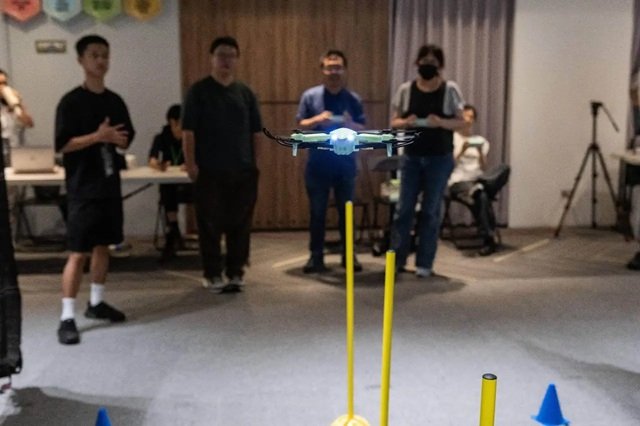
Inside an ordinary office building in Taipei, Taiwanese civilians are learning to fly drones that could one day become essential to defending their island against a Chinese invasion. Small, locally manufactured quadcopters move through classroom obstacle courses as instructors issue commands over microphones. The exercises resemble a simplified version of the drone warfare that has transformed the battlefields of Ukraine. But their purpose extends well beyond technical training: they are part of an attempt to prepare an entire society for the possibility of war.
“Deterrence comes not only from military strength but also from the preparedness and will of civil society as a whole,” says Tang Tsung-yi, an instructor at Kuma Academy, also known as Black Bear Academy. Established in 2021, the non-profit has become one of Taiwan’s best-known civilian preparedness organisations, offering courses in drone operation, first aid, self-defence and media literacy. Its 20,000 members are spread across the island, with women making up the majority of participants.
The academy’s philosophy is captured in its motto, borrowed from the Roman writer Vegetius: “If you desire peace, you must first prepare for war.” For Tang, this does not mean turning ordinary citizens into soldiers. It means teaching people how to respond if conflict arrives: how to protect themselves, where to seek shelter and how to safeguard their families.
Such preparations are taking place against a deteriorating regional security environment. China has expanded its military capabilities under President Xi Jinping and increased pressure on Taiwan, the self-governing island that Beijing regards as part of its territory. Military analysts have frequently identified 2027 as a possible benchmark for China’s ability to mount an invasion, although most observers do not believe Beijing has established a fixed timetable for an attack.
Recent Chinese military exercises have intensified concern in Taipei. Following the US midterm elections, Beijing conducted large-scale manoeuvres around Taiwan, including simulations of a blockade. Earlier this month, around 100 Chinese vessels encircled the island in one of China’s largest naval deployments to date.
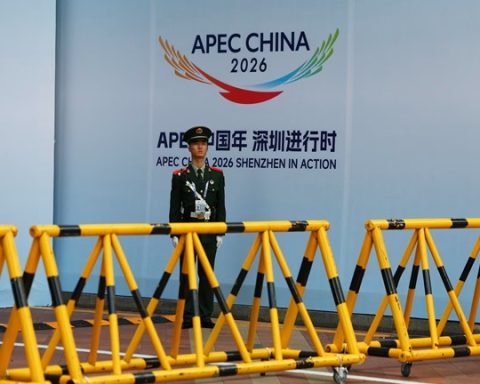
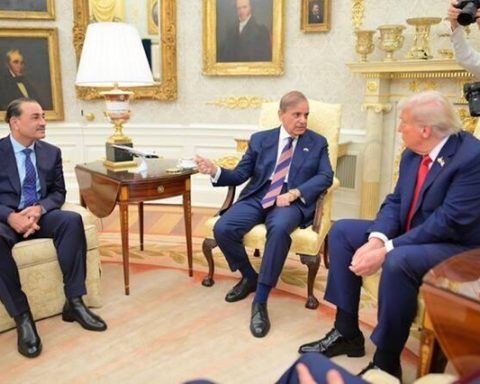
The exercises coincided with an unprecedented summit in Shenzhen involving Xi, US President Donald Trump and Russian President Vladimir Putin. The symbolism of Trump and Putin appearing alongside Xi, together with the American president’s publicly expressed uncertainty over Taiwan, has fuelled questions about whether Washington would intervene if China attempted to seize the island.
The United States is legally obliged to help Taiwan maintain its capacity for self-defence and has supplied it with weapons for decades. However, Washington has deliberately maintained strategic ambiguity over whether American forces would directly intervene in a conflict. That uncertainty has become more consequential as Trump’s approach to foreign policy raises concerns among US partners and allies.
Tang believes Washington is unlikely to abandon Taiwan, given its strategic importance, but questions whether American assistance would necessarily involve troops landing on the island. Arms supplies remain central to the relationship, although deliveries have been slow. Trump approved an $11 billion arms package in December, while a further $14 billion package remains awaiting presidential approval. His description of arms sales as a “very good negotiating chip” with China has added to anxieties in Taipei.
There are also concerns that the US war with Iran has depleted American missile stocks, potentially limiting the resources available for other military contingencies. A 2026 Brookings Institution survey found that only 24 per cent of Taiwanese respondents considered the United States trustworthy.
Yet not all assessments of the relationship are pessimistic. Professor William Chung, an assistant research fellow at Taiwan’s Institute for National Defense and Security Research, argues that American policy should be judged by its actions rather than presidential rhetoric. Despite delays in arms deliveries, he notes, Trump has approved more weapons sales to Taiwan than any US president since 1979. Chung also points to the continuing strength of underlying US-Taiwan cooperation.
The island’s strategy, however, increasingly depends on reducing its vulnerability rather than relying exclusively on American protection. One priority is the development of a domestic drone industry capable of supplying Taiwan’s own military while creating a wider international market among democratic countries.
President Lai Ching-te announced plans last year to establish a “non-red supply chain”, aimed at producing military drones without Chinese components. The initiative has already produced significant export growth. Taiwanese drone exports increased by more than 700 per cent in the first half of 2025, driven largely by European demand. Poland and Czechia account for the majority of exports, while Saudi Arabia purchased approximately £36 million worth of drones in June.
In August, Taiwan approved a six-year programme worth £5.7 billion, with the ambition of producing more than 100,000 drones each month by 2030. The objective is not merely to strengthen domestic defence but to establish the island as an international manufacturing centre for unmanned military systems.
For Chung, this could provide Taiwan with a new form of strategic relevance. Semiconductors have connected the island to the global economy and made its industrial capabilities important to countries around the world. A competitive unmanned-vehicle supply chain could extend that interdependence into defence technology. Jonathon Marek, assistant director for technology and geoeconomic affairs at the National Bureau of Asian Research, describes drones as being close to a military game-changer.
The inspiration for this transformation comes overwhelmingly from Ukraine. Since Russia’s full-scale invasion in 2022, Ukrainian forces have demonstrated how relatively inexpensive drones, rapidly adapted and deployed, can alter battlefield tactics. Taiwan’s civilian training programmes have drawn directly on that experience.
The parallels are particularly personal for some Taiwanese. One former member of Taiwan’s military, identified as Chal, travelled to Ukraine shortly after the Russian invasion and joined the foreign volunteer forces. Having initially helped repel Russian advances, he now serves in an air-defence unit targeting Iranian-made Shahed drones used by Russia. He says the character of warfare has changed dramatically: drones have become an increasingly dominant feature of the battlefield.
His experience has reinforced his belief that Taiwan must prepare for a conflict in which unmanned systems could play a decisive role. Tang similarly points to Ukraine’s ability to produce and deploy relatively inexpensive drones quickly, without waiting for sophisticated, high-cost equipment.
The broader lesson is that national defence can no longer be understood solely through the size of an army, the sophistication of its weapons or the promises of foreign allies. Taiwan is attempting to build a system in which civilian readiness, domestic manufacturing and international technological partnerships reinforce one another.
Whether these measures will deter Beijing remains uncertain. But the message emerging from Taiwan’s classrooms, factories and preparedness programmes is clear: the island is seeking to make the prospect of invasion more difficult, more costly and less predictable. As Tang argues, a society prepared to defend itself may repeatedly delay a decision to attack — or prevent that decision from being made at all.