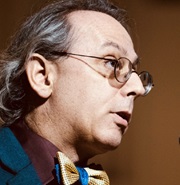

It is commencement season and the ceremony at Bard College this weekend was special for a number of reasons. Above all, the great class of 2026 — I had some truly remarkable students in this class whose lives, thinking, and passions have changed me for the better. We teachers know that we learn more from teaching our students than they do from us, but it is always good to be reminded of that by the great ones. The commencement weekend was also meaningful because it became a meditation on the meaning of being human: our imperfections, the humanity of humility, and the moral act of paying attention to the dignity of each person. What emerged was a defense of the human condition at a moment when our humanity seems both fragile and endangered.
Fareed Zakaria gave a beautiful and meaningful commencement speech on Human Intelligence (HI). He asked: What does AI tell us about all the things that make us humans distinctive and irreplaceable? The human brain, he reminded us, is 3lbs and runs on less energy than a laptop charger. And yet, it can infer intentions, recognize faces, understand irony, and sense tension in silence and detect insincerity in a smile. We are not inferior computers! We are not computers, he said. Our human intelligence is embodied and emotional. A machine can write a sad poem, but it cannot weep at a funeral. It thus cannot feel the losses and successes of human life, the experiences that are the core of human experience. Above all, he told the students, humans are imperfect. He reminded us to celebrate our imperfections, to remember our failures that reveal our individual humanity. Zakaria invoked kintsugi, the Japanese tradition of mending broken pottery with veins of gold so the cracks are honored rather than hidden. He cited Leonard Cohen’s famous line, “There is a crack in everything, that’s how the light gets in.” Our imperfections, he reminded us, do not diminish us. They shine forth as the light of our humanity.
In a surprise that was kept a secret, the board of trustees gave Bard President Leon Botstein an honorary degree. On the occasion of his imminent retirement as President of the College, the Board recalled how Leon Botstein has led Bard for 51 years and transformed the college into one of the most distinguished and distinctive liberal arts colleges in the nation committed both to the life of the mind and the public good. At a time when so many colleges and universities are risk averse and largely indistinguishable, President Botstein has taken chances and made Bard a uniquely mission driven institution, one dedicated to expanding access to college education, dedicated to democratic citizenship, and committed to excellence in the arts, humanities, and the sciences. He has expanded general education and a rigorous core curriculum. Bard’s early colleges have brought liberal arts college education to disadvantaged students across the country. The Bard Prison Initiative makes a full-Bard liberal arts education available to incarcerated students. The international programs that Bard has innovated are found not in wealthy countries but in places like Burma, Afghanistan, Palestine, Bishkek, and Vilnius. Bard brings liberal education to the places where it is most needed. And President Botstein has shown an unwavering support for public intellectual endeavors like the Hannah Arendt Center, which could never have existed without his enthusiastic contributions.
We at Bard understand that Bard is a special place, one that inspires us to further the mission of the college. This leadership has come from President Botstein. And he has done all this while also treating students, faculty, and staff with empathy, respect, and true humanity. We all know that it is now our responsibility to carry forward his legacy.
President Botstein based his final charge to the Class of 2026 on a reading of verses from Ecclesiastes. He began with, “For every thing there is a season,” and he ended with, “There is time to love and hate, a time of war and a time of peace.” Our life is dominated, he said, in the space between love and hate, in the in-between space that is neither absolutely good nor evil. Against the certainty that there are good and evil people, he told the class that we all possess redeeming features, if only we look. Moralizing self-righteousness promotes the illusion of human perfection and the absence of humility. If you take risks, you’ll make mistakes. Acknowledge the fact, he told our students, that we are all inconsistent and not always right. Thus, don’t rejoice at the pain or failures of others. Yes, you should speak in the service of discovery and defense of truth and justice, but that also includes being kind to strangers, those who are different from you, and those with whom you disagree. Remember, he said, matters are not as self-evident as they seem. Just because you hold an opinion, he added, channeling his friend Hannah Arendt, does not make it right.
A particularly meaningful part of the commencement weekend was the honor bestowed upon me to present Marilynne Robinson to the trustees of the college to receive the Mary McCarthy award. Robinson is one of my favorite writers. Her novel Gilead is the one I give many of my former students. Her essays on science, religion, and the meaning of a human life are beacons of humanity in dark times. One of the highlights of my time at Bard was when one of my students, Anna Hadfield, wrote an extraordinary senior project on Robinson. Anna and I then worked together to write an essay on Robinson, The Romance of the Self: Marilynne Robinson’s Existential Humanism. I was blessed to spend five hours with Robinson and her son Joe in conversations about the Bible, Herman Melville, and Fyodor Dostoyevsky. I also had the opportunity to write the citation for Robinson, read by the trustees.