


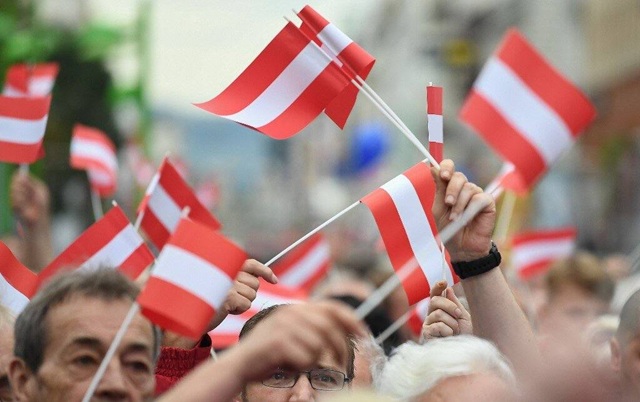
Austria’s right-wing Freedom Party (FPO) secured victory in the country’s parliamentary election with 29.2% of the vote, yet it finds itself locked out of power as three centrist parties have formed a coalition government to sideline it. Despite winning the largest share of votes, the FPO was outmaneuvered by the Austrian People’s Party (OVP) and the Social Democrats (SPO), who, along with a smaller party, struck a deal to govern without them.
This scenario is not unique to Austria. Across Europe, right-wing and populist parties have gained electoral traction, only to be blocked from power by coalition-building among traditional parties. In Sweden’s 2022 elections, the Sweden Democrats (SD) finished second, but a governing coalition was instead formed by the Moderate Party, Christian Democrats, and Liberals, excluding the SD from key ministerial positions. Similarly, in the Netherlands, the People’s Party for Freedom and Democracy (VVD) won the most seats in 2021 but had to navigate lengthy coalition talks before securing a government. Spain’s People’s Party (PP) also led the polls in 2016 but struggled to form a government due to a lack of majority support.
These cases highlight a recurring pattern in European politics, where winning an election does not always guarantee governing power. While populist and right-wing parties have made gains at the ballot box, centrist and establishment parties have frequently worked together to prevent them from leading.









