


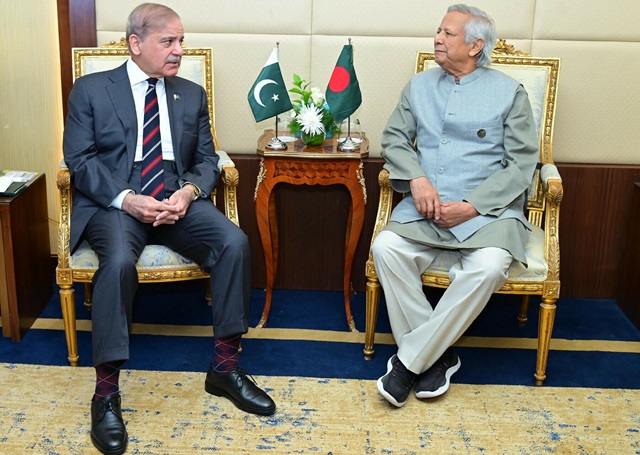
Bangladesh has formally demanded an apology from Pakistan for the “atrocities” committed during the 1971 Liberation War. This issue, along with unresolved financial claims, was raised during the first Foreign Office Consultations (FOC) between the two nations in 15 years.
The meeting, which took place on Thursday, saw Bangladesh’s Foreign Secretary Md Jashim Uddin and Pakistani Foreign Secretary Amna Baloch discussing longstanding issues. These included Bangladesh’s call for a formal public apology from Pakistan for the atrocities committed by its military during the 1971 war. The war, which resulted in the separation of East Pakistan from West Pakistan and the creation of Bangladesh, has been a sore point in the bilateral relations between the two countries for decades.
In addition to the apology, Bangladesh has demanded $4.52 billion from Pakistan as part of its share of pre-1971 assets. The claims also include the repatriation of stranded Pakistanis, an equitable distribution of undivided assets, and the transfer of foreign aid funds sent for the victims of the 1970 cyclone in East Pakistan.
Foreign Secretary Jashim Uddin emphasized that these issues must be resolved to lay a solid foundation for future bilateral relations. “We have raised the historically unresolved issues with Pakistan. These issues need to be resolved to establish a solid foundation for our bilateral relations,” Uddin said. He added that both countries should aim for mutual benefits and interests, emphasizing that it is the right time to settle these longstanding matters.
The Pakistani delegation, led by Foreign Secretary Amna Baloch, indicated a willingness to remain engaged in future discussions, with the hope of resolving these issues. However, they did not provide a direct response to the demands put forward by Bangladesh.
As part of the ongoing talks, Bangladesh also raised concerns over the unpaid $200 million in foreign donations meant for the victims of the 1970 cyclone. The issue of the money’s devaluation over the decades was also raised, though further discussions are expected in future meetings.
The FOC meeting also served as a precursor to the visit of Pakistan’s Deputy Prime Minister and Foreign Minister, Ishaq Dar, who is scheduled to visit Dhaka on April 27 and 28. The visit is expected to continue discussions on these unresolved issues and further the efforts to rebuild diplomatic ties between the two nations.
The relations between Bangladesh and Pakistan had soured significantly over the past 15 years, with few direct talks between the two governments. However, the current meeting signals a thaw in relations, particularly after the ouster of former Bangladesh Prime Minister Sheikh Hasina last year.
India Responds to Bangladesh’s Remarks on West Bengal Violence
Meanwhile, tensions also flared between India and Bangladesh over comments made by Bangladeshi officials regarding violence in West Bengal. Bangladesh’s Press Secretary to the Chief Adviser Muhammad Yunus, Shafiqul Alam, condemned recent attacks on the Muslim minority in West Bengal and urged the Indian government to take action to protect their rights. Alam called for both the Indian government and the West Bengal administration to ensure the safety of the minority Muslim population, following protests over the Waqf (Amendment) Act.
In response, India’s Ministry of External Affairs (MEA) rejected the remarks, accusing Bangladesh of “virtue signalling” and urging Dhaka to focus on protecting its own minorities. MEA spokesperson Randhir Jaiswal stated, “We reject the remarks made by the Bangladesh side with regard to the incidents in West Bengal. Bangladesh would do better to focus on protecting the rights of its own minorities.” This sharp retort from India comes amid heightened concerns over the persecution of Hindus and other minorities in Bangladesh, where recent attacks on temples and religious minorities have drawn international criticism.
India has frequently raised concerns over the treatment of minorities in Bangladesh, especially after Sheikh Hasina’s ousting in August of the previous year. Since then, there has been a rise in attacks on religious minorities, with nearly 200 Hindu temples being vandalized. Human rights organizations and diaspora communities have strongly condemned the violence, calling for stronger protection of minority groups.
While Bangladesh has denied the allegations of systemic persecution, the recent incidents of violence have put the spotlight on the treatment of minorities in the country. The ongoing diplomatic tensions between India and Bangladesh highlight the complexities of regional relations and the delicate balance of addressing human rights issues while navigating national interests.









