Correction Notice: An earlier version of this article incorrectly referred to the late son of Mr. Gadi Eisenkot, who was killed in Gaza, as “Gadi.” His son’s name was Gal Eisenkot. The error has been corrected following clarification provided by Daphna Spigelman, Foreign Press Director of Yashar! We regret the error and apologise for any confusion caused. [Updated: 14 October 2026]
As Israel moves towards parliamentary elections, former military chief Gadi Eisenkot has emerged as one of the country’s most significant political figures. His growing popularity reflects not only widespread dissatisfaction with Prime Minister Benjamin Netanyahu after the Hamas attack of 7 October 2023 and the prolonged war in Gaza, but also a striking contrast in political style. Rather than projecting forceful personal charisma, Eisenkot has cultivated an image of responsibility, restraint and authenticity. His rise raises broader questions about whether democratic societies are beginning to seek a different kind of leadership in an era often dominated by populist and highly personalised politics.
Three months before Israelis are due to vote, opinion polls have placed Eisenkot’s newly established Jaschar (“Straight” or “Straightforward”) party on a level comparable with Netanyahu’s Likud, an outcome that would have appeared improbable only months earlier. The rapid shift reflects changing public sentiment following nearly three years marked by war, political division and continuing debate over the government’s leadership.
Die Zeit frames Eisenkot’s emergence through the lens of the German sociologist Max Weber’s classic theory of political authority. Weber distinguished between rational-legal, traditional and charismatic forms of legitimacy. In recent years, the concept of charismatic authority has often been associated with political figures such as Donald Trump, while Netanyahu has long been regarded as one of its most prominent practitioners in Israel. His political style has been characterised by confrontational rhetoric, populist messaging and increasingly authoritarian tendencies, enabling him to project an image of strength even among critics.
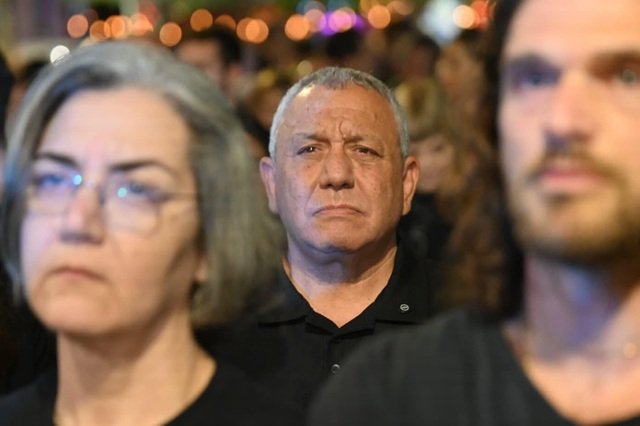
Eisenkot presents a markedly different public image. The former Israel Defense Forces chief of staff, now 66, is described as physically unassuming, with a calm demeanour and a friendly smile rather than an imposing presence. For much of his political career, he was viewed as a secondary figure rather than a natural contender for the country’s highest office.
His entry into frontline politics came after Hamas attacked Israel on 7 October 2023. Netanyahu appointed him minister without portfolio in the emergency government’s war cabinet, where Eisenkot participated in decisions during one of the most challenging periods in Israel’s recent history. He left the government in mid-2024, arguing that Netanyahu had failed to produce a credible strategy for ending the war in Gaza.
The conflict also became deeply personal for Eisenkot. Just two months after the Hamas attack, his 25-year-old son, Gal, was killed while serving as a soldier in Gaza. At the funeral, Eisenkot pledged to help ensure that Israel would remain “strong, progressive and just”. When he launched the Jaschar party in September 2025, he presented his return to politics as an obligation rooted in responsibility rather than personal ambition.
That personal history has strengthened his credibility among many Israelis. Political scientist Assaf Shapira of the Israel Democracy Institute told Die Zeit that Eisenkot is widely regarded as authentic because both he and his family have made profound sacrifices for the country. The contrast with Netanyahu’s family has become part of the political discussion, particularly regarding public perceptions of commitment and shared national sacrifice.
According to the report, Eisenkot’s rise cannot be understood without considering Netanyahu’s declining standing. For years, Netanyahu cultivated an image of exceptional competence and international stature. Earlier portrayals celebrated his political success, his international experience and his ability to appeal across different segments of Israeli society. Under his leadership, Israel joined the Organisation for Economic Co-operation and Development (OECD), while the country’s high-technology sector expanded rapidly, attracting investment and contributing to significant economic growth.
At the same time, however, Netanyahu’s premiership has become inseparable from the security failures surrounding the Hamas attack of October 2023, widely regarded as the most devastating assault on the Jewish people since the Holocaust. The attack fundamentally altered Israeli politics and reshaped public expectations of political leadership.
The name of Eisenkot’s new party also reflects this changing political climate. Jaschar is presented as a reference to former hostage Eli Sharabi, whose wife, daughters and brother were killed by Hamas while he himself remained captive for 491 days before his release in February 2025. After regaining his freedom, Sharabi argued that securing the release of hostages was “not about right or left, but about going straight — jaschar”. The concept has since become associated with a politics that seeks clarity, responsibility and practical action rather than ideological confrontation.
Questions surrounding the conduct of the Gaza war have further influenced the political debate. Although Eisenkot has not directly accused Netanyahu of prolonging negotiations with Hamas for personal political reasons, public comments by senior officials have intensified scrutiny of government decisions. Nitzan Alon, who coordinated hostage negotiations, recently stated that the war could have ended during 2024 if different political choices had been made. He also argued that dozens of hostages who had initially been taken alive were later killed and might have survived under different circumstances.
Against that backdrop, Eisenkot has not relied on dramatic speeches or theatrical campaigning. Instead, his political appeal has largely rested on his biography, military leadership and measured public conduct. He would also become Israel’s first Mizrahi prime minister, having been born in Tiberias and raised in Eilat, offering additional symbolic significance in a society where questions of identity and representation continue to shape politics.
His openness towards the media has reinforced that image. Die Zeit highlights an extended documentary project in which journalist Ben Shani accompanied Eisenkot for months, capturing private moments alongside political discussions. Rather than carefully managing every appearance, Eisenkot allowed viewers to see both personal grief and everyday interactions, including conversations about moving home after the death of his son because his wife could no longer bear living in their previous house.
The report also contrasts Eisenkot’s media strategy with Netanyahu’s. While Netanyahu has largely restricted access by Israeli journalists and primarily grants interviews to American media outlets or the supportive Channel 14 television network, Eisenkot has accepted close journalistic scrutiny. One widely discussed episode involved criticism of his limited English proficiency following a speech in Washington. Responding to attempts by Likud to mock his language skills, Eisenkot asked: “Where was Netanyahu’s excellent English on 7 October?”
His growing popularity has reshaped the opposition landscape. Former prime minister Naftali Bennett and opposition leader Yair Lapid formed a joint electoral alliance named Beyahad (“Together”) to maximise the chances of defeating Netanyahu. They later invited Eisenkot to join them. However, as his own polling numbers surpassed Bennett’s while Lapid’s support declined, Eisenkot chose to continue independently rather than subordinate his movement to a broader alliance.
Despite his electoral momentum, questions remain about the substance of his political programme. Shapira noted that Eisenkot appears to place greater emphasis on strengthening democratic values than on advancing a clearly defined ideological platform. His appeal therefore rests less on a detailed political agenda than on the perception that he represents honesty, responsibility and moderation after years of increasingly polarised politics.
The meaning of the word “jaschar” itself captures that approach. In Hebrew, it conveys ideas such as going straight, being straightforward and acting with integrity. Rather than pointing towards a specific ideological direction, it describes a personal quality and ethical disposition.
Whether that style can ultimately secure electoral victory remains uncertain. Yet, as Die Zeit suggests, Eisenkot’s emergence represents more than simply an alternative to Benjamin Netanyahu. It reflects the possibility that, after years in which politics has often rewarded dominant personalities and highly personalised leadership, a quieter model based on credibility, personal sacrifice and measured authority may also resonate with voters. Whether that proves sufficient at the ballot box will become clear only when Israelis cast their votes, but Eisenkot has already reshaped the country’s political conversation.