Bolivia, long seen as a regional model of leftist governance, is bracing for a historic election that could mark the end of nearly two decades of socialist rule. Evo Morales, once celebrated for lifting millions out of poverty and overseeing what was hailed as an “economic miracle,” now finds himself sidelined, facing criminal charges, and calling for protest votes from a political stronghold deep in the coca-growing Chapare region.
According to The Washington Post, Morales has urged his supporters to reject the upcoming presidential election by marking a large “X” on their ballots, declaring that if he is barred from the contest, the vote itself should be deemed illegitimate. “We decided that if Evo isn’t on the list, voto nulo — there’s no other option,” Morales told the newspaper’s journalists during a visit to his compound.
The former president, who first took office in 2006, once commanded widespread admiration for cutting extreme poverty rates from 33 percent to 15 percent and building infrastructure projects such as La Paz’s aerial cable car system. But his reliance on a global commodities boom — particularly natural gas exports — has left Bolivia’s economy vulnerable. With reserves dwindling and foreign investors wary after years of nationalization, the country now faces its worst economic crisis in four decades. Inflation has climbed to more than 16 percent, the central bank nearly ran out of dollars, and energy shortages have forced drivers to queue for hours at gas stations.
Morales’s protégé-turned-rival, President Luis Arce, has struggled to revive the economy while distancing himself from his former mentor. Their once-dominant Movement Toward Socialism (MAS) has fractured into bitter factions. Arce, trailing in the polls, has opted not to run for reelection, leaving the field open to conservative challengers. Former president Jorge Fernando “Tuto” Quiroga and businessman Samuel Doria Medina are now seen as frontrunners, raising the prospect of Bolivia joining a regional shift to the right after recent victories in Argentina and Ecuador.
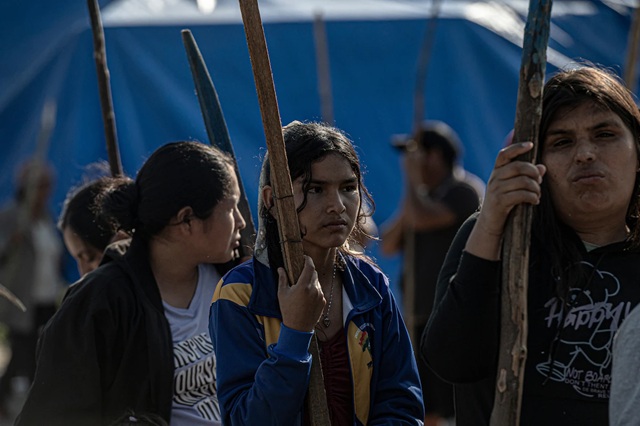
Yet Morales retains a fiercely loyal base in Chapare, where he began as a coca union leader. There, his supporters have mobilized under the banner of “voto nulo,” plastering the slogan across buildings and rallying to his defense with sticks and shields. “With one call on the radio, people will be mobilized within five minutes,” Morales warned, insisting that an attempt to arrest him would provoke bloodshed.
President Arce, however, dismissed Morales’s tactics, pointing to a 2016 referendum in which voters rejected extending presidential term limits. “You have to know when you’ve lost,” Arce told The Washington Post. “It’s a personal ambition. It’s a greed for power.”
For many Bolivians, the disillusionment is palpable. Once beneficiaries of Morales’s policies, small business owners and workers now cite soaring prices and economic stagnation as evidence that the socialist model has run its course. “Socialism is no longer the future,” said one former supporter, a minibus driver in La Paz, after sleeping in his car overnight while waiting for scarce fuel.
As the election approaches, Bolivia stands at a crossroads — with Morales refusing to fade quietly and a weary electorate weighing whether to end a socialist experiment that once promised prosperity but now teeters under economic collapse and political division.