



by Eric
Retired from the Sri Lanka Navy, Rear Admiral Rathnayake’s work is immediately distinguished by its rare integration of operational experience, academic rigour, and a profound understanding of regional geopolitics, particularly in the Indian Ocean and Indo-Pacific theatres. From the outset, he establishes the criticality of secure and open sea lines of communication, reminding readers, as noted in the foreword by Justin Jones, that “the maritime domain remains not only as a critical enabler of economic prosperity but also as a vital arena for safeguarding national sovereignty and strategic interests.” This dual focus on economic and security imperatives is particularly salient for island nations such as Sri Lanka and Australia, whose national survival is inextricably linked to maritime connectivity. Rathnayake’s approach reflects the foundational insight of David K. Brown in The Design and Construction of British Warships 1939–1945, where he asserts that “the warship is a complex machine, embodying the synthesis of various technological disciplines, each contributing to the vessel’s overall performance,” and Rathnayake extends this synthesis into the legal, policy, and strategic dimensions of maritime security.
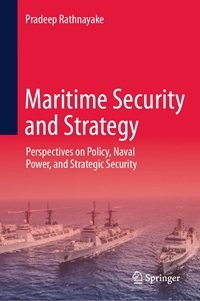
The book’s initial exploration of the Archipelagic State concept and the ‘Due Regard’ principle in Exclusive Economic Zones demonstrates Rathnayake’s command of maritime law and governance. By analysing Indonesia and the Philippines, he illuminates the persistent tensions between coastal state sovereignty and the rights of other nations to freedom of navigation. In doing so, he situates legal frameworks within operational realities, a methodological approach that bridges the gap between doctrine and practice. These discussions are reinforced by contemporary scholarship; Geoffrey Till, in Seapower: A Guide for the Twenty-First Century, emphasises that “control of key maritime infrastructure is often as decisive as fleet strength in securing national interests,” a principle that Rathnayake operationalises in his case study of Hambantota Port. By assessing the so-called “debt-trap” narrative, Rathnayake demonstrates how port-centric geostrategy intertwines with global power projection and economic policy, illustrating that maritime security is inseparable from economic and diplomatic considerations.
Rathnayake’s analysis of strategic threats in the Asia-Pacific and Indo-Pacific regions further underscores the operational dimension of maritime security. The detailed examination of submarine proliferation, technological developments, and naval arms races draws on both historical and contemporary sources to contextualise the risks of regional conflict. He observes, “The reliability of torpedoes, over-the-horizon attack capabilities, and Air Independent Propulsion systems have rendered submarines both cost-effective and strategically essential,” a point echoed by Vincent P. O’Hara and Leonard R. Heinz in Innovating Victory: Naval Technology in Three Wars, who argue that “the introduction of nuclear propulsion and advanced undersea platforms fundamentally altered naval power projection and deterrence paradigms.” This discussion is strengthened by Rathnayake’s pragmatic consideration of operational risks, including submarine accidents, intruder vulnerabilities, and environmental hazards, highlighting the complexity of undersea warfare in contemporary strategic calculations.
Equally compelling is Rathnayake’s integration of classical naval theory with modern maritime challenges. His treatment of Mahanian sea power doctrine, particularly in the context of Sri Lanka’s counterinsurgency against the LTTE, illustrates the enduring relevance of foundational strategic principles. Rathnayake writes, “The principles of Mahanian sea power remain relevant, guiding peacetime naval operations and the projection of maritime influence.” This argument aligns with Till’s broader assertion that, while platforms and technologies evolve, the strategic logic of controlling sea lines of communication remains central to naval policy. Furthermore, Rathnayake extends classical theory into the asymmetric warfare domain, analysing maritime terrorism, piracy, and armed robbery in ways that highlight both legal and operational strategies, demonstrating the practical applicability of centuries-old doctrines in a modern context.
The book’s exploration of maritime law, including the Proliferation Security Initiative and US ship boarding agreements, reflects a sophisticated understanding of legal frameworks and operational challenges. Rathnayake identifies ambiguities and enforcement gaps while providing concrete recommendations, emphasising that effective maritime security requires coherence between international law, domestic regulation, and interagency coordination. This is consistent with Norman Polmar’s observations in Submarine and Naval Technology Innovations, where he stresses that “technological superiority must be complemented by coherent legal frameworks and cooperative enforcement mechanisms to maintain maritime order.” By highlighting case studies and operational lessons, Rathnayake ensures that legal analysis is never abstract but firmly grounded in the realities of naval strategy and enforcement.
A particularly innovative aspect of Rathnayake’s work is its emphasis on the intersection of climate change and maritime security. Rising sea levels, infrastructure vulnerability, and climate-induced migration are explored as emergent threats that require a holistic security response. He notes, “Securing the seas requires proactive patrols, capacity building, and community-led adaptation to mitigate climate-induced maritime risks,” situating environmental concerns within the broader strategic calculus. This perspective resonates with Karen McLeod’s studies on ocean governance, which argue that “climate-resilient maritime policy is essential to sustain both national economies and the marine ecosystem.” Rathnayake’s focus on climate resilience highlights the necessity of integrating environmental sustainability into maritime strategy, particularly for vulnerable island nations.
Rathnayake also provides a comprehensive treatment of maritime regulation, enforcement, and fisheries management. He critically evaluates the doctrine of hot pursuit, the obligations of flag states, and the effectiveness of Regional Fisheries Management Organizations (RFMOs) in combating illegal, unreported, and unregulated (IUU) fishing. By linking enforcement mechanisms with strategic and legal imperatives, he provides actionable guidance for policymakers. The use of Australia’s Marine Bioregional Planning Process as a comparative model exemplifies best practices in integrated ocean governance and sustainable resource management, reinforcing Till and McLeod’s argument that effective maritime security requires harmonising ecological stewardship with strategic and economic objectives.
Maritime Security and Strategy is a masterfully crafted work that combines operational insight, legal scholarship, and strategic foresight. Rathnayake navigates the complex maritime environment with analytical precision, bridging classical theory, contemporary threats, and emergent challenges such as climate change and technological evolution. While the book could benefit from a deeper engagement with emerging technologies such as unmanned surface and underwater vehicles, cyber resilience, and AI-driven maritime surveillance, its strengths lie in its comprehensive scope, clarity of argumentation, and practical relevance. Rear Admiral Brett Sonter observes that “Every coastal state faces its own unique maritime security challenges, often requiring tailored management approaches…this book provides detailed examination of the maritime threats and what that means for maritime security.” By offering a coherent framework for understanding, assessing, and responding to maritime security challenges, Rathnayake’s work is an indispensable resource for academics, policymakers, and naval practitioners.









