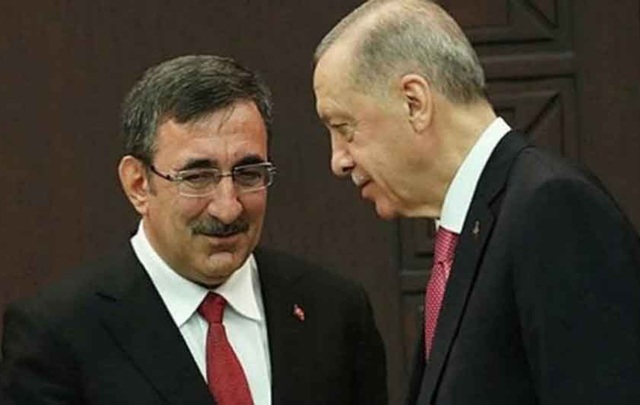
As Turkish President Recep Tayyip Erdoğan embarks on a significant economic shift, one figure has played a central yet understated role in managing the country’s transition from unconventional economic policies to a more orthodox approach: Vice-President Cevdet Yılmaz. While Mehmet Şimşek, the finance minister, has garnered international attention for his efforts to restore fiscal credibility, it is Yılmaz who has quietly kept the ship steady at home, playing a crucial backstage role in supporting Turkey’s pivot, according to Financial Times sources.
Yılmaz’s appointment as vice-president in 2023 was met with fanfare in his hometown of Bingöl, reflecting the local pride in his rise through Erdoğan’s Justice and Development Party (AKP). However, behind the celebratory atmosphere, Yılmaz’s reputation as a trusted confidant of Erdoğan has allowed him to take a critical role in managing the country’s economic overhaul, particularly amidst the growing public discontent with the new policies.
Yılmaz, a former bureaucrat and seasoned AKP veteran, has been deeply involved in steering Turkey through the economic turbulence caused by high inflation and the shifting policies of Erdoğan’s government. He has become the bridge between Erdoğan and domestic business leaders, communicating the government’s economic program to industry and calming concerns over the rapid shift towards financial orthodoxy. As noted by political risk consultancy Eurasia Group’s Emre Peker, Yılmaz’s expertise in liaising between business and government is crucial. “He is trusted by Erdoğan because he has been in the AKP from the start,” Peker said.
Yılmaz’s role has been indispensable in managing the country’s monetary policy, particularly in backing the central bank’s aggressive rate hikes. Under his influence, interest rates soared from 8.5% in June 2023 to as high as 50%, which has played a significant role in stabilizing inflation. While President Erdoğan had previously referred to high interest rates as the “mother and father of all evil,” his support for the new monetary stance is seen as partly due to Yılmaz’s backing.
“Cevdet has been communicating with the president, businesspeople, the public, telling them we have a programme running and things are under control,” said a former senior policymaker. His calm, measured approach has helped reassure both the Turkish public and the business community that the economic pivot is under control, despite the growing pain for many households as inflation continues to weigh on the economy.
The ongoing transition, while supported by many international bodies such as the IMF, EU, and Wall Street banks, has faced internal resistance, particularly from Erdoğan’s allies in industries that thrived under the previous economic strategy of low borrowing costs. Yılmaz has been critical in managing these tensions, listening to business concerns, and advising Erdoğan on necessary adjustments without losing sight of the broader goals.
Yet, as Turkey grapples with economic pressures and public disillusionment, particularly with a high cost of living, the real test of Yılmaz’s influence will be whether Erdoğan’s commitment to economic reforms remains steadfast. As analysts have pointed out, Erdoğan’s history of policy shifts, including abrupt changes in economic leadership, means that the continuity of these reforms could be uncertain.