by Our Correspondent in Jaffna
Sri Lanka’s post-war promise remains unfulfilled nearly two decades after the guns fell silent, according to civil society activist Lasantha Mendis, who says the country’s economic collapse and deepening social fractures are rooted in a failure to address inequality, marginalisation, and the erosion of public integrity.
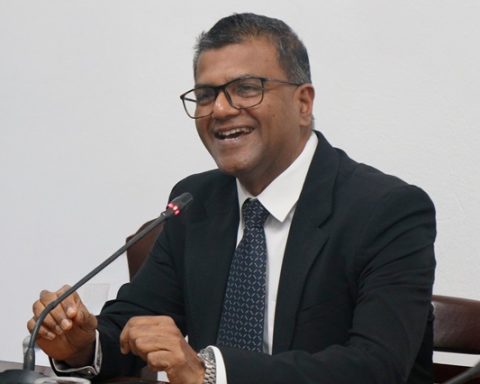
Speaking at the Jaffna Press Club, Mendis, founder and chairman of the Avanka Lanka Foundation and director of the Knowledge Lanka Research and Development Institute, delivered a stark assessment of Sri Lanka’s trajectory since the end of its three-decade civil conflict. His remarks reflected growing concerns among activists and development advocates that the country’s northern and eastern regions continue to suffer from neglect, unemployment, and unresolved grievances despite repeated promises of national reconciliation.
Mendis argued that Sri Lanka’s downfall was not simply financial mismanagement, but a broader collapse of integrity across political and social institutions. “Lack of integrity is the fall of Sri Lanka,” he said, insisting that oppression of minorities and exclusion of vulnerable communities contributed directly to the nation’s instability and eventual bankruptcy.
He said the optimism that followed the end of the war in 2009 had rapidly faded. At the time, many believed Sri Lanka was on course to become an economic success story in Asia. Instead, years later, the country was engulfed in its worst economic crisis since independence, exposing what Mendis described as unresolved structural problems and failures in governance.
Central to his message was the assertion that Sri Lanka cannot achieve sustainable national development unless the northern province, eastern province, and plantation communities are fully integrated into the country’s economic future. According to Mendis, the long-term exclusion of these regions has weakened the country socially and economically, leaving thousands trapped in cycles of poverty and unemployment.
He described how his organisation began working in the north after witnessing the hardships faced by war-affected communities. Among the groups his foundation sought to assist were tens of thousands of widows, rehabilitated former combatants struggling to find employment, and families of the missing still searching for answers years after the conflict ended.
Mendis also highlighted the difficulties southern activists faced when attempting to build trust in the north. He acknowledged that communities in Jaffna were initially sceptical of outsiders arriving with promises of assistance, particularly from the predominantly Sinhalese south. To address this distrust, Avanka Lanka Foundation focused first on small-scale community projects designed to demonstrate commitment rather than rhetoric.
One such project was launched in a village in Vaddukoddai South in Chankanai, where the foundation renovated homes, repaired roofs, improved sanitation facilities, and provided bicycles for schoolchildren. Mendis said these efforts were aimed at showing solidarity with ordinary families rather than pursuing political visibility.
He noted that the organisation’s work also carries symbolic weight because of the backgrounds of some of its members. Two widows of senior Sri Lankan military officers are actively involved in the initiative, including the widow of a decorated navy commodore and the widow of an air force group captain. Mendis said their participation reflected an effort to bridge divisions created during decades of conflict.
The organisation, he explained, operates without foreign funding and instead relies on crowdfunding and donations from supporters. Administrative costs are covered separately by members, allowing all public contributions to be directed entirely toward development projects. Since formally launching their northern engagement in 2019, Mendis and his team have made regular monthly visits to Jaffna, travelling repeatedly to maintain relationships with local communities.
A major turning point came in 2023 when a provincial initiative focused on poverty alleviation through employment creation was launched with support from the then governor of the Northern Province. Mendis said Avanka Lanka played a leading role in implementing projects across 20 villages in all five districts of the province.
However, the programme stalled after political changes within the provincial administration. Mendis said he spent more than two years attempting to revive the initiative before finally receiving approval under the current governor to restart the work.
His proposed model focuses heavily on community employment creation rather than direct financial aid. According to Mendis, even though the Sri Lankan state faces severe financial constraints, the country still possesses extensive human resources within provincial and local administrative systems. By mobilising those resources more effectively, he believes rural employment and village development can be accelerated at relatively low cost.
Another major concern raised during the speech was the plight of farmers in the north. Mendis said agricultural communities remain economically vulnerable despite the region’s long history of cooperative farming structures. In particular, paddy and vegetable farmers have struggled with poor savings, weak market access, stray cattle problems, and insufficient protection from imports.
After consultations with farmer organisations in multiple divisions across Jaffna district, his team concluded that weak coordination between agricultural banks and farming groups was contributing to financial insecurity. Mendis said his organisation had already submitted recommendations to both the Minister of Agriculture and the governor of the Northern Province seeking reforms to strengthen rural savings and improve support mechanisms for farmers.
He argued that many of the problems facing farmers are manageable if institutions function properly and if communities are given access to stronger organisational support. Excessive market commissions, poor infrastructure, and inadequate supply chains, he said, continue to undermine the livelihoods of rural producers.
Beyond economics, Mendis framed the issue as one of national reconciliation and social cohesion. He warned that unresolved grievances in the north continue to fuel frustration, pointing to protests that took place during recent Independence Day commemorations. Rather than dismissing such demonstrations, he said authorities must understand the deeper causes behind them.
“The issues are not that big, but they are diverse and numerous,” he said, arguing that government institutions often struggle to respond effectively because of fragmented administration and lack of coordination.
Mendis called on President Anura Kumara Dissanayake’s administration to establish a dedicated northern development task force capable of coordinating solutions across multiple sectors. He also appealed to the Sri Lankan diaspora to become more involved in grassroots economic development initiatives rather than limiting engagement to political advocacy abroad.
Without employment and rising household incomes, he said, children from marginalised communities are likely to leave school early and enter low-paying work, perpetuating poverty across generations. Breaking that cycle, he argued, requires sustained investment in local employment, education, and infrastructure.