Editorial
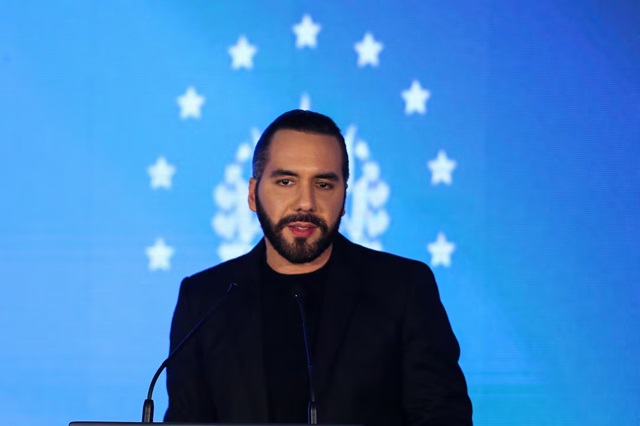
El Salvador’s legislative assembly yesterday voted to abolish presidential term limits, a decision that may appear procedural at first glance but is, in reality, a seismic shift that threatens to extinguish the fragile flame of democracy in the country. With overwhelming support from President Nayib Bukele’s allies, this constitutional overhaul effectively hands him the keys to indefinite power, entrenching an iron grip that critics say signals the death knell of democratic governance in El Salvador. Only three opposition lawmakers dared to vote against the measure, their voices drowned in a sea of acquiescence. “Democracy in El Salvador has died,” lamented Marcela Villatoro, one of the few remaining dissenting legislators. Such words resonate not just as a domestic outcry but as a warning to the world about the perils that unfold when unchecked ambition is cloaked in the guise of reform.
Bukele, who once half-jokingly styled himself the “world’s coolest dictator,” is no mere caricature. His rise to international prominence in 2022 was cemented by a brutal crackdown on gang violence, a campaign that swept thousands into prison cells and slashed El Salvador’s sky-high homicide rate. To many Salvadorans, he is a saviour—a man who reclaimed streets long strangled by criminality and restored a semblance of safety in a nation scarred by decades of violence. “He saved our streets,” said a local resident in San Salvador. “No other president dared to do what he did.” This narrative of order restored has garnered him unprecedented approval ratings, soaring beyond 80%, and inspired a wave of admiration across parts of Latin America and even within certain factions of the United States. Yet beneath this veneer of success lies a darker, more unsettling reality.
History teaches us that when a man hungers for power, the extent to which he is willing to go often exceeds the bounds of legality, morality, and even common sense. Bukele’s trajectory mirrors a disconcerting pattern observed time and again: the gradual erosion of democratic institutions in the name of security and progress. Human rights organisations and opposition figures raise alarms about the sharp decline in civil liberties under his rule. A prominent human rights activist was recently jailed, while dozens of journalists have fled the country amid threats, harassment, and surveillance. This is not the hallmark of a healthy democracy but the unmistakable signs of authoritarianism flourishing under popular approval.
Human Rights Watch noted chillingly, “The dismantling of democratic institutions is happening in plain sight. This is not security — it’s authoritarianism with popular approval.” Such a statement demands sober reflection. It forces us to confront the uncomfortable truth that a society can willingly trade freedom for safety, and in doing so, hand over its future to a leader who presides over fear more than justice. Bukele’s government has, under the pretext of combating gangs, instituted a “state of exception” that has suspended basic civil liberties, resulting in the mass incarceration of over 80,000 people, many without due process. Reports of torture, overcrowded prisons, and deaths in custody reveal a regime indifferent to the human cost of its security agenda.
The parallels with historical autocrats are stark. From Julius Caesar crossing the Rubicon to Ferdinand Marcos extending his rule in the Philippines, and more recently, leaders like Viktor Orbán in Hungary or Recep Tayyip Erdoğan in Turkey, the story repeats itself: once the concentration of power is accepted, the path to dictatorship is paved with populist promises and executed through the gradual dismantling of checks and balances. Bukele’s allies in the legislature fired the entire Constitutional Court and the Attorney General, replacing them with loyalists who rubber-stamp the president’s agenda, including the very constitutional reinterpretation that now allows him to remain in power indefinitely.
Yet, perhaps the most disturbing aspect is the apparent complicity—or at least tolerance—of certain Western governments, particularly the United States and some European nations. Bukele has become something of a darling for parts of the American right, especially those who champion a hardline stance on law and order. His tough-on-crime approach aligns with the populist law-and-order rhetoric that resonates in political circles influenced by the Trump era. The US government, while occasionally issuing warnings about democratic backsliding, continues to provide security cooperation and funding, valuing his role in reducing migration and drug trafficking over concerns about human rights abuses. This tacit blessing from powerful Western actors serves as a troubling endorsement of authoritarian tendencies, validating the notion that strongmen who deliver “results” can be useful allies regardless of the cost to democracy.
Bukele’s embrace of Bitcoin and his anti-globalist rhetoric have also endeared him to libertarian and right-wing circles in the West, painting him as a visionary rebel challenging the international financial order. Yet this economic experimentation cannot obscure the authoritarian reality on the ground, where independent media face censorship and surveillance, political opponents are intimidated or jailed, and civil society struggles under an increasingly repressive regime.
The people’s overwhelming support for Bukele, often cited to justify his consolidation of power, should not be mistaken for a mandate for dictatorship. Popular approval, especially when garnered through fear, propaganda, and repression, does not equate to democratic legitimacy. “He governs more like a strongman than a statesman,” observed The New Yorker, and it is this strongman persona that has secured his dominance but at the expense of El Salvador’s democratic institutions.
The extension of presidential terms and abolition of limits may guarantee political stability but at what cost? The nation risks becoming a cautionary tale of how democratic erosion begins not with dramatic coups but with gradual legal manipulations, popular enthusiasm for “order,” and the dangerous complicity of international actors prioritising strategic interests over human rights. Bukele’s rule encapsulates a broader challenge confronting democracies worldwide: how to balance security and liberty, order and freedom, without sacrificing one for the other.
As history repeatedly shows, the hunger for power can devour nations from within. The lessons are etched in the rise and fall of republics and empires: once power is concentrated in the hands of one man or party without effective restraint, the path to authoritarianism becomes nearly inevitable. Bukele’s El Salvador, blessed by some Western powers and cheered by many of its own citizens for restoring safety, is now perilously close to following this age-old script—one where public safety is used as a pretext to dismantle democracy itself.