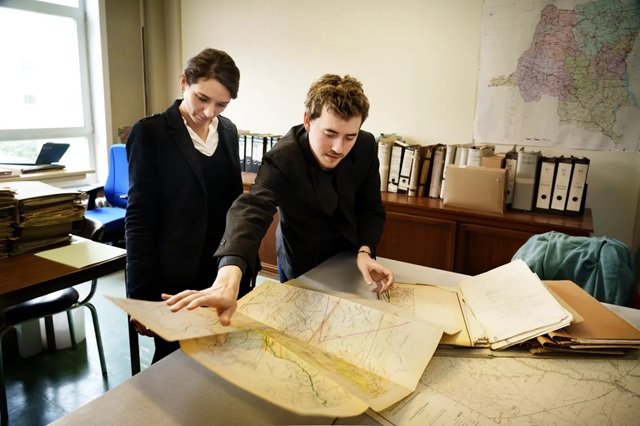
Far beneath the manicured lawns, rolling gardens, and ornamental lake surrounding a former royal palace on the outskirts of Brussels, a quiet archive has unexpectedly become the focus of a geopolitical struggle. Inside the AfricaMuseum in Tervuren, where only narrow slivers of daylight reach the storage rooms, researchers work through fragile, century-old documents that may help determine the future of one of the world’s most resource-rich nations. According to reporting by the Sunday Times in the UK, these colonial-era records are now at the heart of a dispute involving the Democratic Republic of Congo, Belgium, and an American mining company backed by some of the most powerful figures in global technology and finance.
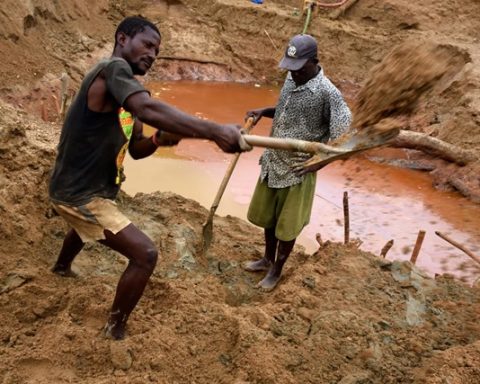
The documents are not merely historical artifacts. They include extensive geological surveys, expedition reports, and hand-drawn maps created during the colonial period, charting the mineral wealth of what is today the Democratic Republic of Congo. Beneath the country’s vast landscape lie some of the most strategically important resources in the modern world, including coltan, cobalt, copper, lithium, uranium, and other critical minerals. These materials are essential for technologies ranging from smartphones and electric vehicle batteries to wind farms, fighter jets, and nuclear power infrastructure. Estimates suggest that the untapped mineral wealth of the DRC could be worth as much as 24 trillion dollars, placing the country at the center of a rapidly intensifying global scramble for resources.
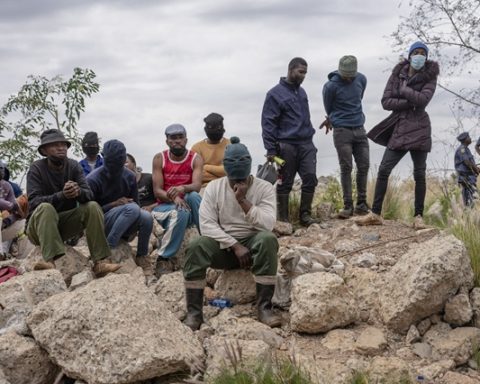
The renewed attention on these archives is closely tied to the escalating geopolitical competition between the United States and China for access to rare earth elements and battery metals. American mining companies, with support from the Trump administration, have been expanding efforts to secure a foothold in central Africa. A US-brokered peace agreement between the Democratic Republic of Congo and its eastern neighbor Rwanda last year included provisions encouraging greater foreign investment, particularly in mining. Yet the practical challenge remains immense: identifying viable deposits in a country larger than western Europe, much of it lacking infrastructure, where armed groups and instability make exploration both costly and dangerous.
For some, the answer may already exist in the archives themselves. Deep inside the AfricaMuseum, geologist Florias Mees carefully examines folders created more than a century ago. Among them are detailed records produced by colonial-era explorers and military officers who mapped vast areas of the Congo in the early 20th century. One of the most notable figures is Josué Henry, a Belgian officer whose meticulous surveys identified mineral-rich regions with remarkable accuracy. His maps pointed to copper and gold deposits in areas that are still major mining sites today, suggesting that key knowledge about the country’s resources has long been documented but largely forgotten in public discourse.
The archive is vast, stretching for more than a kilometer and containing approximately 25,000 maps alongside diaries, scientific reports, and corporate records. These materials were produced not only by colonial administrators but also by mining, forestry, and railway companies operating under Belgian rule. After Congo gained independence in 1960, many of these documents were transferred to the museum for preservation. Today, they form one of the most comprehensive geological records of the region, preserved in a single institutional collection in Europe.
Their continued relevance is now at the center of a heated dispute. In June last year, KoBold Metals, an American mineral exploration company supported by venture capital linked to Bill Gates and Jeff Bezos, requested access to the archives. The company, which uses artificial intelligence to identify potential mineral deposits, proposed digitizing the records as part of a project it said had been encouraged by the Congolese government. The goal, it argued, was to make the data widely accessible while accelerating mineral exploration in the country.
The AfricaMuseum refused. Its director, Bart Ouvry, argued that handing the entire archive to a private company would raise serious ethical concerns. The institution is already engaged in its own European Union-funded project to digitize the collection in partnership with Congolese authorities, a process expected to take around five years. Ouvry emphasized that the work should remain in the public domain, warning against allowing private commercial actors to gain exclusive or primary control over historically significant state-linked records.
KoBold, however, has pushed back strongly, accusing Belgium of obstructing access to materials that, in its view, belong to the Congolese people rather than a European institution. The company insists it does not seek ownership of the archives but rather faster digitization, arguing that its approach would make the information publicly available more quickly. At the same time, KoBold has expanded its operations in the DRC, recently announcing a major lithium exploration campaign across multiple regions of the country.
The dispute has drawn in governments. The Trump administration has publicly supported KoBold’s position, with US officials questioning Belgium’s authority over the records. A State Department official said the documents are fundamentally Congolese in origin and argued that Belgium no longer has a legitimate claim to control access decades after the end of colonial rule. The comments reflect broader strategic interests as Washington seeks to secure supply chains for critical minerals essential to technology and defense industries.
For Belgium, the issue touches a deeply sensitive historical legacy. The country continues to grapple with the consequences of its colonial rule in the Congo under King Leopold II, a period marked by extreme violence, forced labor, and mass exploitation. During the late 19th-century rubber boom, millions of Congolese people died under a system that historians widely regard as one of the most brutal colonial regimes in modern history. The legacy of that era remains visible in Brussels today, where statues and monuments still provoke public debate and protest.
Efforts at restitution have been limited. While Belgium passed legislation in 2022 allowing for the return of certain cultural artifacts taken during the colonial period, archival materials were excluded. Only a small number of symbolic returns have taken place, including personal items linked to historical figures such as Patrice Lumumba, the first prime minister of independent Congo, who was assassinated in 1961 in a plot involving Cold War and Belgian interests.
As the debate over the archives continues, the broader question remains unresolved: who controls the knowledge of a country’s resources, and who benefits from it. In the dimly lit storage rooms of the AfricaMuseum, researchers continue to sift through brittle pages that were never intended for modern geopolitical battles. Yet as global demand for critical minerals accelerates, these forgotten maps have become instruments of power once again, linking colonial history directly to the future of global industry and energy.