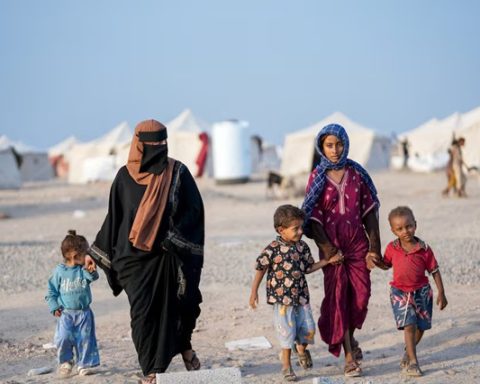
In the outskirts of Bujumbura, Burundi’s capital, Amisia Aleko struggles to feed her family on a single daily meal of renga renga, a stew of leafy vegetables. “We ate some fish in 2019. That was a good day,” said the 40-year-old mother of four, reflecting the stark reality of life in one of the world’s poorest countries. Many residents forage for scraps at rubbish dumps, highlighting the severe deprivation that affects the majority of Burundi’s population, where nearly 63 percent live on less than $2.15 a day, according to the World Bank.
Despite these hardships, President Évariste Ndayishimiye is seeking to open Burundi’s doors to multilateral lenders and foreign investors, aiming to lift the country out of decades of isolation. In an interview with the Financial Times at the presidential palace, Ndayishimiye framed the reforms as a historic shift from the era of his predecessor Pierre Nkurunziza, whose authoritarian rule led to sanctions from the US and EU. “This country comes from the greatest poverty, but it is coming out of it towards a resurgence,” he said, emphasizing efforts to fight corruption and improve governance.
The government has already announced investment and financing commitments of up to $4 billion—more than Burundi’s total GDP of $3.6 billion—including contributions from the World Bank, African Development Bank, and private firms such as Anzana Electric Group. Chinese companies have also secured a $2.15 billion railway project linking Burundi’s nickel deposits to Tanzania’s port of Dar es Salaam. Yet despite these initiatives, foreign investors remain cautious due to persistent corruption, human rights abuses, and the government’s heavy-handed approach to companies operating in the country.
Burundi continues to grapple with crippling inflation, a severe foreign exchange shortage, and chronic malnutrition affecting over half of children under five. The local currency trades at a steep discount on the informal market compared with the official exchange rate, while fewer than half of children complete primary school. Opposition leaders and international observers have criticized Ndayishimiye’s portrayal of the country as a “miracle,” warning that economic reforms are slow, incomplete, and overshadowed by entrenched inequality.
Still, the president remains bullish on Burundi’s potential, envisioning it as an “emerging country by 2040 and developed by 2060.” For residents like Aleko, however, the reality is far grimmer. As she searches for peanuts to supplement her family’s meager diet, the contrast between the government’s promises and the day-to-day struggle of ordinary Burundians underscores the enormous challenges that lie ahead for one of Africa’s last reclusive states. The Financial Times’ coverage highlights both the ambitious reforms and the persistent socioeconomic obstacles that define Burundi’s uncertain path to recovery.