


Genghis Khan, one of history’s most formidable conquerors, is being celebrated in modern Mongolia as a symbol of national unity, political strength and cultural identity, despite the mass killings and devastation that
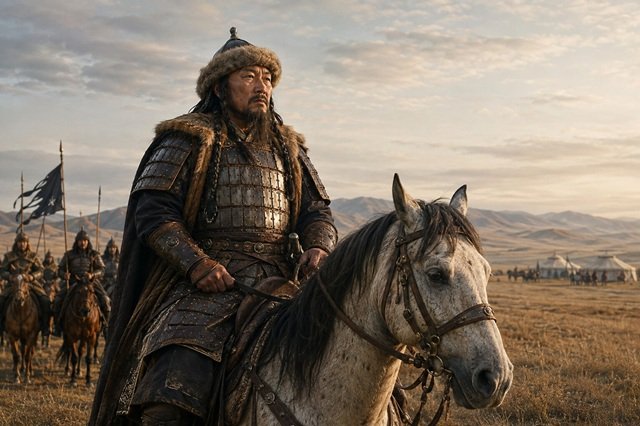
Genghis Khan, one of history’s most formidable conquerors, is being celebrated in modern Mongolia as a symbol of national unity, political strength and cultural identity, despite the mass killings and devastation that
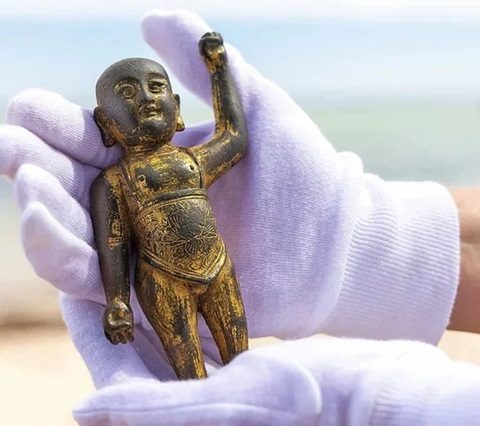
A 500-year-old bronze Buddha statue discovered buried near a roadside in Western Australia has been returned to China, ending years of uncertainty over its custody but leaving unanswered questions about how the artefact reached the country. The 15cm (six-inch) figurine
The United States and the Soviet Union came closer to an agreement to abolish nuclear weapons than the public was led to believe after
Leif Erikson and his Norse crew reached North America around the year 1000, establishing an outpost in present-day Newfoundland nearly five centuries before Christopher

Historical Background The civilizational beliefs have echoed in the course of history as more stringent factors above the geopolitical realities. In particular, the geopolitical trajectories are begotten from certain civilizational or cultural
More
Important scientific advances are changing what we know about the technological, social, and cognitive traits of our ancient human ancestors. The invention of the first stone tools was a hugely significant milestone
More
Environmental destruction entails two intertwined processes: climate change and the destruction of biodiversity, which mutually reinforce each other. Both are human-caused. Climate change is not the lead driver of biodiversity loss; it is
More
Dear Comrades if it must be you speak no more with me nor smile no more with me nor march no more with me then let me take a patience and a
More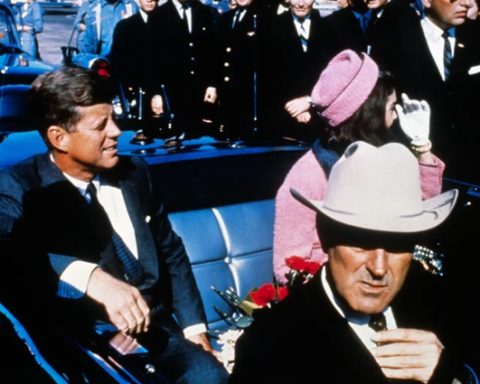
Six decades ago today (Nov. 22), President John F. Kennedy was assassinated in Dallas. The murder put an end to “Camelot” and the hope and energy that the young president and his
More
All of humanity can now take the Grand Tour: a travel circuit of global sites that help us understand ourselves and our history, made increasingly clear thanks to recent advances in archaeology
More
Link to Part 6 Reforms Whenever the class nature of the state is threatened, its first line of defense will be the police force. We have repeatedly witnessed this phenomenon in Sri
More
by Santosh Mathew On 14 October 2023, the long awaited ferry service between India and Sri Lanka was green-flagged. It is after four decades that the regular ferry service is being restarted.
More
Link to Part 5 Global experiences International experience shows that devolution of power to the periphery has successfully curtailed demands for secession in a number of countries. Yet, many chauvinist political parties,
More
Link to Part 4 Police powers Under colonialism, Sri Lanka’s policing and judicial system was developed to safeguard colonial privileges and interests. Since independence, this skewed system has continued with minimal changes,
More
Link to Part 3 Current Situation The full implementation of the 13th amendment continues to be a controversial issue. The amendment is subject to opposition from both the south and the northeast
More
by Saurav Sarkar Israeli flags are flying over all government buildings in the United Kingdom currently, but this isn’t the first time the former imperial hegemon has put its weight behind Zionism. In 1917,
More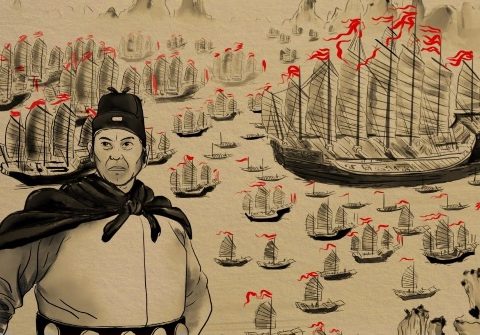
by Yi Fan More than 600 years ago, a large fleet of hundreds of ships from China’s Ming Dynasty traversed the Indian Ocean. The man at the helm was Zheng He, Asia’s
More
Link to Part 2 The 13th Amendment The accord with India signed in 1987 was followed up with the enacting of the 13th Amendment[i]. This established nine provincial councils within a unitary
More
Fifty years back, Pinochet’s coup destroyed Allende’s government and the structure of liberal democracy in Chile. Allende died with a machine gun in his hands, defending his attempt to build socialism in
More