Nearly four decades after the explosion that defined the world’s worst nuclear disaster, the ruins of Reactor No 4 at the Chernobyl power plant have вновь become a source of global тревога. What was once a symbol of Cold War catastrophe now sits in the middle of an active war zone, where drones and missiles threaten a structure never built to withstand them. Reporting from Times UK underscores how a single strike could undo decades of containment and potentially release radioactive material across Europe once again.
At the center of this danger stands the New Safe Confinement (NSC), a vast steel arch completed in 2019 to enclose the разрушенный reactor. Designed to last a century, it represents one of the most ambitious engineering projects in history. However, its purpose was to contain radiation, not to resist military attacks. That limitation has become increasingly clear as the war in Ukraine intensifies.
The risk is no longer hypothetical. In February 2025, a Russian Shahed drone struck the northwestern section of the NSC, breaching both its outer and inner layers. The explosion triggered a fire that burned for 17 days, damaging the internal membrane that regulates conditions around the reactor remains. According to Serhii Tarakanov, director-general of the Chernobyl Nuclear Power Plant, a more powerful strike could have far more devastating consequences.
He warns that if the arch were penetrated and the underlying sarcophagus destabilized, vast quantities of hazardous material could be released. This includes uranium, plutonium and other radioactive elements fused with concrete and steel into a lava-like mass. Even more опасно is the radioactive dust contained within the structure. If released, it could rise into the atmosphere and spread far beyond Ukraine’s borders.
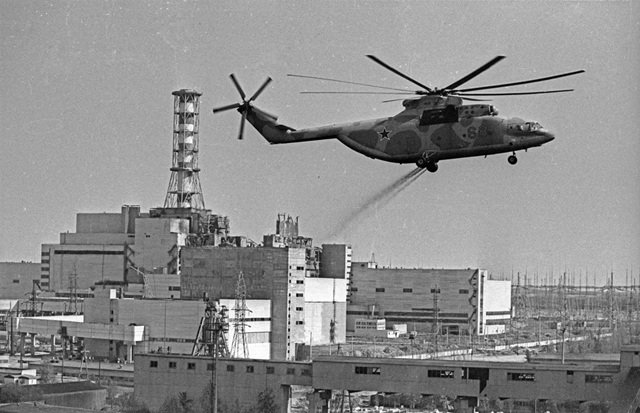
The масштаб of the original 1986 disaster remains staggering. When Reactor No 4 exploded, it released roughly 400 times more radioactive material than the atomic bomb dropped on Hiroshima. Two workers died immediately, while dozens of emergency responders succumbed to radiation within months. Thousands more, known as “liquidators,” suffered long-term health consequences after being exposed during the cleanup.
Survivors like Yevhen Yashyn still recall the event vividly. Arriving at the plant shortly after the explosion, he described a blinding glow emanating from the reactor, “round and bright as the sun.” With little more than a gauze mask and iodine tablets for protection, he worked for days in extreme conditions. Today, he notes that few of his colleagues are still alive, a stark reminder of the disaster’s lasting human toll.
The original containment effort was rushed and imperfect. The concrete sarcophagus built in 1986 was intended only as a temporary solution, constructed in just 200 days under emergency conditions. It encloses a volatile mix of radioactive materials, including fuel, dust and structural debris. While the NSC was later built to cover this unstable structure, the sarcophagus itself remains fragile.
That fragility is now compounded by ongoing military activity. Ukraine faces a constant поток of missiles and drones, with many passing dangerously close to nuclear facilities. Officials report that advanced hypersonic missiles have flown within miles of both Chernobyl and other power plants, raising the risk of accidental or deliberate strikes.
Tarakanov stresses that while the steel arch might withstand some impacts, the structure beneath it is far less resilient. Built decades ago under extreme pressure, it does not meet modern safety standards. A sufficiently powerful strike could cause parts of it to collapse, releasing radioactive material that has been contained for years.
The damage already inflicted has made the situation more precarious. The 2025 drone strike left a breach in the NSC, creating a direct link between the contaminated interior and the outside environment. Emergency repairs have addressed the most immediate issues, including sealing the main hole and hundreds of smaller openings created during firefighting efforts. However, restoring the structure fully is expected to cost hundreds of millions of euros, a challenging prospect in the midst of war.
Repair work is further complicated by radiation levels. Areas above the sarcophagus expose workers to significant doses, limiting how long they can safely operate. Teams must work in short, carefully managed shifts, slowing progress and increasing the complexity of the task.
Beyond the technical challenges, Chernobyl remains a powerful historical symbol. The disaster contributed to the eventual collapse of the Soviet Union by exposing systemic failures and eroding public trust. Initial attempts to conceal the scale of the accident only deepened the crisis, as delayed information allowed radiation to spread and fueled public outrage.
Today, that legacy takes on new urgency. The war in Ukraine has transformed Chernobyl from a managed hazard into an active risk zone. The combination of aging infrastructure, incomplete decommissioning and ongoing military threats creates a uniquely dangerous situation.
Plans to fully dismantle the reactor and remove its radioactive contents have been put on hold indefinitely. Instead, efforts are focused on maintaining containment and preventing further damage. As long as the conflict continues, the possibility of a permanent solution remains distant.
For those who experienced the original disaster, the current situation is deeply unsettling. Yashyn reflects that the events of 1986 still shape his life and fears that a similar catastrophe could happen again under today’s unpredictable conditions.