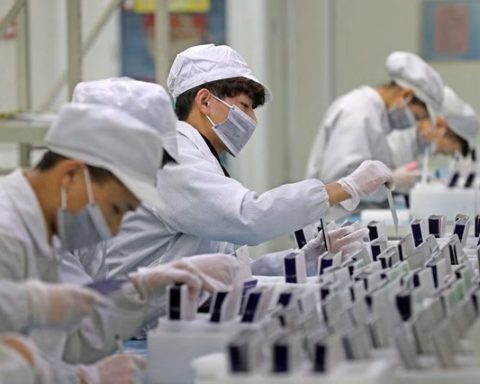
China is advancing its military capabilities with artificial intelligence at the forefront, as state-owned defense manufacturer Norinco unveiled the P60 military vehicle in February, capable of autonomously conducting combat-support operations at speeds of 50 kilometers per hour. The system is powered by DeepSeek, a leading AI model developed in China, and touted by officials as a key element in closing the technological gap with the United States.
A review conducted by Reuters of hundreds of research papers, patents, and procurement records highlights Beijing’s systematic efforts to integrate AI into military operations. While many details of China’s next-generation weapons remain classified, the documents indicate progress in autonomous target recognition, battlefield decision support, and AI-powered command systems. Reuters noted, however, that it could not verify if all systems are operational.
Chinese military research continues to rely on both domestic hardware and U.S. technology. Despite U.S. export restrictions on Nvidia’s A100 and H100 chips, patents and tenders show the PLA and affiliated institutions seeking to use them, alongside domestic alternatives like Huawei’s Ascend AI chips. Reuters reported that as of 2025, DeepSeek-powered systems have appeared in multiple PLA tenders, reflecting Beijing’s push for “algorithmic sovereignty” and reduced dependence on Western technology.
The documents reviewed by Reuters also highlight ambitious applications of AI, including robot dogs for scouting, autonomous drone swarms, satellite and drone image analysis, and immersive command centers. Researchers claim that DeepSeek-enabled systems can process tens of thousands of battlefield scenarios in seconds—tasks that previously took human planners days to complete.
Autonomous weapon development is another focus. Patents and tenders suggest the PLA is integrating AI into drones capable of coordinated operations with minimal human input. Beihang University, known for military aviation research, is reportedly using DeepSeek to enhance drone swarm decision-making. Chinese defense leaders, however, have emphasized maintaining human oversight amid concerns over AI in warfare.
Despite the shift toward domestic chips, Nvidia hardware continues to appear in PLA research, Reuters reported, with multiple patents citing A100 chip use in military-affiliated institutions. Experts acknowledge that U.S. restrictions have affected some AI research but say China is committed to narrowing the technological gap.
According to Reuters, Norinco, DeepSeek, the PLA, and affiliated companies did not respond to requests for comment, and U.S. authorities declined to comment on the findings. Nvidia stated that small quantities of recycled hardware do not pose a national security risk and cannot support new military capabilities.