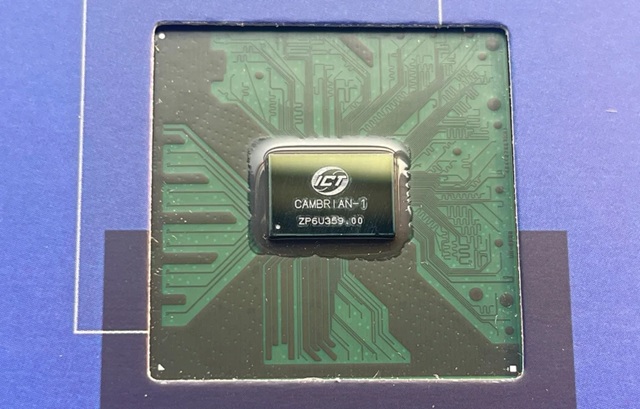
China is now leading the world in fundamental research on next-generation computer chips, producing more than twice the number of research papers as the United States in key areas of chip design and fabrication. A new analysis suggests that if these advancements translate into commercial applications, U.S. export controls aimed at restricting China’s semiconductor development could lose their effectiveness.
Between 2018 and 2023, Chinese institutions were credited in 50% of the top 10% most-cited research papers in this field, compared to just 22% for U.S. institutions and 17% for European ones. The study, published in The Nature, highlights China’s dominance in emerging chip technologies such as neuromorphic computing, which mimics the structure of the human brain, and optical computing, which relies on light rather than electrons to process information. Both fields have the potential to revolutionize artificial intelligence (AI) and high-performance computing.
Despite U.S. export restrictions on advanced chips and manufacturing equipment, China’s research is having a significant academic impact. Yunji Chen, head of the State Key Laboratory of Processors in Beijing, noted that U.S. scholars account for the largest share of citations for China’s deep-learning chip designs. Meanwhile, analysts warn that if China successfully commercializes its experimental technologies, it could leapfrog the U.S. rather than merely catching up.
With China constructively pushing forward in next-gen chip research, experts believe the global balance of power in semiconductor technology could shift, challenging the U.S.’s long-held dominance in the industry.