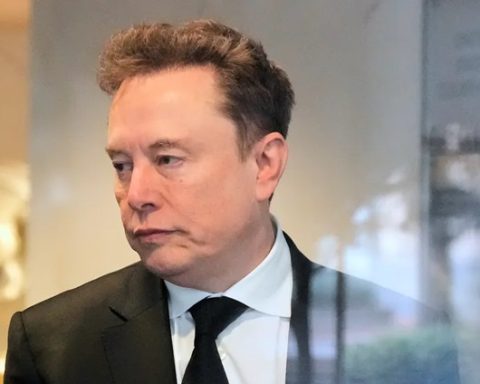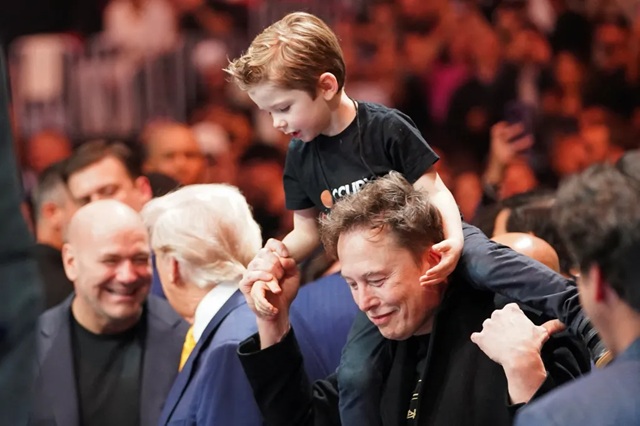
Elon Musk, already one of the most influential figures in technology and business, is increasingly gaining attention for a more personal crusade: repopulating the planet.
As reported by The Times UK, the billionaire is deepening his involvement with the growing pronatalist movement—a coalition of thinkers, policymakers, and influencers who believe that declining birth rates pose an existential threat to civilization. For Musk, the mission is personal, ideological, and, according to those close to him, urgent.
Over the summer, Musk was not only seen throwing his support behind Donald Trump’s presidential campaign, but also reportedly planning for future children with Ashley St Clair, a conservative influencer and the mother of his 14th child. St Clair revealed that she and Musk had already begun discussing surrogacy options in an effort to expand what Musk envisions as a “legion” of offspring aimed at securing humanity’s future.
According to The Times, Musk’s zeal for procreation isn’t limited to traditional parenting. Reports from the Wall Street Journal suggest the SpaceX CEO has approached multiple women—some casually, some with whom he had personal relationships—offering sperm via messages sent through his platform X (formerly Twitter). One such message referenced a request from a Japanese official asking for Musk’s donation to an unnamed woman: “No romance or anything, just sperm,” he allegedly wrote.
Musk’s views align with a wave of global leaders such as Italy’s Giorgia Meloni and Hungary’s Viktor Orbán, both of whom have pushed pro-natalist policies aimed at reversing demographic decline. In the U.S., Musk finds allies in figures like Trump and his vice-presidential pick J.D. Vance, who recently called for “more babies in the United States of America.”
The Times reports that Musk has taken practical steps to support his ambitions. He’s constructed a residential compound in Texas to house the mothers of his children and works closely with Shivon Zilis, a Neuralink executive and mother of four of his children, all conceived via IVF.
This growing family is part of a broader cultural movement, marked by events like NatalCon, a conference in Texas that brings together libertarian technologists, religious conservatives, and futurist thinkers. While opinions vary—some champion traditional family values, others advocate for embryo selection and fertility tech—most agree that falling birth rates represent a looming crisis.
But not everyone is convinced Musk’s approach is the answer. Critics argue that his vision—rooted in technology and elite access—risks turning procreation into a playground for the wealthy. The Heritage Foundation, a conservative think tank, warned that Silicon Valley’s version of pronatalism may be less about societal good and more about “producing the smartest, healthiest children possible.”
Yet voices like Catherine Pakaluk, an economics professor and mother of six, see common ground with Musk. “We need to have an honest conversation about the future of our population,” she told The Times UK, adding that the media’s framing of parenthood has grown increasingly negative and even dystopian.
Musk himself has echoed similar concerns. “Instead of teaching fear of pregnancy,” he said, “we should teach fear of childlessness.”
With global birth rates at historic lows—1.6 children per woman in the U.S., below the 2.1 replacement threshold—the urgency Musk feels may not be as far-fetched as it sounds. But whether his strategy of high-tech fertility, personal ambition, and ideological fervor will inspire a broader movement or simply raise more eyebrows remains to be seen.