


by Luxman
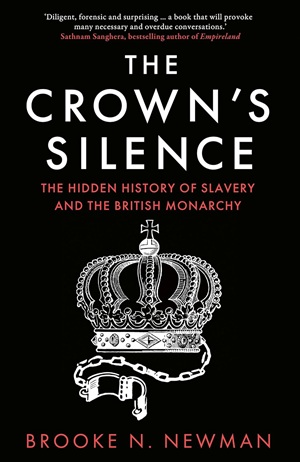
Brooke N. Newman’s The Crown’s Silence is a book that does not merely revise British history; it indicts it. Written with the precision of an archival historian and the moral urgency of a political intervention, the book dismantles one of the most carefully protected myths of British national identity: that the monarchy stood above, apart from, or uneasily adjacent to the transatlantic slave trade. Newman’s central claim is blunt and corrosive — that the British Crown was not a passive beneficiary of slavery, nor a reluctant overseer, but an active architect, financier, and legitimising force behind one of the greatest crimes in human history. The scandal is not simply what the monarchy did, but what it has refused to say ever since.
From its opening pages, the book situates silence as power. Newman frames Queen Elizabeth I’s motto — “Video et taceo” (“I see and keep silent”) — not as personal discretion but as political strategy. The Crown’s silence, she argues, is not absence but action. It is a method of governance that allows continuity without accountability. When Elizabeth I assured the Spanish ambassador that John Hawkins’s voyage was an “innocent mercantile venture,” despite knowing it involved the capture and sale of Africans, she established a template that would echo for centuries: denial in public, profit in private. The lie was not incidental; it was foundational.
Newman is most devastating when she strips away the fig leaf of ambiguity surrounding Elizabeth I’s involvement. The queen did not merely tolerate Hawkins; she “loaned him one of the largest warships in her modest royal navy,” expected “a share of the profits,” and ultimately received “a staggering 60 percent return” on her investment. This was not ignorance, nor naïveté, nor a momentary lapse driven by fiscal desperation. It was a calculated decision to convert human bodies into royal revenue. The Crown’s coffers, Newman insists, were “bursting with gold coins, jewels, sugar, and animal hides, as the payment for his slaves.” The language is unrelenting because the evidence is.
The book’s provocation lies in its refusal to allow moral outsourcing. Newman demolishes the comforting narrative that merchants were rogue actors and monarchs reluctant overseers. She shows instead how royal charters, naval loans, monopolies, and legal protection transformed private violence into state-sanctioned commerce. Hawkins did not act despite the Crown but under its command. Flying the royal standard, captaining the Jesus of Lübeck, he could plausibly claim that enslaving Africans was an act of English policy. When Newman writes that Elizabeth I became “the first English monarch to profit directly from the transatlantic slave trade,” she is not making a rhetorical point; she is closing a historical case.
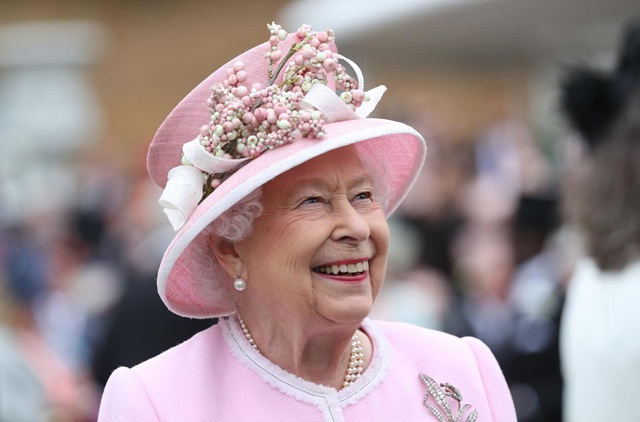
What makes The Crown’s Silence especially uncomfortable for contemporary Britain is that it refuses to confine culpability to the sixteenth century. Newman draws a deliberate line from Elizabeth I’s evasions to Elizabeth II’s silence. The latter’s refusal to acknowledge or apologise for the monarchy’s role in slavery is presented not as oversight but as inheritance. When a Black protester shouted “You should say sorry!” inside Westminster Abbey during the 2007 abolition commemoration, the queen’s wordless response was, in Newman’s reading, historically fluent. Silence was tradition. Silence was continuity.
The book takes aim at the politics of commemoration with particular venom. Newman argues that Britain’s celebration of abolition operates as a moral laundering exercise, one that “fills silence with narratives of power” while erasing the centuries of state-sponsored violence that preceded it. Abolition becomes proof of British benevolence, rather than an overdue, partial dismantling of a system the nation had perfected. As Newman notes, the British state chose to remember the end of slavery rather than its beginning, and to congratulate itself for stopping what it had spent centuries building.
Perhaps the book’s most controversial intervention is its insistence on reparations as a logical, not symbolic, conclusion. Newman documents repeated petitions — from Rastafarians in Jamaica to Caribbean governments — requesting apology, restitution, and repatriation. The monarchy’s response is consistently evasive: slavery is regrettable, but it belongs to the past; governments today cannot be held responsible. Newman exposes this as a legal and moral sleight of hand. The Crown, she argues, is not a rotating administration but a continuous institution, one that retains wealth, land, artefacts, and prestige accumulated during the era of enslavement. To claim disconnection while retaining inheritance is hypocrisy elevated to constitutional principle.
Newman is unsparing in her treatment of liberal discomfort. She anticipates the reader’s resistance — the instinct to see Elizabeth I as a product of her time, or Elizabeth II as a ceremonial figure — and dismantles it methodically. Context, she insists, explains motivation but does not dissolve responsibility. Other paths were imaginable. Other choices were made. The Crown chose profit. Again and again. Even abolition, she notes, compensated enslavers rather than the enslaved, reinforcing racial hierarchies while proclaiming moral progress.
Stylistically, The Crown’s Silence is forensic rather than polemical, which is precisely what makes it incendiary. Newman does not shout; she documents. She quotes letters, financial records, charters, sermons, and protests, allowing the monarchy to condemn itself in its own words. The cumulative effect is suffocating. By the end, silence no longer appears neutral; it appears violent.
This is not a book that seeks reconciliation without reckoning. Newman makes clear that healing cannot occur in the absence of truth, and truth cannot coexist with royal muteness. The Crown’s silence, she concludes, has outlived its usefulness. It no longer preserves dignity; it exposes moral bankruptcy. In forcing the British monarchy to confront what it has “seen and kept silent” about for centuries, Newman does not merely rewrite history. She demands that history finally answer back.









