Chancellor Friedrich Merz announced that Germany has begun confidential discussions with France on building a European nuclear deterrent, signaling a historic shift in the continent’s security thinking as leaders confront what they describe as a dangerous new era of geopolitical rivalry.
Speaking at the Munich Security Conference, Merz said Europe must grow stronger to reset its relationship with the United States and urged Washington to “repair and revive trust” with its allies. He warned that the longstanding international order was eroding and that even America would be unable to manage rising global tensions alone.
French President Emmanuel Macron reinforced the message, arguing that Europe must transform itself into a true geopolitical power capable of defending its own interests. He said the continent’s Cold War-era security framework is no longer suited to modern threats and must be fundamentally reorganized.
The consultations mark a significant moment for Europe, which has long depended on U.S. nuclear protection through NATO. France remains the European Union’s only nuclear-armed state and holds the world’s fourth-largest arsenal, placing it at the center of any future continental deterrence strategy.
Leaders say the debate is driven by a worsening threat environment, including the ongoing war launched by Russia against Ukraine, as well as instability in global trade and security structures. European officials increasingly fear the emergence of unequal security zones if the continent fails to coordinate its defenses.
Merz emphasized that Berlin would remain bound by international agreements that prohibit it from developing its own nuclear weapons, framing the talks as complementary to existing alliance arrangements rather than a break from them. Still, the discussions highlight how far European capitals are willing to go to reduce reliance on U.S. guarantees after a year of unprecedented strain in transatlantic relations.
U.S. Secretary of State Marco Rubio described the alliance as facing a “defining moment” but adopted a more conciliatory tone than Vice President JD Vance, whose sharply critical remarks toward European allies at the same conference a year earlier had deepened divisions.
Public sentiment appears to reflect the unease. A survey by YouGov found favorability toward the United States in Europe at its lowest level since tracking began in 2016, with threat perceptions in some countries approaching those associated with China, Iran, and North Korea, though still below views of Russia.
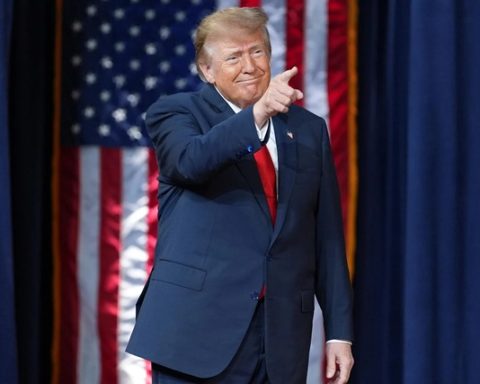
Tensions have been exacerbated by the foreign policy approach of Donald Trump, whose administration has imposed tariffs on allies, threatened military action in parts of Latin America including Venezuela, and floated the idea of annexing Greenland from Denmark, a fellow NATO member.
Despite the friction, European and American officials insist cooperation remains essential. Merz concluded that NATO membership is not only Europe’s strategic advantage but also America’s, urging both sides to rebuild trust as great-power competition intensifies and the assumptions that defined the postwar era give way to a far more uncertain global landscape.