


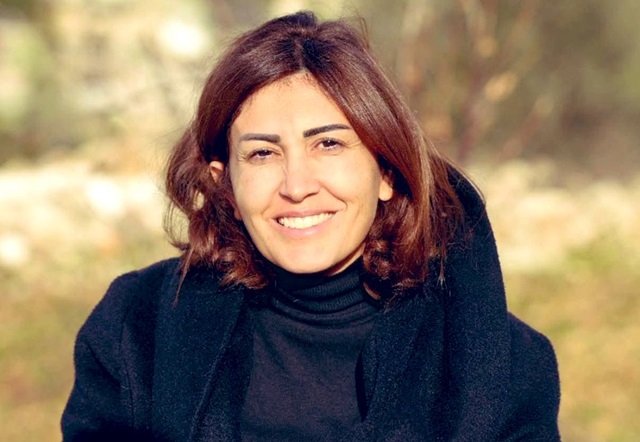
An extensive investigation by the Lebanese human rights organisation Legal Agenda, conducted alongside international monitors Human Rights Watch and Amnesty International, argues that the killing of Lebanese journalist Amal Khalil was not an unintended consequence of military operations but a deliberate attack amounting to a potential war crime. Drawing on witness testimony, satellite imagery, military statements, medical records and communications logs, the investigation presents one of the most detailed reconstructions yet of the incident and raises broader concerns over the protection of journalists during armed conflict.
An independent investigation conducted by the Lebanese human rights organisation Legal Agenda, alongside international human rights monitors Human Rights Watch and Amnesty International, has concluded that there is substantial evidence indicating that the killing of Lebanese journalist Amal Khalil during Israeli military operations in southern Lebanon may constitute a war crime under international humanitarian law.
The investigation reconstructs the events surrounding the attack in the town of Al-Tiri and argues that Amal Khalil was deliberately targeted while carrying out her journalistic duties. It also concludes that photographer Zainab Faraj, who survived the incident with injuries, was likewise the victim of an unlawful attack. According to the findings, the Israeli military carried out three separate strikes over approximately two hours, while continuously monitoring the area with drones and subsequently delaying rescue operations for several hours.
The report places particular emphasis on the events preceding Amal’s death. On 15 April 2026—only days before the fatal attack—the Israeli military’s Arabic-language spokesperson shared on social media a video originally published by Al-Akhbar newspaper showing Amal rescuing a cat trapped beneath rubble in the town of Ansariyeh. In the accompanying post, the spokesperson referred to Al-Akhbar as “terrorist media” speaking on behalf of what he described as “the devilish Hezbollah,” using language that the investigation characterises as inflammatory and potentially inciting.
The investigation further documents that Amal had previously received two explicit death threats from an Israeli telephone number during August and September 2024, months before the escalation of Israeli military operations in Lebanon. One message warned that the Israeli military knew her location and instructed her to “escape” if she wished to preserve “the connection between her head and shoulders.” Amal later publicly disclosed that Israeli authorities had also threatened Al-Akhbar newspaper itself, demanding that she cease her reporting or face consequences directed at the publication.
These threats were formally documented by Lebanon’s former Information Minister Ziad Makary, who, on 17 September 2024, wrote to UNESCO’s Regional Office in Beirut detailing the threats against Amal, including explicit references to killing, beheading and demolishing her home. The Lebanese Journalists Syndicate also reported the threats to the United Nations Special Rapporteur on freedom of opinion and expression, Irene Khan, urging international attention to the matter.
According to the investigation, these documented threats establish a broader context suggesting that Amal had already become known to Israeli authorities because of her reporting from southern Lebanon. The report argues that this background is significant when assessing whether the Israeli military possessed prior knowledge of her identity and professional status before the fatal attack.
The investigation challenges the Israeli military’s public explanation of the incident. Israeli officials acknowledged carrying out strikes against a vehicle and subsequently against a building, claiming that Hezbollah operatives had sought shelter there and posed an immediate threat to Israeli forces. However, Legal Agenda’s reconstruction disputes that account.
Based on witness testimony, route analysis and satellite imagery, investigators conclude that Amal and Zainab were travelling exclusively on a journalistic assignment from Sidon through Ain Baal, Qana, Tebnine and Qounine before arriving in Al-Tiri. The investigation states that neither their vehicle nor that of their companions entered any military installation or Hezbollah facility before reaching the attack site.
The report also disputes the claim that Israeli forces faced an immediate military threat. Satellite imagery reviewed during the investigation reportedly showed no visible Israeli military vehicles at the nearest possible troop concentration point on the day of the incident. Zainab Faraj likewise testified that she observed no Israeli military presence throughout the journalists’ journey.
Investigators further argue that even if Israeli forces had been stationed nearby, this alone would not justify an attack against civilians under international humanitarian law. They note that ceasefire arrangements and political understandings cannot override the legal obligations imposed by the Geneva Conventions and customary international humanitarian law, including the principles of distinction, proportionality and precaution.
One of the report’s most significant findings concerns the sequence of attacks. While the Israeli military acknowledged two strikes, investigators conclude that three separate attacks took place. The first struck the vehicle carrying Amal’s companions, Ali Bazzi and Muhammad al-Hourani. Approximately one hour later, Amal and Zainab’s own vehicle was attacked. Roughly another hour later, the building in which the two wounded journalists had sought refuge was struck, killing Amal beneath the rubble and seriously injuring Zainab.
According to the investigation, Bazzi and al-Hourani were already dead in their vehicle by the time the building was attacked, undermining the Israeli military’s later assertion that the building contained militants. Investigators state that they found no evidence that either man was armed, engaged in hostilities or otherwise forfeited civilian protection under international humanitarian law.
The report also presents evidence suggesting that Israeli forces were fully aware that the individuals inside the building were civilians and journalists. Zainab testified that three Israeli drones remained overhead following the initial strike, with one drone reportedly approaching within less than a metre of her face before following the pair until they entered the building. Investigators believe the drones continuously monitored the area for nearly two hours, enabling operators to observe that only two wounded women had entered the structure.
In addition, the investigation states that Israeli authorities received official notifications through both UNIFIL and the international ceasefire monitoring mechanism informing them that two female journalists were trapped at the location. The first notification reportedly reached Israeli authorities at approximately 3:00 p.m., followed by another at 3:41 p.m.—around 90 minutes before the building was struck at approximately 4:25 p.m. Simultaneously, Lebanese media outlets, government officials and Al-Akhbar itself publicly identified Amal and Zainab as journalists trapped at the site.
Legal Agenda argues that these multiple channels of communication substantially undermine any suggestion that Israeli forces were unaware of either the journalists’ civilian status or Amal’s identity.
The investigation also accuses Israeli forces of obstructing rescue efforts. Ambulance teams reportedly sought permission twice to reach the wounded journalists, facing lengthy delays between 3:00 p.m. and 4:45 p.m., and again between 6:23 p.m. and 8:15 p.m. Rescue personnel were also allegedly forced to withdraw after what investigators believe was the deployment of a stun grenade near the rescue team, while additional allegations suggest that fire was directed towards an ambulance.
Medical evidence cited in the report places Amal’s death at approximately 7:00 p.m., indicating that she survived beneath the rubble for around two and a half hours after the building was struck. The investigation concludes that delays preventing rescuers from reaching her may have directly contributed to her death. If established, the obstruction of humanitarian relief would constitute a separate violation of international humanitarian law, while any deliberate attack on medical transport would amount to an additional potential war crime.
Drawing together witness testimony, military statements, satellite imagery, communications records and legal analysis, the investigation concludes that the available evidence indicates Amal Khalil was deliberately killed while performing her duties as a civilian journalist. It argues that the attacks violated the customary international humanitarian law principles of distinction, precaution and protection of journalists, as well as obligations to facilitate medical assistance to the wounded.
For the investigators, the case extends beyond the death of a single journalist. Amal had spent years documenting the experiences of communities across southern Lebanon, building extensive local networks and becoming a trusted source for both residents and fellow reporters. Colleagues recalled that she knew virtually every village and family affected by the conflict and consistently placed the concerns of local civilians at the centre of her reporting.
The report concludes that her death represents not only the loss of an experienced journalist but also a broader challenge to press freedom during armed conflict. It calls for an independent international investigation capable of determining individual criminal responsibility and ensuring accountability where violations of international humanitarian law are found to have occurred.









