by Our Economic Affairs Editor
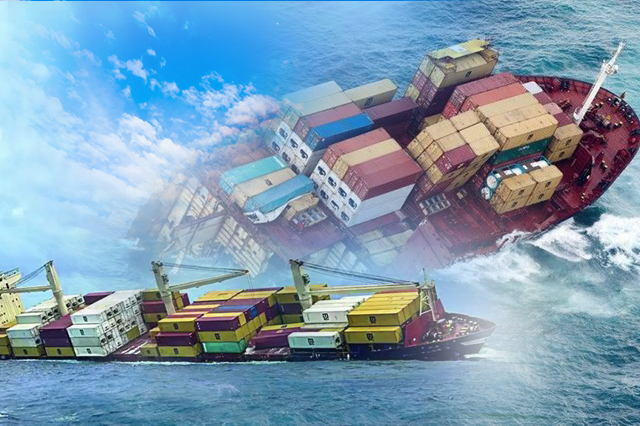
Between 2015 and 2025, the Mediterranean Shipping Company’s global rise unfolded alongside an accumulation of environmental crises, safety lapses, and governance failures that now define a decade marked as much by expansion as by erosion of public trust. As Greenpeace India’s issue brief notes at the very outset, “Between 2015 and 2025, the Mediterranean Shipping Company (MSC) became the world’s largest container carrier,” yet this achievement came in tandem with “repeated scrutiny over safety incidents, environmental compliance, liability strategies, and end-of-life vessel management.” The sinking of MSC ELSA 3 in May 2025 crystallized these concerns into a single, devastating catastrophe, one that the report describes as having “triggered severe oil and nurdle pollution, devastated coastal livelihoods, and led to landmark litigation in India.” In examining the underlying patterns that led to this disaster, Greenpeace India offers not merely an account of an isolated accident but a portrait of systemic practices across MSC’s fleet management, regulatory strategy, legal maneuvering, and environmental footprint.
The story begins with the company’s expansion strategy and the structural underpinnings of its fleet composition. By 2025, MSC controlled “more than 750 vessels, accounting for nearly 20% of global container capacity.” This explosive growth was driven by a dual system: investing in ultra-large newbuilds for major trade routes while simultaneously acquiring ageing ships that were redeployed increasingly to the Global South. The report emphasizes that this was not coincidental but strategic, noting that “the widespread use of ageing ships, coupled with a heavy reliance on flags of convenience such as Liberia and Panama, has raised questions…about the adequacy of inspection regimes, crew safety, and accountability for pollution incidents.” Such vessels, often operating far from stringent European or North American oversight, became the backbone of feeder and regional networks in South Asia, West Africa, and parts of Latin America, areas where, as the report points out, “weaker enforcement environments coincide with the company’s late-stage asset operations.”
MSC ELSA 3 provides a central case study of how this model functions in practice. The vessel, built in the late 1990s and brought under MSC’s operations in 2015, had long shown signs of decline. Its inspection history, meticulously compiled from port records, reveals a steady march of technical failures. The brief highlights that these deficiencies ranged from “faulty life-saving appliances and fire systems to machinery leaks and navigational failures,” and although many were corrected in the short term, the cumulative pattern “paint[s] a picture of systemic neglect.” Through the narrative of inspections between 2010 and 2024, the report identifies a vessel repeatedly repaired just enough to pass the next regulatory hurdle. As summarized: “Collectively, these inspection findings and incident records reveal a vessel trapped in a cycle of deferred maintenance and reactive compliance.”
This pattern of incremental decline was made possible in part by a strategic shift in the vessel’s operational geography. The report states that the ship was “progressively moved away from heavily regulated European ports toward regions offering lower operating expenses, limited inspection frequency, and more lenient flag-state oversight.” After being reflagged to Liberia—a registry widely criticized by NGOs and maritime experts—by 2015, the vessel gradually transitioned to Asian waters. By 2025 it was serving the Kerala Shuttle Service between Vizhinjam and Kochi, a short-route assignment typical for ships nearing end-of-life. Greenpeace India notes that such redeployment “appears economically motivated: extracting residual value from an ageing vessel in weaker regulatory markets prior to scrapping.” The ultimate disaster therefore was not sudden but predictable, “the culmination of long-term structural decline, inadequate oversight by both flag and port states, and a broader culture of cost minimisation over safety assurance.”
When MSC ELSA 3 developed a severe list and blackout during the early monsoon and capsized off Kerala, the environmental and social consequences were immediate and far-reaching. The brief characterizes the outcome starkly: “The widespread release of oil and nurdles devastated coastal ecosystems, disrupted fisheries, and imposed heavy cleanup costs on local authorities.” Fisherfolk, already vulnerable to fluctuating catch, saw their livelihoods upended as oil slicks spread and trillions of plastic pellets washed ashore. Local communities in Pulluvila, Valiyathura, and surrounding coastal stretches organized spontaneous protests, described in the brief as “demonstrations…calling for cleanup, accountability, and compensation.” Their testimonies, images, and on-ground documentation helped pierce international silence and propelled legal action faster than in previous MSC-related incidents elsewhere in the world.
The legal response to the ELSA 3 sinking marks one of the most important dimensions of the decade-long narrative. Greenpeace India highlights how MSC has historically relied on “international liability limitation regimes, denial of negligence, and early settlements,” using a strategy of legal containment designed “to minimise accountability.” The company’s typical recourse to flags of convenience and one-ship shell ownership structures further buffers MSC’s core corporate entity from major financial risk. Yet in Kerala, this approach met an unusually robust judicial challenge. The state government initiated claims totaling ₹9,531 crore, and the Kerala High Court issued a series of orders, including the conditional arrest of sister ships to secure damages. The brief stresses that the High Court “directed MSC to deposit ₹1,227.62 crore in damages,” a sharp departure from typical liability limits, as MSC claimed its exposure was capped at approximately ₹132 crore under international conventions. The brief notes that the court’s stance “broke precedent” and placed pressure on MSC to comply with cleanup and compensation expectations, challenging the long-standing imbalance between large shipping corporations and coastal communities.
While MSC ELSA 3 became the most high-profile symbol of MSC’s operational failures in South Asia, it is crucial to situate this disaster within a wider history of fleet incidents. Table 3 in the report enumerates a series of serious accidents involving MSC vessels between 2007 and 2025. These include major fires, such as the MSC Flaminia’s “mid-Atlantic cargo-hold explosion,” the MSC Messina’s engine-room fire in 2021, and the dramatic blaze aboard MSC Daniela off Sri Lanka that required multi-day intervention by naval forces. The company’s vessels were involved in grounding events in the St. Lawrence Seaway, piracy-related seizures in the Gulf of Guinea, and collisions such as the infamous MSC Chitra crash off Mumbai, which resulted in “shoreline contamination” and damages estimated at “~₹514–515 crore.” Loss of containers also recurred, including the MSC Zoe’s spill of up to 342 containers that polluted the Wadden Sea and led to a €3.4 million settlement with Dutch authorities. Across these incidents, the brief argues that “older vessels and operations in the Global South are disproportionately represented in serious events,” revealing that the systemic factors culminating in the ELSA 3 sinking have long been present.
The structural drivers behind these events are rooted in fleet-wide management practices, particularly the reliance on open registries and the cascading of older vessels to jurisdictions with weaker oversight. The brief notes unequivocally that “MSC’s average fleet age in 2023 was 16.8 years, the oldest among major carriers,” and that the company “uses Liberia, Panama, and Madeira as preferred registries.” These registries offer low taxation, reduced labor obligations, and flexible environmental enforcement, thereby creating an environment where compliance becomes, as the report phrases it, “a procedural obligation rather than a substantive safety priority.” Such a system entrenches a two-tiered fleet model: the most modern vessels operate in the scrutiny-heavy markets of Europe or East Asia, while the oldest and most technically vulnerable are dispatched to South Asia, West Africa, or South America.
End-of-life practices reinforce this divide. While MSC has publicly committed to “sustainable recycling” aligned with the Hong Kong Convention, the brief documents a starkly contradictory record. Between 2006 and 2024, MSC sent 125 vessels for scrapping in South Asia, many to the notorious shipbreaking yards of Alang, India. In 2023 alone, as Greenpeace India reports, NGO Shipbreaking Platform identified MSC as the “worst corporate dumper,” noting that the company had “scrapped no less than 14 of its old container ships in Alang.” These yards, where ships are beached and dismantled manually, often expose workers to toxic substances and cause irreversible coastal contamination. The report emphasizes that many of these vessels “departed directly from EU ports,” raising the possibility of violations of the EU Waste Shipment Regulation. This reality contradicts MSC’s public claims and underscores a broader pattern wherein corporate sustainability commitments are overshadowed by cost-saving imperatives.
Taken together, these factors outline a model of global logistics built on optimization for efficiency and profitability while externalizing risk toward marginalized regions. The brief synthesizes this dynamic succinctly, noting that MSC’s practices reflect “regulatory arbitrage—exploiting weaker enforcement environments to prolong vessel use and minimize end-of-life costs.” The environmental and human consequences of this system are borne not by MSC’s headquarters or shareholders but by those living along the coasts of Kerala, Gujarat, Bangladesh, Sri Lanka, West Africa, and other regions where weakened regulatory frameworks intersect with intense maritime traffic. The communities affected by the ELSA 3 sinking exemplify this imbalance, as they confront long-term ecological damage, loss of livelihoods, and uncertain recovery, even as legal battles drag on.
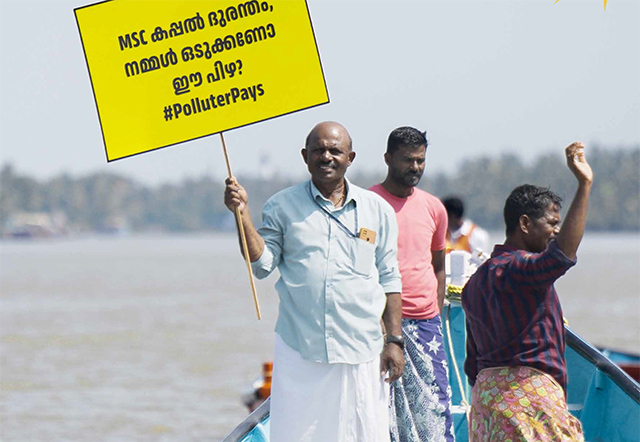
What complicates this picture further is the asymmetric manner in which MSC responds to crises depending on regional context. The brief highlights how in Europe or North America, MSC has “settled quietly” or contributed substantially to cleanup efforts, as seen in the MSC Zoe incident or its partial role in the California pipeline rupture. In contrast, in South Asia or Africa, the company’s initial posture tends toward denial, legal shielding, or delayed engagement. It was only sustained public pressure, amplified by Greenpeace India and coastal communities, that forced greater transparency in the ELSA 3 case. Such disparities point not simply to corporate strategy but to systemic inequalities in international maritime governance. Wealthier jurisdictions possess stronger enforcement, more powerful legal systems, and greater media scrutiny, whereas poorer coastal regions struggle to compel accountability from transnational carriers.
The year 2025 may, as the brief suggests, mark a turning point. Kerala’s litigation strategy, involving the arrest of sister ships and demands for compensation far exceeding conventional limits, may inspire other coastal states across the Global South. In a globalized shipping industry where liabilities are often diffused through complex ownership structures, these legal actions begin to reassert sovereignty over environmental protection and community welfare. At the same time, growing international attention to shipbreaking practices and the tightening of regulations in Europe may curtail the ease with which companies like MSC can offload ships into hazardous recycling markets.
The Greenpeace India report closes by underscoring that MSC’s decade-long record “reveals a striking duality”—a company celebrated for its global logistical prowess yet consistently implicated in environmental degradation and legal evasion. Its strategy, as distilled by the brief, is one of “maximizing commercial use of older tonnage” while minimizing accountability through layered registries, limited-liability structures, and jurisdictional asymmetries. The consequences are borne not by the corporation but by those living along the edges of global trade, where a single vessel’s failure can destroy fisheries, poison beaches, and unravel generations of economic stability.
Whether MSC adapts to these lessons remains to be seen. The brief concludes that “this model is unsustainable,” and that mounting regulatory, legal, and community pressures may force structural reform. The future of maritime governance will be shaped in part by how states, courts, and civil society respond to cases like MSC ELSA 3. What is clear is that the narratives emerging from Kerala and other affected regions challenge the longstanding invisibility of those harmed by global shipping and redefine what accountability must look like in a world that depends on maritime trade yet can no longer afford to ignore its hidden costs.