


by Our Political Affairs Editor
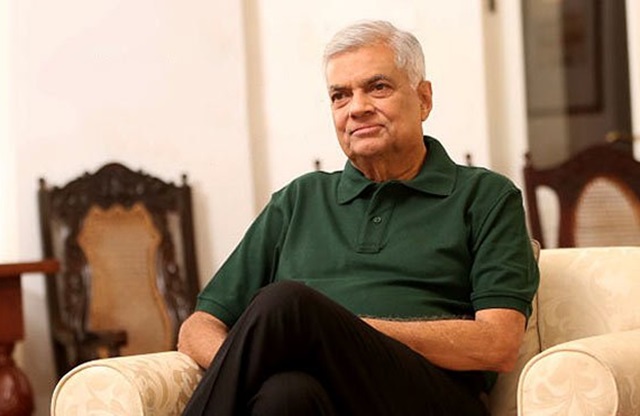
An International Monetary Fund (IMF) delegation, in Colombo to finalise the third tranche of its bailout package for Sri Lanka, met with former President Ranil Wickremesinghe today ( Nov. 18), expressing regret over his loss of political influence. According to insider sources, the meeting in his office on Flower Road featured IMF representatives praising Wickremesinghe’s leadership during one of the most turbulent periods in Sri Lanka’s economic history.
“In our history, we have rarely seen such exceptional progress as we did in Sri Lanka. The country stabilised faster than anticipated, and for that, we owe thanks to your rigorous and often bitter economic reforms,” one senior delegate reportedly told Wickremesinghe, before lamenting, “Unfortunately, you had to pay the price.” Wickremesinghe, unfazed, responded candidly, “I initiated this programme fully aware of the consequences, and I am at peace with them.”
Wickremesinghe stepped into leadership when the country was reeling from its worst economic crisis in decades, triggered by mismanagement, dwindling foreign reserves, and the collapse of the Rajapaksa government amidst mass protests. First as Prime Minister and later as President, he implemented IMF-backed reforms aimed at stabilising the economy. These measures, while praised internationally, were deeply unpopular at home, leading to his loss in the September Presidential Elections.
Sri Lanka’s economic collapse saw the nation default on its debt for the first time in history, leaving it no choice but to approach the IMF. The bailout programme introduced in March 2023, amounting to $3 billion, required sweeping austerity measures, including tax hikes, subsidy cuts, and restructuring of state enterprises. These policies stemmed the economic freefall but came at a high political cost, with public anger directed at Wickremesinghe’s government for imposing hardship on already struggling citizens.
The IMF delegation’s remarks, describing Sri Lanka’s recovery as a rare success story, underscore the paradox of Wickremesinghe’s tenure. He achieved what many thought impossible—halting the country’s economic collapse and steering it toward stability—only to lose his political foothold in the process. His pragmatism and willingness to bear the political consequences of reform have drawn both admiration and criticism, raising questions about the price of leadership during a national crisis.
While the IMF’s relationship with Sri Lanka spans decades, with past interventions in the 1960s, 1980s, and 2009, the current programme stands out for its intensity and stakes. The delegation’s acknowledgment of Wickremesinghe’s role reflects the bitter irony of his leadership: a stabiliser during the country’s darkest hour, rejected by the very people his policies aimed to save.


You are entitled to your rather skewed opinions. But we know that Ranil W is not electable and this has nothing to do with his ‘courageous ‘implementation of the IMF package. It has much to do with his sheer arrogance, aloofness and sly manoeuvres behind the scenes
The manner in which you laud RW it looks as if it is only RW who was capable of “saving” Sri Lanka!
Never make statements which will be regretted later as the new Government has appointed suitable, qualified and efficient gentlemen and ladies to important and critical posts.
Wait and see!
Bryan Baptist kind