
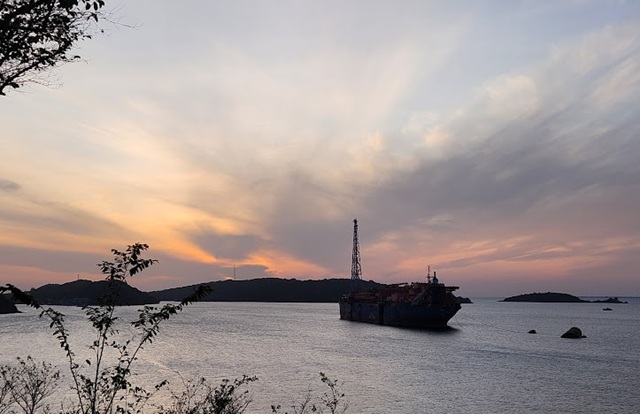
Trincomalee, located on the northeastern coast of Sri Lanka, has long been a coveted strategic location due to its natural deep-water harbour and position along key maritime trade routes. This history, shaped by centuries of colonial conflict, remains a draw for tourists, especially those with an interest in naval history. The French and British rivalry for control of Trincomalee in the late 17th and 18th centuries provides a fascinating lens through which visitors can explore the island’s military past, and there are several ways to approach this rich history for both French and British tourists seeking to understand this pivotal moment in global history.
The history of French involvement in Trincomalee is marked by two significant periods: first in 1672, when Admiral Jacob de la Haye secured an agreement with the King of Kandy to use the harbour, despite the Dutch controlling it at the time. Later, in 1782, the French returned under Admiral Bailli de Suffren, marking a critical episode during the ongoing Anglo-French rivalry in the Indian Ocean.
In 1782, after a three-day bombardment, Admiral Suffren captured Trincomalee from the British on 25 August. The British garrison, weakened by the sustained assault, surrendered on 30 August under terms that allowed them to safely retreat to Madras. This event was a major victory for the French and represented a temporary shift in naval power in the region, with the harbour serving as a vital French base for operations in the Indian Ocean.
For French tourists, a visit to Trincomalee allows them to trace the footsteps of Admiral Suffren, whose strategic foresight helped capture a key naval stronghold. At the local level, visitors can explore Fort Frederick and the nearby Dutch Bay, sites where the French garrison would have been stationed and from where naval skirmishes played out. The memories of these French triumphs can still be felt in the ruins of the fortifications and in the stories passed down through the island’s heritage.
The British, unwilling to lose their grip on the strategic port, responded swiftly to the French occupation by sending Vice Admiral Sir Edward Hughes with a fleet of 12 ships of the line. However, Hughes arrived too late to prevent the surrender of the British garrison. On 3 September 1782, Hughes engaged the French fleet in a fierce battle off the coast of Trincomalee. Despite heavy damage on both sides, the battle was inconclusive, and both fleets retreated for repairs, leaving Trincomalee under French control for a brief period.
This episode highlights the vulnerability and resilience of naval power during the era of sail and serves as a point of reflection for British visitors interested in this dramatic period of the British Empire’s maritime history. The Battle of Trincomalee, while not a decisive victory, reminds visitors of the close calls and the ebb and flow of naval dominance in the Indian Ocean during the 18th century. Sites such as the Trincomalee Naval Base, still an active military installation, offer a unique opportunity for British tourists to connect with this historical moment.