


The transition from secondary education to university is one of the most decisive moments in a young person’s life, but the way that transition is managed varies dramatically around the world. While Spain’s university entrance exam is a familiar source of anxiety for students, similar or even more intense systems exist elsewhere, alongside models that remove competitive selection almost entirely. According to a comparative overview published by EL PAÍS, global admission systems reflect deeply different philosophies about merit, equality, and the role of higher education.
In much of Western Europe, academic performance during secondary school plays the central role in determining university access. In Germany, for example, students rely on the Abitur, a final qualification obtained through a combination of coursework and examinations at the end of secondary school. There is no single nationwide entrance exam equivalent to Spain’s system. Instead, universities largely base admission decisions on Abitur results, although highly competitive programs such as medicine or psychology may impose additional requirements. France follows a similar logic, where the baccalauréat is the key determinant of access. The system is further centralized through Parcoursup, a national platform that manages applications and selection criteria for higher education pathways.
Southern European countries such as Italy and Greece maintain systems closer to Spain’s model of standardized national testing. Italy administers a single annual state exam that includes written and oral components, acting as a gatekeeper to university admission for hundreds of thousands of students. Greece uses a comparable national examination, but with the distinctive feature that all students take it simultaneously across the country, reinforcing the sense of a shared high-pressure academic moment.
Elsewhere in Europe and Latin America, systems vary more widely, with some countries placing full responsibility for selection on individual universities. In Mexico and Peru, there is no unified national entrance exam. Instead, each institution designs its own admissions tests, often requiring students to register separately and pay fees for each application. In Mexico, leading public universities such as UNAM and the Instituto Politécnico Nacional use highly competitive multiple-choice exams that can include more than a hundred questions. According to education experts cited by EL PAÍS, this model emerged as a response to rapid population growth in the late twentieth century, forcing universities to adopt mechanisms to control demand for limited places.
However, scholars also note that these systems can reinforce social inequality. Preparation courses, access to better schooling, and economic stability can strongly influence exam performance. Students from wealthier backgrounds often have greater access to preparatory resources, while those from disadvantaged regions may face structural barriers that affect their chances of success long before they reach the exam hall.
In contrast, several Latin American countries such as Chile, Brazil, and Colombia use centralized national testing systems that aim to standardize access. In Chile, the Prueba de Acceso a la Educación Superior (PAES) combines exam results with secondary school grades to produce a final score used for university applications through a centralized system managed by the Department of Evaluation, Measurement and Educational Registration. Brazil’s ENEM exam similarly evaluates students at the end of secondary education and is widely used for admission to universities across the country, with participation open even to those who have not yet completed their studies in some cases.
At the opposite end of the spectrum lies Argentina, where university admission is largely open. Public universities do not require selective entrance exams, and students are generally only required to hold a secondary school diploma. Institutions such as the University of Buenos Aires implement introductory programs like the CBC, which function as leveling courses rather than elimination filters. While this model promotes broad access, it also faces criticism for high dropout rates, long degree durations, and the challenge of supporting students from lower-income backgrounds through to graduation.
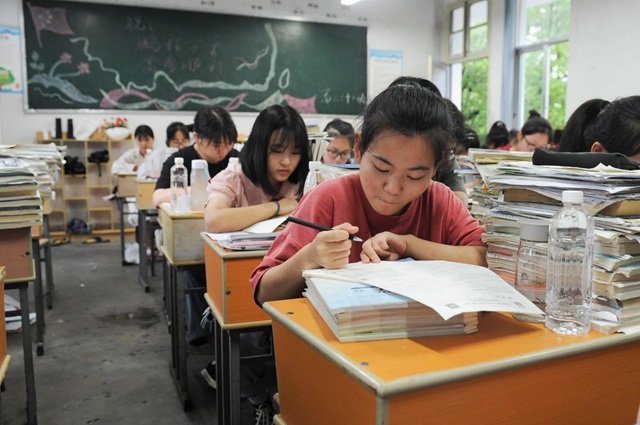
In Asia, the intensity of university entrance systems reaches its peak. In China, the Gaokao is one of the most competitive exams in the world. It determines admission to universities based on performance in core subjects such as Chinese, mathematics, and English, along with optional science or humanities tracks. The importance of the exam is such that entire cities adjust their daily rhythms during test days to minimize distractions for students. Preparation for the Gaokao dominates the final years of secondary education, shaping both academic life and family expectations.
South Korea’s Suneung exam follows a similarly high-pressure model. This single-day national test lasts around eight hours and is treated as a defining moment in a student’s life. The entire country adjusts its schedule to accommodate it, with businesses delaying opening hours and traffic restrictions imposed near exam centers to ensure silence and focus.
These contrasting systems highlight how differently countries interpret the purpose of higher education. In some, universities are gateways filtered by competitive exams designed to select the highest-performing students. In others, access is broad and inclusive, with selection deferred to later stages of academic life or replaced entirely by open enrollment.
What emerges from this global comparison is not a single model of success, but a spectrum of trade-offs between fairness, accessibility, and academic excellence. Whether through intense national examinations like China’s Gaokao or open systems like Argentina’s, each approach reflects deeper social and political choices about who gets to learn, under what conditions, and at what cost.










