Germany’s industrial legacy is under renewed scrutiny as Klaus-Michael Kuehne, the billionaire majority owner of logistics giant Kuehne + Nagel, faces questions over his company’s Nazi-era history. The Financial Times reports that Kuehne has repeatedly declined to address mounting evidence that his family’s fortune was built, in part, through the expropriation of Jewish-owned businesses during the Aryanisation process.
Ron Zur, the grandson of Leo Lewitus, discovered this year that his grandfather’s shipping company, located in what is now the Czech Republic, was forcibly taken over by Kuehne + Nagel during the Nazi era. “From that moment, everything changed,” Zur told the Financial Times, describing decades of family silence about the company and its fate. Zur’s family, based in Israel, is exploring potential restitution claims, although they do not expect Kuehne or the company to cooperate.
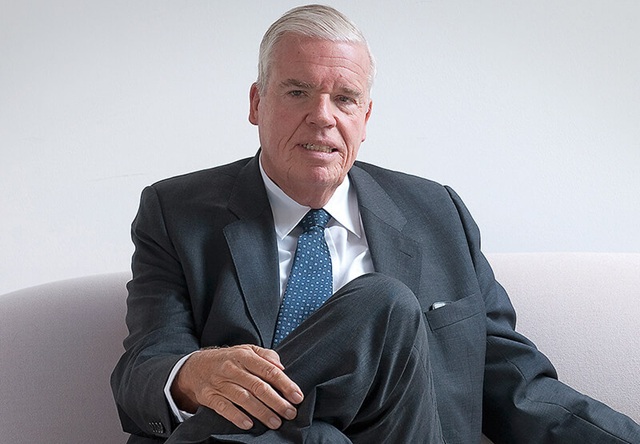
Kuehne, now 88, has publicly distanced himself from these allegations, telling the Financial Times in March that the company’s alleged wartime actions were “completely unknown” to him and insisting that there is no connection between the war period and the company’s current assets. He has also emphasized his philanthropic efforts, including a €300 million donation to build a new opera house in Hamburg.
The debate over Kuehne’s moral responsibility contrasts with growing efforts across German industry to confront Nazi-era legacies. Porsche, for example, recently published an independent inquiry confirming the forced removal of its Jewish co-founder, Adolf Rosenberger, and the denial of fair compensation. Kuehne + Nagel, in contrast, claims that wartime archives were destroyed in Allied bombings, although researchers argue that records survived and could provide critical evidence about the company’s wartime conduct.
Barbara Maass, granddaughter of Adolf Maass, a Jewish businessman forced to surrender his 45% stake in K+N’s Hamburg branch in 1933, told the Financial Times that her family’s story is part of a broader lesson about compliance with Nazi demands. Adolf and Käthe Maass were deported to Auschwitz in 1944, where they were murdered. Maass stresses that acknowledgment, rather than financial compensation, is the goal of her family’s engagement.
Critics argue that Kuehne’s reluctance to investigate or publicly address his family’s wartime fortune reflects a wider hesitation in Germany to fully reckon with the Third Reich’s impact on modern industry. Henning Bleyl, director of the Heinrich Böll Foundation in Bremen, told the Financial Times: “In a material sense, we were all profiteers; the Third Reich is part of all of our small biographies. Just like Kuehne doesn’t want to face his heritage, so many of us don’t.”
The Financial Times notes that the revelations underscore enduring questions about the moral and historical responsibilities of Germany’s corporate elite, particularly those whose wealth was accrued during periods of state-sanctioned persecution.