Early on Wednesday, Mahmoud ventured from the ruins of Nuseirat in central Gaza to a makeshift market that had emerged amid the devastation of war. By 6 a.m., masked men carrying guns were patrolling the streets, and traders were instructed to keep the road clear for traffic. By 8 a.m., a bulldozer cleared debris for a convoy of SUVs, and by 8:30 Hamas security personnel in familiar polyester jackets with fake fur lining had established a checkpoint. “On the ground, from A to Z, there is no doubt: Hamas is in charge,” Mahmoud said, recounting his encounters with four separate checkpoints as he drove north.
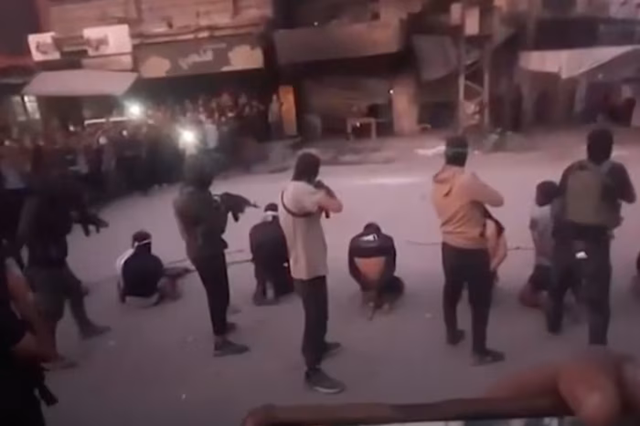
Barely four days into a US-brokered ceasefire, the rapid redeployment of Hamas across Gaza has sent a clear message: the group is back in control. Yet observers caution that the show of authority may mask concerns about the extent to which Hamas has retained influence after two years of intense conflict with Israel. Residents have described seeing videos on social media of Hamas publicly executing members of rival clans, believed to have profited, collaborated with Israel, or expanded territory while Hamas hid in tunnels. On the streets, Hamas personnel maintain order, schools are being promised reopening, and the ministry of health is working to identify unclaimed bodies. Meanwhile, TV broadcasts display armed men in clean uniforms and shiny pick-up trucks—a conspicuous signal of strength after months of subterranean survival.
Analysts have noted the striking contrast between the destruction wrought by Israel’s two-year bombing campaign and the apparent resurgence of Hamas. “New cars, new gear, new equipment, new uniforms, printing presses with massive slogans,” said Ibrahim Dalalsha, director of the Horizon Center for Political Studies in Ramallah. “What has Israel been bombing for two years?” While Israel estimates it destroyed 40 percent of Hamas’s tunnel network and killed thousands of fighters, including commanders, the militant group’s social, political, and administrative structures have endured.
The conflict has been catastrophic for civilians. Local health officials report that nearly half of the more than 67,000 Palestinians killed were women and children. Israeli officials, including Prime Minister Benjamin Netanyahu, have claimed that 10,000 to 20,000 of those killed were Hamas fighters, though evidence remains scarce. Analysts suggest that while Hamas is not at full operational capacity, it is projecting authority to assert control over the enclave and strengthen its negotiating position in the ceasefire process.
Public executions of hooded men in marketplaces, purportedly of collaborators with Israel, have become a stark symbol of Hamas’s regained dominance. The militant group has declared war on multiple rival clans, some reportedly armed by Israel, and videos of punitive shootings have circulated widely, reinforcing the message that dissent will not be tolerated. “Two million Palestinians now know: don’t rise up against Hamas,” said Mkhaimar Abusada, a political science professor at Gaza’s Al Azhar University.
Hamas’s displays are also aimed at diplomats and international negotiators, who are working to convert the ceasefire into a longer-term truce. Under the terms of the US-mediated agreement, Hamas is expected to disarm and cede governance responsibilities while an international stabilisation force enters Gaza. Analysts say the group’s public assertion of control, including the policing of streets and retention of internal security functions, is a strategic effort to position itself favorably in those negotiations. Mahmoud noted the apparent wellbeing of Hamas personnel he encountered, suggesting that despite the devastation around them, the militants are secure and well-provisioned, a further indicator of the group’s resilience and intent to maintain authority across Gaza.