


The deep and often underexamined alliance between Israel and the United Kingdom has roots that stretch back centuries, long before the founding of the modern Israeli state. Driven by a blend of religious ideology and geopolitical strategy, the Israeli-British relationship is not merely a product of 20th-century diplomacy but rather the continuation of a longstanding historical, cultural, and military bond.
At the heart of this alliance lies Christian Zionism — a theological belief that gained prominence in the UK during the 17th and 18th centuries. British Christian Zionists believed that the return of Jews to the Holy Land was a fulfillment of biblical prophecy. Some went even further, claiming that the British were descended from the Ten Lost Tribes of Israel and that the English monarchy carried the bloodline of King David. These beliefs, endorsed by influential figures like Lord Shaftesbury, who in 1839 published a call for Jewish resettlement in Palestine, laid the ideological groundwork for future British policy in the region. Remarkably, these ideas predated Theodor Herzl’s seminal Zionist text The Jewish State by more than half a century.
Britain’s imperial ambitions and strategic positioning in the Middle East further cemented its role in the formation of modern Israel. The 1916 Sykes-Picot Agreement between Britain and France carved up former Ottoman territories, with Britain taking control of Palestine. A year later, the Balfour Declaration formally expressed British support for the establishment of a “national home for the Jewish people” in Palestine, a move championed by Zionist leaders like Baron Walter Rothschild.
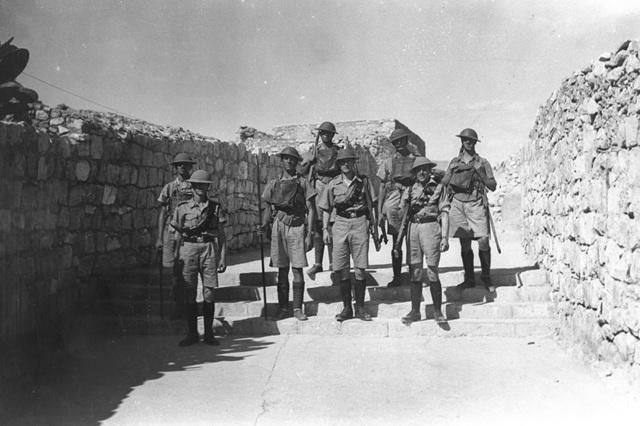
This policy of support continued into the 20th century. In 1929, the World Zionist Organization established the Jewish Agency, which Britain recognized in 1930 to manage Jewish immigration and settlement. These developments were not purely political. British officers like Lieutenant Colonel John Henry Patterson played a pivotal role in forming early Jewish military units — efforts that laid the foundation for what would eventually become the Israel Defense Forces (IDF). Patterson’s close ties to Zionist figures, including Ben-Zion Netanyahu, father of Prime Minister Benjamin Netanyahu, underscore the personal and institutional interconnections between the two nations.
In the modern era, these ties have only deepened. While officially supporting a two-state solution to the Israeli-Palestinian conflict, the UK has consistently acted as a staunch ally of Israel. British intelligence agency MI6 has collaborated with Israel’s Mossad for decades, and successive UK governments have pushed back against international efforts to delegitimize Zionism. Notably, Britain opposed the 1975 UN resolution equating Zionism with racism and supported its repeal in 1992. Even religious institutions have echoed this stance: in 2019, the Church of England declared Zionism to be a legitimate and important movement, warning that its condemnation often veils antisemitic sentiment.
Today, this historic alliance continues to influence policy and shape the dynamics of the Middle East. From 19th-century prophecy to 21st-century espionage, the Israeli-British bond is a testament to the enduring power of ideology, empire, and strategic interest — a partnership built not just on common goals, but on centuries of shared belief and mutual reinforcement.









