The most anticipated film of the summer, Disclosure Day, directed and written by Steven Spielberg, has arrived at a moment when fiction and policy are increasingly difficult to separate. As reported by El País, Spielberg recently revealed on Stephen Colbert’s program that the film centers on the theft of classified government information by officials “committed to the truth” concerning UFOs and alleged extraterrestrial visits, while the system attempts to suppress them. The narrative echoes decades of conspiracy theories that have moved from fringe culture into congressional hearings and intelligence debates. The timing of the film’s release, paired with renewed official document disclosures in Washington, has intensified speculation that popular culture is now shaping, and being shaped by, state-level transparency about unidentified aerial phenomena.
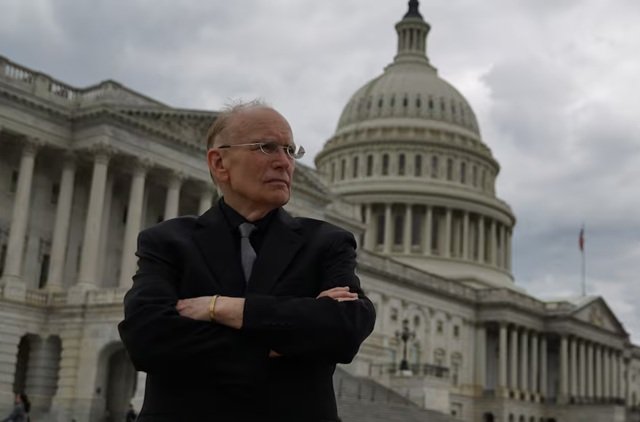
At the heart of the contemporary UFO revival is a dense and unusual ecosystem in Washington, where activists, former intelligence officials, journalists, and political influencers are treating “disclosure” not as fantasy but as an imminent political event. One of its most persistent figures is Stephen Bassett, a long-time self-described UFO lobbyist who has spent decades urging the U.S. government to release classified material on what he calls non-human intelligence. Operating from a small office filled with ufology texts and historical Roswell newspaper clippings, Bassett represents a strand of activism that has transformed UFO belief into a form of political campaigning. His claim that a “Revelation with a capital R” is approaching reflects a broader conviction among supporters that official acknowledgment of extraterrestrial life is no longer a matter of if, but when. Polling data frequently cited in these circles, including surveys suggesting that a majority of Americans believe in extraterrestrial visits, has only reinforced their sense that mainstream acceptance is already underway.
The institutional dimension of the debate has expanded significantly since 2017, when former intelligence official Luis Elizondo publicly challenged the secrecy surrounding unidentified aerial phenomena. Elizondo, once involved in a classified Pentagon program investigating unexplained sightings near military installations, became a central figure in shifting the conversation from speculation to national security. He and others have argued that many incidents can be explained by conventional technology or misidentification, yet some cases remain unresolved even after analysis. His testimony, along with that of military pilots in congressional hearings in 2023 and 2024, helped legitimize the issue within the Capitol. Those hearings featured accounts of encounters with objects exhibiting unusual flight characteristics, prompting bipartisan calls for structured investigations and transparency. The Pentagon’s recent release of hundreds of documents, while not containing definitive evidence of extraterrestrial contact, has further normalized the topic in official discourse.
Political dynamics have also played an unexpected role in elevating UFO discussions. Figures across the ideological spectrum, from Democratic senators to Republican congress members, have embraced calls for greater disclosure, framing the issue in terms of national security and public accountability. High-profile politicians, including Marco Rubio and J. D. Vance, have publicly commented on unidentified aerial phenomena, while former President Barack Obama once acknowledged the reality of unexplained sightings without confirming their origin. Donald Trump’s administration added further momentum when it ordered the release of classified materials related to UFOs and UAPs, presenting the effort as part of a broader push for transparency. Yet interpretations of these moves remain deeply divided: some see a genuine effort to confront hidden knowledge, while others argue it is political theater designed to distract from more immediate crises. The language of a “deep state” and institutional secrecy has become a common framework for both believers and skeptics navigating the debate.
Cultural production has amplified these tensions. Spielberg’s Disclosure Day is only the most visible example of a broader wave of entertainment exploring extraterrestrial themes with renewed seriousness. Earlier works by Spielberg, such as Close Encounters of the Third Kind and E.T., are often cited as foundational in shaping modern UFO mythology. Now, new productions like the documentary The Age of Disclosure, which includes interviews with senior government officials and defense insiders, claim to present a more documentary-style case for hidden extraterrestrial technology. The film argues that governments and private defense contractors may be engaged in a silent competition to reverse-engineer unidentified technology. These narratives, while compelling to supporters, are met with skepticism by scientists and analysts who caution that extraordinary claims require extraordinary evidence. Still, their popularity underscores a growing appetite for stories that blur the boundary between investigation and imagination.
Beyond politics and media, the implications of potential disclosure are increasingly discussed in speculative terms that extend into economics, religion, and global security. Analysts and former financial experts have even considered scenarios in which confirmation of non-human intelligence could destabilize markets or challenge theological frameworks. Such discussions remain hypothetical, yet they reflect how deeply the subject has penetrated mainstream strategic thinking. Critics of the movement argue that the absence of conclusive evidence should temper expectations, warning that years of ambiguous sightings and classified reports have created fertile ground for misinformation. Yet proponents insist that the accumulation of testimony, partial declassifications, and institutional interest suggests an underlying reality that has yet to be fully acknowledged. As the debate intensifies, the line between disclosure as political process and disclosure as cultural myth continues to blur.
The UFO question has become less about proving or disproving extraterrestrial life and more about trust in institutions, the limits of governmental transparency, and the power of narrative itself. Whether Disclosure Day proves to be prophetic fiction or simply entertainment, it arrives at a moment when audiences are already primed to believe that something significant is being withheld. And in Washington, where hearings, documentaries, and leaked documents continue to accumulate, the idea that humanity may be on the verge of an unprecedented revelation no longer belongs exclusively to science fiction—it has become part of the political conversation itself.