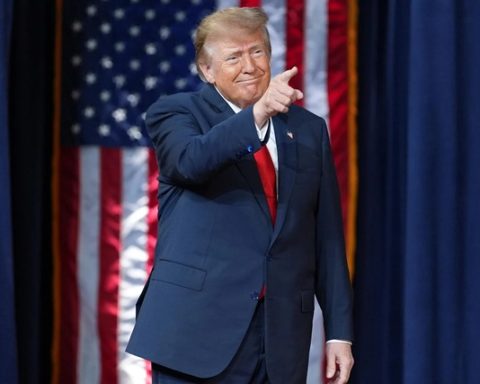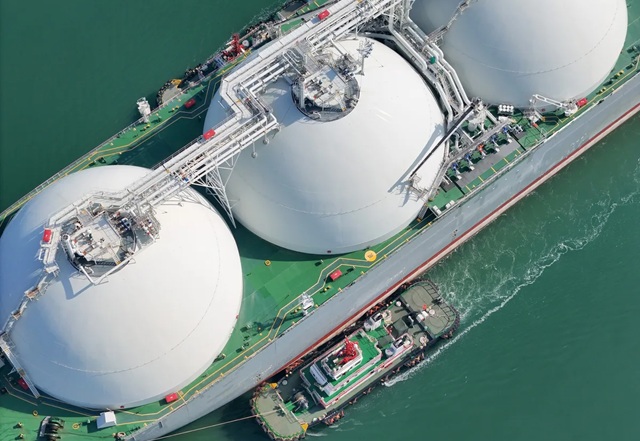
The White House’s LNG-powered diplomacy is poised to expand further in Donald Trump’s second term, leveraging liquefied natural gas (LNG) as a key geopolitical tool. Over the past seven years, the U.S. has transformed from an insignificant LNG supplier to the world’s largest, with production capacity set to increase by 60% in the early years of Trump’s second presidency, according to BloombergNEF. By the end of the decade, nearly one-third of global LNG shipments will originate in the United States, reinforcing Trump’s vision of “energy dominance.”
The U.S. Leads the LNG Market
Despite geopolitical disruptions, demand for U.S. natural gas continues to rise. During his second term, Trump has taken bold steps—such as attempting to broker a peace deal for Ukraine without key allies and implementing tariffs on trade partners—yet nations like Europe, India, and Japan have responded with commitments to purchase more American LNG. Energy analysts emphasize that this newfound energy independence gives the U.S. an unprecedented negotiating advantage in global affairs.
While U.S. oil production is expected to grow only modestly, natural gas is projected to see dramatic expansion. Analysts at S&P Global suggest that by 2028, the U.S. may reach peak oil production, making LNG exports even more crucial. Vice President JD Vance has underscored this potential, calling America the “Saudi Arabia of natural gas.”
The Evolution of the U.S. Natural Gas Industry
Two decades ago, the notion that natural gas could surpass crude oil as a cornerstone of U.S. diplomacy seemed far-fetched. In the early 2000s, the U.S. faced a gas shortage, and policymakers urged expanded imports. However, the advent of horizontal drilling and hydraulic fracturing unlocked massive reserves, doubling U.S. natural gas production to over 100 billion cubic feet per day. Today, gas fuels 41% of the nation’s electricity generation.
With domestic supply outpacing demand, LNG exports emerged as a crucial market opportunity. Companies such as Cheniere Energy Inc. and Venture Global Inc. have invested billions in liquefaction plants that transform natural gas into a transportable liquid form. Eight LNG terminals are currently operational in the U.S., with three more under construction and additional projects under consideration. Trump has also revived efforts to complete a long-stalled LNG project in Alaska.
Bloomberg’s Perspective on LNG’s Growing Influence
According to Bloomberg, the rapid expansion of the LNG sector has given the U.S. an economic and geopolitical edge. The Netherlands, France, and the U.K. have become major buyers, replacing Russian gas with American imports. European Commission President Ursula von der Leyen has called the U.S. a “reliable” energy partner, reinforcing the strengthened transatlantic alliance in the wake of Russia’s invasion of Ukraine.
However, this rise in LNG exports has sparked environmental concerns. While originally seen as a “bridge fuel” to transition from coal to renewables, natural gas’s role in achieving net-zero emissions by 2050 remains uncertain. Critics argue that the U.S.’s focus on LNG could hinder global efforts to phase out fossil fuels altogether.
Challenges and Future Prospects
Despite its growing dominance, the U.S. gas industry faces hurdles. President Joe Biden, who initially supported LNG expansion after Russia’s Ukraine invasion, imposed a moratorium on new export licenses in his final year in office due to climate concerns. Trump swiftly lifted this restriction upon returning to the White House, prioritizing economic and geopolitical gains over environmental considerations.
Yet, potential risks remain. While Europe and Asia depend heavily on U.S. gas, China—last year’s largest LNG importer—has imposed retaliatory tariffs in response to Trump’s trade policies. Additionally, analysts warn that an oversupply of LNG by the late 2020s could drive prices down, making the fuel less competitive against coal and renewables.
For now, the U.S. enjoys a dominant position in global energy markets, with LNG exports reinforcing its diplomatic and economic clout. However, as global energy transitions continue, the long-term sustainability of America’s natural gas boom remains uncertain.