by Luxman Aravind
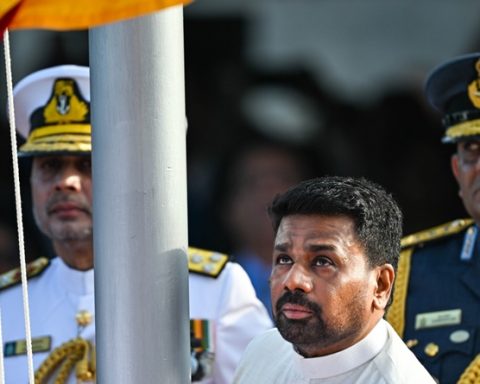
When President Anura Kumara Dissanayake delivered his Christmas message in 2024, likely drafted with the assistance of a language model (LLM) by one of his aides, few could have anticipated the profound reflection it would provoke within me. His address, graceful in its delivery, celebrated the nativity of Jesus Christ, invoking timeless principles of love, peace, and human compassion. He urged a collective rejuvenation of society, advocating for a national revival grounded in justice, equality, and fraternity. However, as I absorbed his words, I found myself contemplating the broader socio-political ramifications of his message, particularly in a Sri Lanka that has experienced seismic shifts in its political and religious spheres since the tragic Easter Sunday bombings of 2019.
It is inescapable to acknowledge how religious institutions have increasingly embedded themselves within the machinery of the state in Sri Lanka, especially since the harrowing events of 2019. However, what struck me most, as I perused Dissanayake’s speech, was the unspoken truth hanging in the air—the rising dominance of the Catholic Church and the evolving power structures that have taken shape in the aftermath of that devastating day. While Dissanayake’s rhetoric painted a picture of a harmonious and united Sri Lanka, the reality is far more intricate. In the wake of the attacks, religious institutions have seen their influence over governance grow exponentially. Of all the institutions, it is the Catholic Church, which was previously dominated by Buddhist temples, that has strategically harnessed this tragedy to recalibrate the balance of power, raising uncomfortable questions about the intersection of religion and politics in the country.
The Easter Sunday attacks, which claimed the lives of over 250 people and left hundreds more injured, shook Sri Lankan society to its core. Attributed to local Islamist militants with alleged symbolical ties to ISIS, the bombings were an assault on the very pluralistic fabric of the nation. Yet, as the initial shockwaves dissipated, the Catholic Church, with Malcolm Cardinal Ranjith at the helm, became one of the most vocal forces in the public discourse—not only condemning the violence but framing the tragedy as part of a larger, more sinister conspiracy. From the outset, Church leadership raised grave concerns regarding the government’s mishandling of intelligence and security, fueling a narrative that implied there were covert and far-reaching forces at play in Sri Lanka. This narrative quickly took root, sowing distrust and opening the door for the Church to assume a greater role in the country’s political dynamics.
What followed was not simply religious condemnation, but a deliberate and strategic effort by the Church to expand its political sway. Within a mere five years, the Church’s influence began to outpace that of the Buddhist temples, which for centuries had been pillars of Sri Lankan political and social life. In the wake of the attacks, the Church demanded government transparency and accountability, particularly regarding intelligence failures. On the surface, this was a legitimate and reasonable demand. However, it soon became apparent that the Church’s intentions extended beyond mere justice; it was positioning itself as a key power player in the national political arena. It is at this juncture that the narrative takes a more troubling turn.
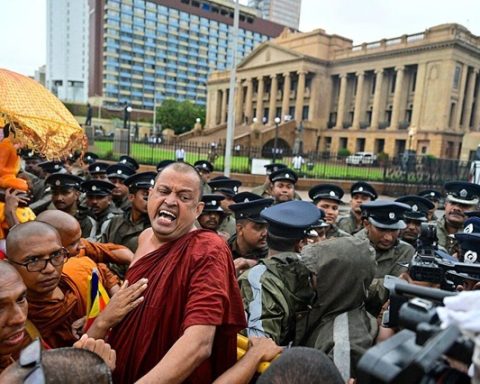
Buddhist temples, which had long been considered the cornerstone of Sri Lanka’s societal and political structure, found themselves relegated to the periphery. For decades, the Buddhist monastic community had been instrumental in shaping the nation’s policies, with Buddhist leaders enjoying direct access to the government. Yet, the aftermath of the Easter Sunday bombings altered this dynamic. While some Buddhist clergy spoke out in condemnation of the attacks, it was the Catholic Church that ultimately emerged as the dominant voice in national discourse. Cardinal Ranjith, wielding considerable influence both within religious and political circles, became the public face of opposition to the government, using the tragedy to carve out a more politically significant role for the Church.
The years following the attacks clearly illustrated the growing influence of the Church. Its presence permeated every stratum of governance, from the highest echelons of power to the more mundane operations of the security apparatus. Key positions within the intelligence services, the police, and the military were reshuffled, often in favour of individuals sympathetic to the Church’s agenda. The implications of these appointments are profound. Were these decisions based on merit, or were they driven by the Church’s expanding influence? While the answer remains uncertain, what is undeniable is that the security sector, once dominated by a largely secular state, had become more susceptible to the influence of religious institutions. The Catholic Church, in effect, had embedded itself within the state apparatus, not merely as a spiritual leader, but as a formidable political player.
The consequences of this shift are both far-reaching and deeply concerning. It is not just a matter of one religious institution usurping the influence of another—although that in itself is a troubling development. More alarmingly, the nature of the power that the Church has accumulated invites scrutiny. With its newfound clout, the Church has begun to shape key policy decisions, particularly in the realms of national security, foreign policy, and economic priorities. The state, which ought to remain impartial and secular, has instead been co-opted, its policies now shaped by the interests of religious leaders whose priorities do not always align with the national good. The political manoeuvring of the Church is not confined to Sri Lanka alone. The Church has leveraged its influence to strengthen ties with foreign powers, particularly in Europe. Some of these individuals, once outspoken in their support of the Church’s political stance, have made substantial fortunes in real estate, further complicating the narrative. One notable example is a young man who was often seen in the media after the bombings. Despite his modest background, he later emerged with millions in real estate holdings, including prime properties in Colombo. How this wealth was acquired remains a mystery, yet the state remains curiously silent on the matter.
Meanwhile, the Church continues to demand transparency and accountability from the government, yet when scrutiny is directed toward its own actions, its responses are evasive and contradictory. There remains a glaring lack of clarity regarding how funds donated by both local and international donors have been utilised, or how the Church has accounted for its substantial resources. The Church has maintained an air of moral superiority, accusing the government of corruption and inefficiency, but it has failed to hold itself to the same standards of scrutiny. This duality—the Church demanding accountability from the state while evading it itself—may well represent the most troubling aspect of its newfound political prominence.
This situation raises a critical question about the role of religious institutions in shaping the policies of a nation: to what extent should such institutions be allowed to influence state governance? Historically, Buddhism has been at the core of Sri Lankan identity, enshrined in the Constitution as the preeminent religion. Yet, the meteoric rise of the Catholic Church as a political force challenges the very foundations of Sri Lankan society. It forces us to reconsider whether any religious institution, particularly one as powerful as the Catholic Church, should be permitted to dictate the trajectory of national policy. More troubling still is the growing realisation that Sri Lanka’s political decisions are no longer driven by national interests or rational governance, but increasingly shaped by religious dogma, personal vendettas, and short-term political gain.
The full extent of these political machinations remains unclear, but it is apparent that the events following the Easter Sunday attacks have marked a pivotal turning point in Sri Lankan politics. Religious institutions, once relegated to the spiritual domain, have embedded themselves at the heart of governance, bending the state to their will. While the Church has succeeded in consolidating its power, Buddhist institutions have found themselves marginalised, their influence undermined by the Church’s politically motivated actions. The result is a fragmented political arena, where decisions are no longer grounded in democratic principles or national priorities, but are increasingly dictated by religious elites.
The developments in post-Easter Sri Lanka serve as a grim reminder. If religious institutions continue their unchecked rise to power, the very essence of Sri Lanka’s secular democratic governance may be at risk. The people of Sri Lanka, historically divided along ethnic and religious lines, now face a new division: one that pits the state against religious institutions, each vying for control. The future of Sri Lanka hinges on whether its people can reclaim a rational, secular government, free from the sway of religious elites. Only by recognising the potential dangers of this growing alliance between religion and state can Sri Lanka hope to restore its democracy and pursue a future based on unity, stability, and long-term national interests.
What will be the long-term impact of this religious interference in the governance of Sri Lanka? Will the country’s democratic foundations survive, or will it be forever swayed by the machinations of religious powerbrokers? These questions remain unresolved, but one thing is clear: the Easter Sunday attacks, and the subsequent rise of the Catholic Church as a political force, have set in motion a series of events that could fundamentally alter the very nature of Sri Lankan governance. Unless Sri Lankans confront this reality with urgency and clarity, the consequences for the nation’s future could be profoundly dire.
The writer can be contacted at luxmanaravind@gmail.com