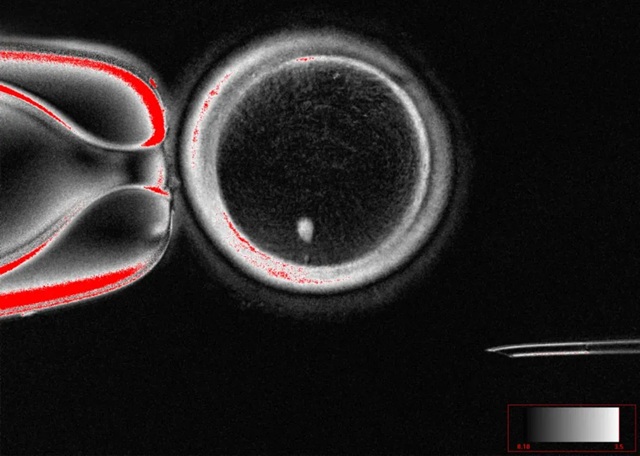
Scientists have taken a major step toward a fertility breakthrough that could one day allow infertile women and gay men to have genetically related children. In a study reported by The Times UK, researchers in the United States successfully turned human skin cells into eggs capable of being fertilised by sperm.
The pioneering work builds on techniques first used to clone Dolly the sheep in the 1990s. Scientists removed the nucleus—the genetic material—from a skin cell and injected it into a donated human egg that had had its own nucleus removed. A mild electric pulse and chemical treatment then prompted the modified egg to shed half of its chromosomes, leaving the 23 necessary for normal fertilisation.
“This shedding of chromosomes is a crucial step not previously achieved artificially,” said Professor Paula Amato of Oregon Health and Science University, a co-author of the study published in Nature Communications.
Using in vitro fertilisation (IVF), the team fertilised these lab-made “pseudo-eggs” with sperm. Some embryos developed to the early blastocyst stage—the point at which embryos are typically transferred to a womb. However, only a small fraction, about 9%, reached this stage.
Experts not involved in the study have called it a potential milestone in in vitro gametogenesis (IVG), the process of creating eggs and sperm from ordinary body cells. Success could help women who cannot produce viable eggs due to age, cancer treatment, or other medical reasons, as well as same-sex couples seeking biological children.
Professor Roger Sturmey, a reproductive medicine specialist at the University of Hull, told The Times UK: “This research demonstrates that the chromosomes of a differentiated adult cell can be persuaded to undergo a type of nuclear division normally seen only in eggs or sperm. It opens up the possibility of creating functional new egg cells from cells from anywhere in the body.”
However, scientists caution that the work is still in its early stages. Success rates remain low, and many embryos carried chromosomal abnormalities. Professor Ying Cheong of the University of Southampton described the study as “an exciting proof of concept,” but emphasized that “it is still very early laboratory work.”
According to researchers, at least a decade of further study is needed before this technique could be considered safe for clinical trials with human patients. Despite the challenges, the findings mark a promising step toward potentially transforming infertility treatment in the future.