Editorial
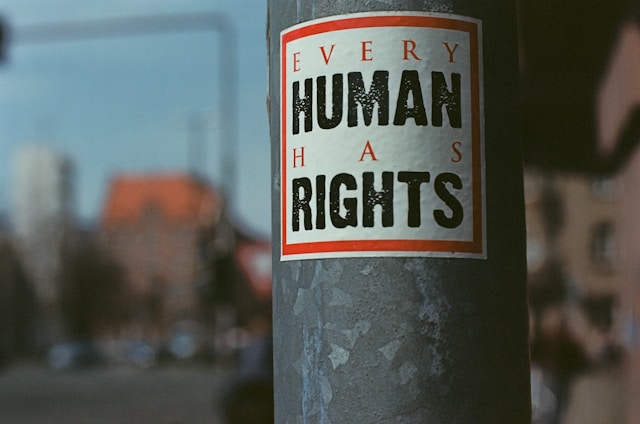
Human Rights Day, December 10, on the surface, stands as a beacon of collective progress—a reminder of the ideals enshrined in the Universal Declaration of Human Rights (UDHR). Yet, as we confront the fractures in the contemporary world, one cannot help but question the sincerity of this observance. Is there truly anything to celebrate when the very fabric of human dignity is relentlessly torn by the forces of profit-driven systems? In a world shaped by conflicts engineered by arms manufacturers, diseases sustained by pharmaceutical profiteering, and malnutrition perpetuated by global food conglomerates, human rights have been rendered a commodity—perhaps one of the most lucrative commodities of all.
The foundations of human rights assert that they are inalienable, transcending the limitations of politics, economics, and social constructs. But the reality of our existence reveals a stark contradiction. We have tethered these lofty ideals to market dynamics, trapping ourselves within an economic machinery that views human suffering not as a moral failure but as a business opportunity. The arms trade thrives on conflict, spinning misery into profit as though war were a renewable resource. Pharmaceutical corporations leverage disease as a recurring revenue stream, turning access to health into a privilege rather than a right. Even hunger—an elemental violation of dignity—is exploited by food monopolies that prioritise profit over equitable distribution.
This commodification is not an aberration but a reflection of a deeper existential crisis. Humanity has surrendered its moral compass to the altar of economic determinism. The market, once a tool to serve human needs, has become the master, dictating the terms of existence. Billionaires, fewer in number than ever before yet wielding unprecedented power, manipulate the planet as if it were a mere instrument in their pursuit of wealth accumulation. Their success is lauded, even idolised, while the resultant disparity and agony are relegated to the periphery of our collective conscience. What does it say about our society when the suffering of the many subsidises the comfort of the few?
This distortion may be understood as a collective defence mechanism—a repression of guilt through the illusion of progress. Human rights, stripped of their essence, are transformed into a veneer of respectability, a symbolic gesture that allows us to avoid confronting our complicity in systems of exploitation. We celebrate Human Rights Day not because we have achieved these rights, but because the ritual distracts us from the truth of their pervasive violation. This act of self-deception shields us from recognising that the structures we uphold are antithetical to the very principles we claim to honour.
The commodification of human rights exemplifies the paradox of modernity. The Enlightenment project, which sought to liberate humanity through reason, has been subsumed by a capitalist ethos that measures worth in terms of utility and exchange value. Human rights, in their commodified form, become tokens in a global marketplace—a language of diplomacy, a branding strategy for corporations, or a tool of soft power in geopolitical manoeuvring. This instrumentalisation erodes their universality, reducing them to privileges contingent on market forces rather than inherent entitlements.
In this light, Human Rights Day is not a celebration but a stark reminder of how far we have strayed from the ideals it represents. It is a day to reflect on the systems we have created and the values we have forsaken. Can there be human rights in a world where profit trumps people? Can dignity coexist with markets that commodify life itself? These questions are not rhetorical; they demand urgent reckoning.
To reclaim the spirit of human rights, we must transcend the logic of commodification. This requires more than policy reform; it necessitates a paradigm shift in how we perceive value and purpose. It demands that we dismantle the systems that prioritise profit over people, that we resist the allure of wealth accumulation at the expense of shared humanity, and that we confront the complicity embedded within ourselves. For as long as we remain trapped in a market-driven abyss, human rights will remain a façade—an aspirational ideal divorced from the realities of the world we have constructed.
The challenge, then, is not merely to observe Human Rights Day but to transform it. It must become a catalyst for genuine introspection and systemic change, a reminder not of what we have achieved but of what we have failed to uphold. Only then can it be more than a hollow celebration, and only then can we hope to honour the dignity and respect that human rights were meant to guarantee.