Scientists have found that humanity’s love of kissing dates back far earlier than previously imagined, possibly originating with our distant ape ancestors 21 million years ago, a new study by the University of Oxford suggests. The research also indicates that Neanderthals, who lived alongside Homo sapiens in Europe tens of thousands of years ago, likely engaged in kissing as well.
While it was known that Neanderthals and Homo sapiens interbred during their coexistence, the new study suggests that these interactions may have included affectionate behaviors such as kissing, not just reproductive activity. “Kissing evolved in the common ancestor of humans and other large apes around 21 million years ago, and Neanderthals likely engaged in kissing too,” said the Oxford-led research team.
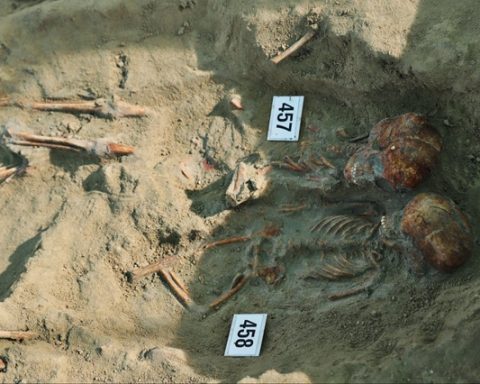
Neanderthals first appeared around 430,000 years ago, while Homo sapiens emerged roughly 300,000 years ago. The two species coexisted in Europe for between 2,600 and 5,400 years until the last Neanderthals went extinct about 40,000 years ago. Previous studies have shown that modern humans and Neanderthals shared some of the same oral microbes, likely through saliva transfer via food sharing or care for children. The latest research strongly supports the idea that this saliva exchange could have occurred through kissing.
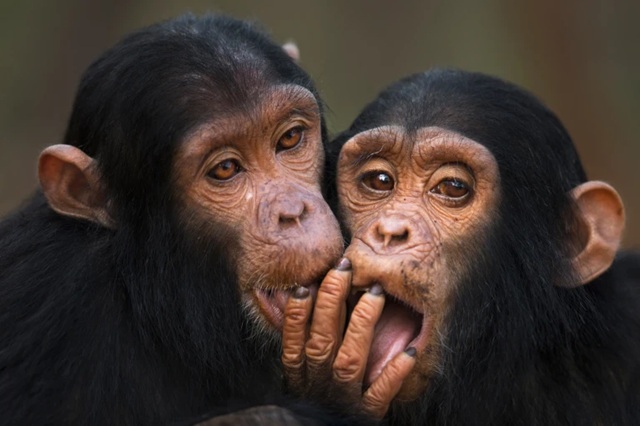
The study, published in Evolution and Human Behaviour, examined mouth-to-mouth behaviors across primates including chimpanzees, bonobos, and orangutans. Researchers ran a model ten million times to estimate the probability of extinct ancestors engaging in kissing, concluding that the trait first appeared between 16.9 million and 21.5 million years ago. Kissing is thought to have originated from grooming habits or maternal behaviors such as feeding and cleaning young, though its exact evolutionary purpose remains unclear.
“This is the first time anyone has taken a broad evolutionary lens to examine kissing,” said Matilda Brindle, an evolutionary biologist at Oxford. Professor Stuart West added: “By integrating evolutionary biology with behavioral data, we can make informed inferences about traits that don’t fossilise — like kissing — allowing us to study social behavior in both modern and extinct species.”
The research highlights how a seemingly simple human behavior carries deep evolutionary roots, connecting modern humans not only to Neanderthals but to apes from millions of years ago.