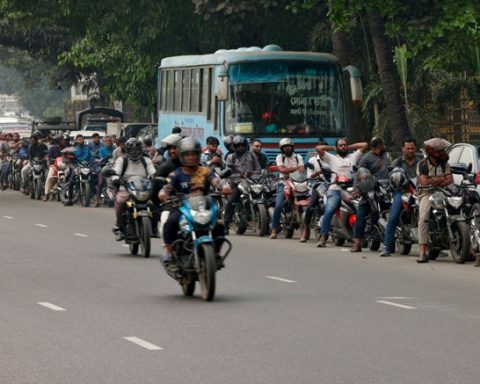
India has taken a significant step toward energy security by passing new legislation aimed at boosting oil and gas exploration. The move, endorsed by Oil Minister Hardeep Singh Puri, amends a 1948 law on oil extraction to promote investment and policy stability. The country’s dependence on imported crude oil has surged, with imports covering nearly 90% of consumption between April and December 2024.
The new legislation is designed to ease regulatory hurdles, extend lease periods, and allow international arbitration, making it more attractive for companies to explore India’s untapped reserves. However, the decision underscores the challenges of balancing economic growth with environmental concerns. India remains the world’s third-largest carbon emitter, trailing only the U.S. and China, and has faced mounting global pressure to accelerate its transition to cleaner energy.
Despite this, Indian officials argue that developed nations bear historical responsibility for emissions and that India has a right to utilize conventional energy sources for its economic development. With crude oil consumption rising from 5 million barrels per day to 5.5 million over the past three-and-a-half years, experts project demand could reach 6.5-7 million barrels per day in the near future.
India has been diversifying its energy sources, with Russia currently serving as its primary crude supplier and Qatar providing liquefied natural gas. Meanwhile, the government has sought to strengthen energy ties with the U.S., with Prime Minister Narendra Modi and President Donald Trump recently agreeing to increase American oil and gas exports to India. Additionally, state-run Oil India has partnered with Brazil’s Petrobras to jointly bid for oil and gas exploration blocks, further signaling India’s commitment to securing its energy future.