In the recent Economic Survey for the year 2023-24, submitted to the Indian parliament, there is a clear admission of the fact that the size of Indian industries and India’s economy is a fraction of China’s. This statement implies that India’s economy is not in any way comparable to that of China at present.
The Economic Survey has also pointed out that India’s import dependence on Chinese products in diversified and critical sectors such as electronics, solar power, pharmaceuticals, and others is steadily increasing, with the trade imbalance between India and China becoming very high for India. Analysis of trade data shows that in FY 2024, India’s exports to China amounted to 16.6 billion USD, while imports from China to India were 101.7 billion USD, leaving a trade deficit of 85 billion USD. This trade deficit increased from 83 billion USD in FY 2023 and 73 billion USD in FY 2022.
Certainly, the above views of the Economic Survey report are based on the ground realities as far as industrial and trade relations with China are concerned.
Wishful Thinking in Economic Survey
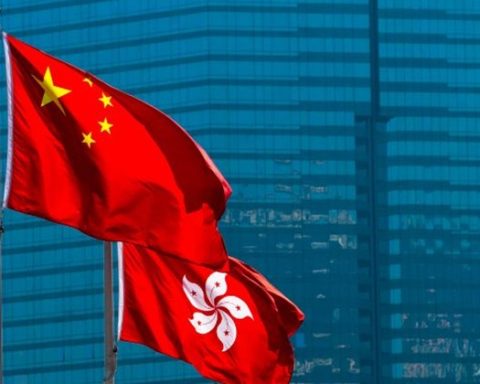
What causes concern is that the Economic Survey has called for a reconsideration of India’s policy towards China by easing FDI (Foreign Direct Investment) norms for China. The Economic Survey suggests that Chinese investments must be welcomed in India and Chinese participation in Indian industries as promoters and equity shareholders should be viewed favourably. This view amounts to wishful thinking and is totally unrealistic.
The Government of India would find it extremely difficult to accept such recommendations due to the geopolitical risks involved, particularly due to India’s border issues with China and China’s open hostility towards India. It is now increasingly being seen that China has decided to challenge India on various fronts in the coming years to ensure that China remains the dominant country in the Asia-Pacific region. India’s relationship with China is unlikely to be sorted out anytime soon. In such circumstances, easing FDI norms for China would amount to giving a firm foothold to China in the Indian industrial sector and economy, consequently increasing India’s exposure to China to extremely uncomfortable levels.
It is also necessary to keep in view that the nature of friction in relationships between China and the USA/Western countries is totally different from the nature of friction that India has with China. In the case of the USA and Western countries, the issues are essentially due to business rivalries and trade factors relating to global market share, and the issues are not fundamental. In the case of India, the issues with China are basic and fundamental and much more serious from India’s security point of view, as it concerns India’s territorial integrity.
At the moment, China is the big beneficiary of India’s trade relations with China, much more than the benefits seen by India due to such relationships with China.
The Economic Survey appears to have missed vital points. It seems to have not paid adequate attention to identifying options for boosting India’s industry and economy and finding ways to reduce India’s import dependence on China. On the other hand, the Economic Survey has recommended easing FDI norms for China to boost India’s industrial growth. One would be justified in concluding that such a recommendation of the Economic Survey could become counterproductive in the long run.
What Factors Behind China’s Big Leap Forward?
There is no doubt that industries in China, whether involved in steel, pharmaceuticals, electronics, or aluminium, have all achieved impressive growth in the last few decades, not only in quantitative terms but also in terms of technology inputs, operational efficiency, and quality parameters.
This has been possible for China mainly due to the solid support, encouragement, and proactive policy initiatives extended by the Chinese government to multinational organisations largely based in Europe and the USA. Being assured of a fair deal and with the availability of several natural resources in China and a huge market base, multinational companies have seized the opportunities and invested several billions of dollars in China. In spite of China’s friction in political relationships with Western countries and the ongoing turbulent trade relationships, the investment by multinational companies in China has not decreased but is only increasing. It should be said to the credit of the Chinese government that it has ensured that the trade war and political issues with Western countries would not cause any discomfort for the presence of multinational companies in China.
One striking factor that cannot be ignored is that the technologists, engineers, and management professionals in China have quietly and quickly absorbed the technology and management inputs that have come into China due to massive investment by Western-based multinational companies and their setting up highly technology-intensive projects in China and also setting up R&D ventures in China.
In all these operations of multinational companies in China, a large number of native Chinese personnel are employed, and in the process, native Chinese have gained technology and management expertise to a significant extent in quick time, thus strengthening the economic and technological base in China.
With huge investment by multinational companies amounting to several billions of dollars, there is a positive impact on ancillary industries in China to supply to multinational companies with the compulsive need to adhere to their global standards.
Today, several domestic companies in China have graduated to a level where they are in a position to compete with multinational companies not only operating in China but also elsewhere.
Chinese Companies vis-a-vis Multinational Companies
One factor that should be noted is that some of the products imported into India from China may not be made by domestic Chinese companies but by multinational companies operating in China. While they are christened as “made in China,” they are really made by multinational companies operating in China.
Another noteworthy point is that even as multinational companies have invested in China in a big way, Chinese project promoters have not set up projects in other countries to any significant level so far. There are Chinese companies owning industries in other countries, but they are few and far between, compared to the massive size of the Chinese economy and the extent of investment made by multinational companies in other countries.
Even as Chinese companies are gearing themselves to compete with multinational companies and overseas organisations, China continues to be the recipient of technology inputs in several fields from abroad, mostly indirectly by overseas companies setting up ventures in China with their updated technologies and equipment.
Further, it has to be kept in view that there are very few Chinese companies that can claim themselves as multinational companies.
What Economic Survey Should Have Said
If India has to reduce its import dependence on China and ensure rapid growth of domestic industries, it is not necessary that Chinese investors should be asked to invest in India but that India should imitate the policy approach of the Chinese government in facilitating multinational companies to operate in China in a massive way.
Multinational companies are attracted to China not only due to the huge market base in China and the availability of several minerals and resources but also due to the peaceful labour relationships prevalent in China with a totalitarian government not allowing trade union operations in a counterproductive way that may disturb industrial peace.
Today, India’s excessive import dependence on China is not due to any particular overwhelming strength of the Chinese companies, but Chinese companies are only filling the supply gap in India due to the vacuum created by India’s inability to strengthen and enlarge the industrial base with the speed that is needed. Therefore, to retrieve the situation, India needs to look internally more than externally at China’s success stories.
The problem in stepping up industrial growth in India is largely due to inadequate investment capability, inability to develop globally competitive domestic technology, and lack of confidence of Indian project promoters to operate with a global mindset. Most project promoters in India appear to prefer to focus on the Indian market, with only “surplus” being targeted for export.
Many project promoters in India seem to consider that totally depending on the export market could be a calculated risk. However, the fact is that without entering the global market in a big way, boosting India’s industrial growth could be nearly impossible.
These problems can be sorted out only by adopting proactive policies by the government to attract massive investment by multinational companies and overseas organisations in India, just like what China has done.
India too has a large potential market base, a high level of natural resources, and a large percentage of the youth population that can be moulded quickly with high levels of technical and other talents.
Whatever the multinational companies have done for strengthening China’s industrial base can as well be done by them for strengthening India’s industrial base. The ball is in the court of the Government of India and Indian project promoters.
There is one aspect that the Chinese government offers to multinational companies, which the Indian government may not be able to do in full measure. This is with regard to ensuring peace in industrial relationships all the time and preventing irritating levels of corruption in local administration and by state-level politicians.
However, in recent times, there is evidence that industrial relations in India have considerably improved, with both employers and trade unions exhibiting more responsible attitudes. However, in rooting out corruption in administration, India has still a long way to go.
Overall, it is surprising that the Economic Survey, which has taken pains to eulogise China, has not focused its adequate attention on the possibilities in India while taking a holistic view of India-China relationships in the short and long term.
There is a subtle difference between easing FDI norms for China and easing FDI norms for other countries and companies that are not of Chinese origin. The Economic Survey seems to have failed to see this distinction.