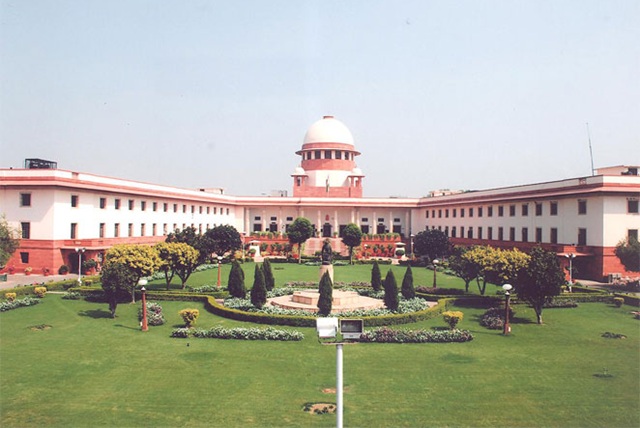
On 8th April 2025, a two-judge bench of the Supreme Court of India severely criticised the Tamil Nadu Governor for not giving assent to ten bills for several months after they were passed by the Tamil Nadu Legislative Assembly. The judges went to the extent of providing approval to the bills themselves, despite the fact that the bills had been sent to the President of India by the Tamil Nadu Governor after being held by him for a period. Ultimately, the President of India rejected a few of these bills.
Paving the Way for a Constitutional Crisis
In effect, the judges have questioned the authority of the President of India to approve or reject the bills.
This raises serious questions about the powers of the President of India vis-à-vis the powers of the judiciary, which constitutes a constitutional issue and could potentially lead to a constitutional crisis.
It also raises the question of whether the judges have exceeded their powers and authority by approving the bills themselves and acting as though they are the ultimate decision-makers in matters that rightly fall within the domain of the Legislative Assembly, Parliament, and ultimately the President of India.
Need for a Holistic View
The judgment and decision of the Supreme Court of India have received a mixed response, with several legal experts questioning the ruling, while some people—particularly a section of politicians—have welcomed the verdict.
Mahatma Gandhi, universally acclaimed as the apostle of peace and fairness, once said that a man of truth must also be a man of care, implying that an honest person should not only be honest but also appear to be honest. In today’s context, this can be extended to say that judgments delivered by judges should not only be correct but should also appear to be correct.
A fundamental principle of justice systems across the world is that judgments should be delivered after taking a holistic view of the matter. Judges should not base their views solely on the narrow confines of the legal framework. In the case of the Supreme Court’s judgment against the Tamil Nadu Governor, one may feel that the judges have not taken a sufficiently holistic view.
Background
All the bills held by the Tamil Nadu Governor without approval relate to universities in Tamil Nadu, where the Governor acts as the Chancellor. Until now, the power to appoint Vice-Chancellors has been vested in the state Governor. The bills passed by the Tamil Nadu Legislative Assembly seek to remove this power from the Governor and transfer it to the state government, effectively allowing the Chief Minister of Tamil Nadu to assume the role of Chancellor.
The Governor, as the President’s nominee, functions as the Chancellor and holds the duty and responsibility to assess matters concerning universities from a constitutional and procedural standpoint. This ensures that universities do not become pawns in political games. After all, universities are not mere government departments or public sector undertakings.
Why the Supreme Court Is Wrong
Today, state governments under political party control are frequently suspected of engaging in corrupt practices and nepotism, with family members of ruling parties often alleged to have undue influence over governance.
In such circumstances, there is a clear need for checks and balances in managing university affairs to ensure politicians in power do not exert undue influence over university administration or academic programmes.
If the Chief Minister were to replace the Governor as Chancellor, it is likely that politically influential individuals could be appointed as Vice-Chancellors to serve the interests of the ruling party. There have been numerous past allegations of political interference in the appointment of Vice-Chancellors in Tamil Nadu.
The Tamil Nadu government’s stance—that a nominee of the University Grants Commission (UGC) should not be a member of the selection committee for Vice-Chancellors—is fundamentally flawed.
There is a well-established procedure that a nominee of the UGC, which is a statutory body under the Government of India, should be part of the Vice-Chancellor selection committee. Substantial funding for universities comes from the Government of India, and such funding is scrutinised and approved by the UGC. This clearly implies that the central government has a legitimate role in university management, and state governments cannot claim exclusive control.
Given the substantial central funding, the UGC nominee has a responsibility to ensure that the funds are properly utilised and that the appointed Vice-Chancellor possesses the requisite credibility and qualifications.
The judges seem to have viewed the Governor’s actions as mere delay tactics aimed at stalling the bills passed by the state government, rather than looking deeper into the constitutional and national implications. The broader consequences of the Governor giving automatic assent to every bill passed by the state assembly—without assessing their constitutionality, alignment with national interest, or adherence to public interest—have not been addressed by the judges.
In today’s India, where a Chief Minister of a state has declared unwillingness to implement a centrally passed law applicable across the country, it becomes even more necessary for checks and balances to be exercised by individuals holding positions such as the President of India.
The President, in this case, exercised her constitutional authority to reject certain bills passed by the Legislative Assembly, as she deemed them not in the national interest. She is fully entitled to make such a decision, and for the Supreme Court to question this authority is both unfortunate and unacceptable.