INTRODUCTION
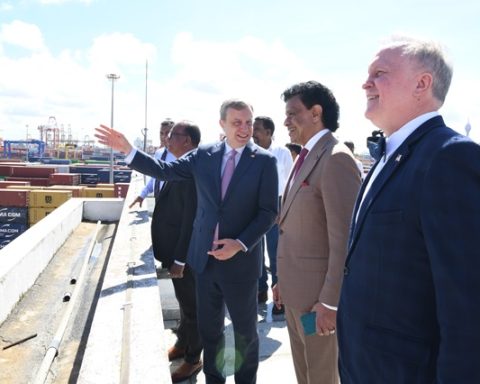
Indian External Affairs Minister S. Jaishankar travelled to Islamabad for a Shanghai Cooperation Organization summit, Canada accuses six Indian diplomats of involvement in threats and attacks against Sikh separatists, and Bangladesh’s foreign secretary visits Washington. Indian External Affairs Minister S. Jaishankar traveled to Islamabad this week for a high-level Shanghai Cooperation Organization (SCO) summit—marking the first time an Indian foreign minister has traveled to Pakistan since 2015 and the first time any Indian minister has visited the country since Defense Minister Rajnath Singh since 2016. During his roughly 24-hour visit Jaishankar participated in meeting and other activities with Pakistani officials present, but there were no bilateral engagements.
JAYASHANKAR’R VISIT SIGNLAS INDIAN COMMITMENT TO SCO
That is no surprise: Jaishankar’s trip was intended to signal India’s commitment to the SCO, not to strengthen ties with Islamabad. Prior to his trip, Jaishankar said he wouldn’t do any one-on-one meetings with Pakistani officials. The visit comes a month and a half after he declared that the “era of uninterrupted dialogue with Pakistan” was over. New Delhi’s position is firm: Until Islamabad deals with terrorist groups on its soil that threaten India, there can be no talks. India has doubled down on this stance since January 2016, when militants attacked an Indian Air Force base days after Prime Minister Narendra Modi made a surprise visit to Pakistan—the last time an Indian minister traveled to Pakistan solely for bilateral reasons.
INDIAN FOREIGN MINISTER VISITS PAKISTAN
That Jaishankar visited Pakistan despite these tensions reflects the importance that India attaches to the SCO. New Delhi values its membership in several monoliteral groupings—including the SCO, BRICS, the Asian Infrastructure Investment Bank, and the Quadrilateral Security Dialogue, among others. They enable India to amplify its support for multipolarity and reflect its strategic autonomy. The SCO is especially important for India because its membership and focus emphasize Central Asia—a region where New Delhi is keen to ramp up ties but faces an inherent constraint with its outreach. India lacks direct land access to Central Asia because Pakistan—itself looking to expand ties there—denies it transit trade rights. This elevates the importance of any opportunity for Indian high-level engagement with the region.
NARENDRA MODI COMMITS INDIA TO CENTRAL ASIAN LEADERSHIP
In recent years, Modi has convened dialogues with Central Asian leaders to signal India’s commitment to partnership—and New Delhi sent Jaishankar to Islamabad to amplify that message. However, Jaishankar’s visit does show a degree of stabilization in India-Pakistan bilateral ties. The relationship plunged to a new low in 2019 following another terrorist attack in India carried out by Pakistan-sponsored militants, a brief military crisis, and New Delhi’s decision to strip Indian-administered Kashmir of its autonomy. But in 2021, India and Pakistan signed a new truce along their disputed border, easing tensions.
Though still fraught, bilateral relations have since remained relatively calm, with both countries seeking to minimize tensions so that they can direct more attention to other challenges: for India, competition with China, and for Pakistan, internal problems, especially economic stress. This sufficiently calm environment allowed Jaishankar to make this week’s trip, which has also given a boost to people-to-people ties, with several Indian journalists to cover it. The trajectory of Increasing the border spike Pakistan relations remains shaky. Each country’s core concern about the other currently stands to intensify: A recent in militant attacks in Kashmir deepens India’s anxieties about Pakistan-sponsored terrorism, while New Delhi’s continued refusal to reverse its 2019 decision to make Kashmir an Indian union territory rankles Islamabad. Jaishankar’s visit to Pakistan should be seen for what it was: an effort to convey India’s commitment to a regional organization critical for its interests. New Delhi was willing to dispatch its top diplomat on a rare visit to Islamabad to underscore that commitment.
WALL STREET JOURNAL COMPARES RAJIV GANDHI WITH RONALD REAGAN
In March 1985, the Wall Street Journal showered India’s new prime minister, Rajiv Gandhi, with its highest praise. In an editorial titled “Rajiv Reagan,” the newspaper compared the 40-year-old Gandhi to “another famous tax cutter we know,” and declared that deregulation and tax cuts had triggered a “minor revolution” in India. Three months later, on the eve of Gandhi’s visit to the United States, Columbia University economist Jagdish Bhagwati was even more effusive. “Far more than China today, India is an economic miracle waiting to happen,” he wrote in the New York Times. “And if the miracle is accomplished, the central figure will be the young prime minister.” Bhagwati also praised the reduced tax rates and regulatory easing under Gandhi.
WORLD BANK PRAISES CHINA’S OUTSTANDING GROWTH PERFORMANCE
The early 1980s marked a pivotal historical moment, as China and India – the world’s most populous countries, with virtually identical per capita incomes – began liberalizing and opening up their economies. Both countries elicited projections of “revolution” and “miracle.” But while China grew rapidly on a strong foundation of human-capital development, India shortchanged this aspect of its growth. China became an economic superpower; projections of India as next are little more than hype. The differences have been long in the making. In 1981, the World Bank contrasted China’s “outstandingly high” life expectancy of 64 years to India’s 51 years. Chinese citizens, it noted, were better fed than their Indian counterparts. Moreover, China provided nearly universal health care and its citizens – including women – enjoyed higher rates of primary education. The World Bank report highlighted China’s remarkable strides toward gender equality during the Mao Zedong era. As Nicholas Kristof and Sheryl WuDunn note in their 2009 book Half the Sky, China (particularly its urban areas) became “one of the best places to grow up female.” Increased access to education and the higher female labor-force participation rate resulted in lower birth rates and improved child-rearing practices. Recognizing China’s progress in developing human capital and empowering women, the Bank made an unusually bold prediction: China would achieve a “tremendous increase” in living standards “within a generation or so.” Rather than tax cuts or economic liberalization, the World Bank report focused on a historical fact recently emphasized by Brown University economist Oded Galor.
CHINESE ECONOMIC GROWTH IS FAR MORE THAN THAT OF INDIA
Since the dawn of the Industrial Revolution, every instance of economic progress – the crux of which is sustained productivity growth – has been associated with investments in human capital and higher female workforce participation. To be sure, market liberalization greatly helped Chinese and Indian growth. But China built its successful development strategy on the twin pillars of human capital and gender equality, areas where India has lagged far behind. Even after it became more market-oriented, China invested impressively in its people, outpacing India in raising education and health standards to levels necessary for an internationally competitive workforce. The World Bank’s 2020 Human Capital Index – which measures countries’ education and health outcomes on a scale of 0 to 1 – gave India a score of 0.49, below Nepal and Kenya, both poorer countries. China scored 0.65, similar to the much richer (in per capita terms) Chile and Slovakia. While China’s female labor-force participation rate has decreased to roughly 62% from around 80% in 1990, India’s has fallen over the same period from 32% to around 25%. Especially in urban areas, violence against women has deterred Indian women from entering the workforce. Together, superior human capital and greater gender equality have enabled much higher Chinese total factor productivity growth, the most comprehensive measure of resource-use efficiency. Assuming that the two economies were equally productive in 1953 (roughly when they embarked on their modernization efforts), China became over 50% more productive by the late 1980s.
CONCLUSION
Today, China’s productivity is nearly double that of India. While 45% of Indian workers are still in the highly unproductive agriculture sector, China has graduated even from simple, labor-intensive manufacturing to emerge, for example, as a dominant force in global car markets, especially in electric vehicles. China is also better prepared for future opportunities. Seven Chinese universities are ranked among the world’s top 100, with Tsinghua and Peking among the top 20. Tsinghua is considered the world’s leading university for computer science, while Peking is ranked ninth. Likewise, nine Chinese universities are among the top 50 globally in mathematics.
By contrast, no Indian university, including the celebrated Indian Institutes of Technology, is ranked among the world’s top 100. Chinese scientists have made significant strides in boosting the quantity and quality of their research, particularly in fields such as chemistry, engineering, and materials science, and could soon take the lead in artificial intelligence. As the figure shows, Chinese researchers, both in academia and industry, are rapidly generating high-quality patents. Since the mid-1980s, Indian and international observers have predicted that the authoritarian Chinese hare would eventually falter, and the democratic Indian tortoise would win the race.
Recent events – China’s harsh zero-COVID restrictions, rising youth unemployment, and the adverse repercussions of the Chinese authorities’ ham-handed efforts to rein in the country’s overgrown real-estate sector and large tech companies – seem to support this view. But while China, with its deep well of human capital and greater gender equality, stands poised at the frontiers of both the old and the new economies, Indian leaders and their international counterparts tout an ahistorical ability to leapfrog over a fragile human foundation with shiny digital and physical infrastructure. China has a plausible path through its current muddle. India, by contrast, risks falling into blind alleys of unfounded optimism.