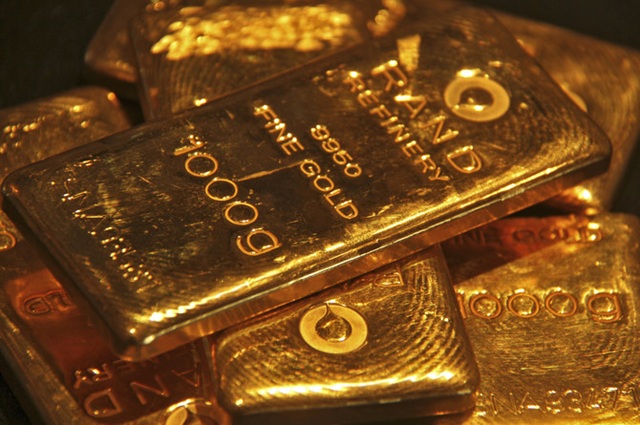
In a significant shift in investment trends, Indian investors have turned to gold exchange-traded funds (ETFs) following a downturn in the local stock market. With gold prices reaching record highs, net inflows into gold ETFs in India surged to Rs37.5 billion ($437 million) in January and Rs19.8 billion in February, according to the Association of Mutual Funds in India (AMFI).
The recent weakness in Indian equities, particularly the Nifty 50 index, which has declined by 0.5 percent year-to-date, has driven investors towards the traditionally favored asset. Analysts highlight that the ease of investing in ETFs has facilitated this transition, allowing retail traders to capitalize on the precious metal’s impressive 16 percent gain so far this year.
Growing Appeal of Gold ETFs
“Historically, Indians have had an affinity for gold,” said Vishal Jain, CEO of Zerodha Asset Management in Bengaluru, which offers a gold ETF. “A lot of people are now moving towards gold ETFs for investment purposes.”
Despite accounting for just 2 percent of the global total, India remains the world’s second-largest investor in gold, trailing only China, according to the World Gold Council (WGC). “There has been a shift from gold jewelry into pure investments,” noted Kavita Chacko, WGC’s India research head.
The WGC attributes the trend to growing economic and policy uncertainties, prompting investors to redirect their free cash flow toward gold ETFs. This shift contrasts sharply with equity market flows, as gold-backed investments surge while stock market investments stagnate.
Gold Prices Hit Record Highs
The rally in gold prices, which soared past $3,000 per troy ounce this month, has been fueled by global investor concerns over potential economic slowdowns and inflationary pressures. In India, the cumulative assets under management (AUM) of gold ETFs have nearly doubled year-on-year, now making up almost 1 percent of the mutual fund industry’s AUM, up from 0.5 percent a year ago, according to the WGC.
Advertising campaigns promoting gold ETFs have inundated major Indian cities, reflecting the growing interest in this investment avenue. The trend extends beyond urban centers, as semiurban and rural households—long-time gold holders—have been leveraging their assets to secure bank loans.
Boom in Gold-Backed Lending
Amid rising gold prices, Indian households have tapped into their gold reserves to access liquidity. Data from the Reserve Bank of India shows that gold-backed loans grew by 74.4 percent between April 2024 and February 2025, compared to a mere 14 percent increase in the same period the previous year.
“When there is economic distress, you see gold lending going up,” said Chirag Sheth, a consultant at Metals Focus. The straightforward application process for gold-backed loans has spurred borrowing, particularly for consumption, during an economic slowdown. However, regulators have expressed concerns that a potential decline in gold prices could trigger margin calls, leading to financial instability.
Impact on Physical Gold Demand
While investment in gold ETFs has surged, demand for physical gold—especially jewelry—has eased due to sky-high prices. Jewelry purchases, which typically constitute around 70 percent of India’s gold consumption, have declined, contributing to a sharp drop in gold imports. According to WGC data, India’s gold imports fell 63 percent year-on-year in February to $2.3 billion, the lowest level since March 2024.
The trend marks a third consecutive month of declining gold imports, following a peak in November 2024. Analysts suggest that the ETF boom, alongside the absence of new sovereign gold bond issuances, has contributed to this shift.
“The price momentum and the bullish sentiments on gold have been supporting investment interest and demand for ETFs,” said Chacko.